By Isabella McHugh
Staff Writer
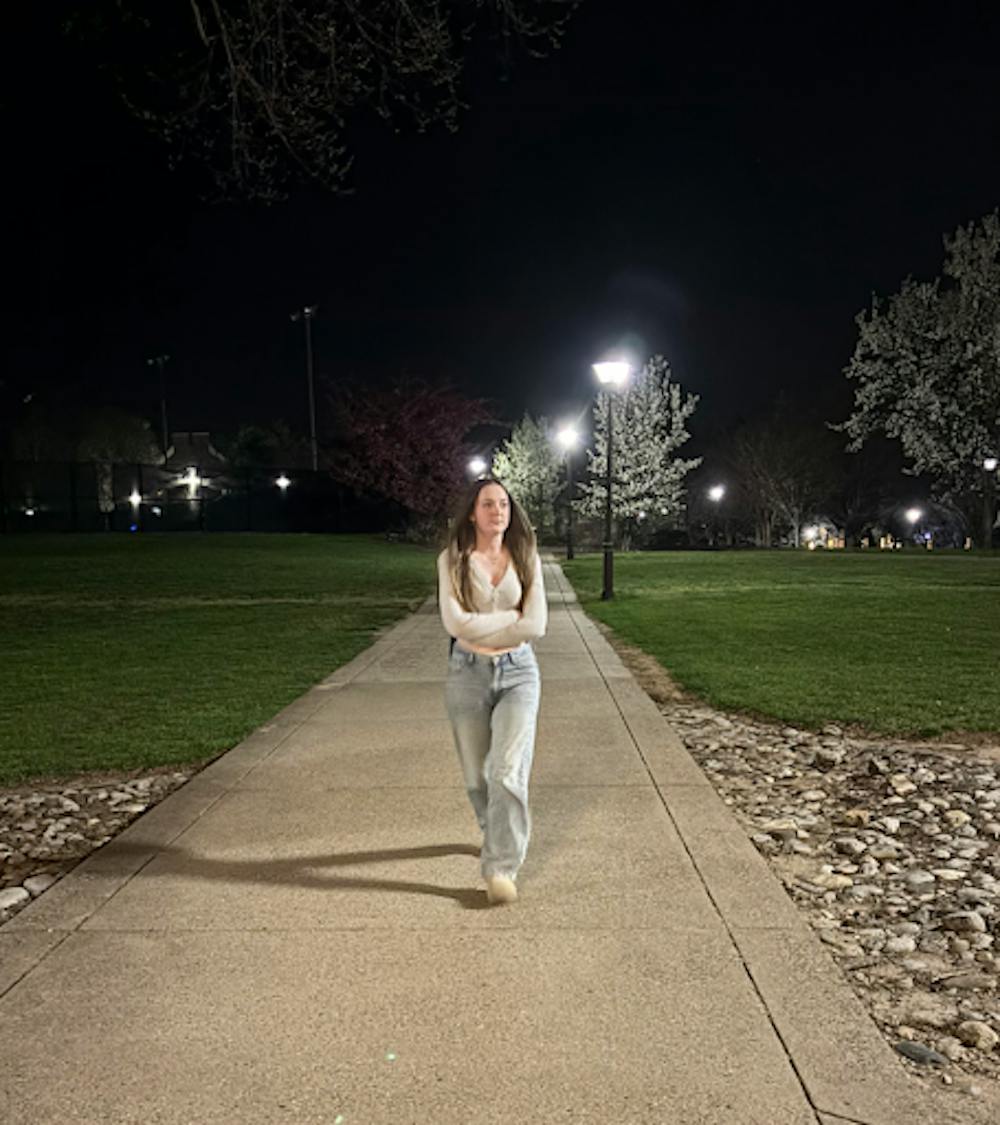
Many women at the College say they feel safe on campus, though students, staff and Campus Police described specific safety concerns and experiences.
In a “yes” or “no” tally with 20 women across campus, all answered “yes,” they felt safe at the College.
Freshman elementary education/art major Silvana Valdeiglesias acknowledged that “campus feels safe for women, but it’s important for us to stay aware.” She added, “Even in like, secure areas, there’s still the fear in the back of your mind like what if that person is actually following me, or will I be safe if I attend this event off campus?”
Freshman nursing major Olivia White experienced her sense of security on campus falter, and described two isolated incidents that changed the precautions she takes to ensure her safety.
White returned to her dorm after winter break to find her crystals scattered across the floor and a book from her shelf in the trash.
“I was confused because I didn't touch them and my roommate left before I did,” White said, adding, “My book could have fallen over because it was down, but I don't think it could have ended up in the trash can. So, you know, definitely it was not a coincidence.”
She described a second incident the day after she returned from break. While lying in bed, she noticed a pair of feet visible beneath her door. The person then tried to enter by aggressively turning the knob, but failed since the door was locked. According to White, the same situation happened three times over the following week.
White reported the incidents to her community advisors, who looked into the situation but did not identify who was responsible.
“If this just happened, I would have thought, oh, like people do this all the time, like a practical joke,” White added. “But because somebody had come into my room and broken stuff the day before and I didn't know what else they could have possibly done. I was really freaked out.”
Following these incidents, White now keeps her door locked at all times to prevent anyone from entering her dorm.
Campus Police Sergeant Cheryl Campbell pointed to a similar past incident in which a male student entered women’s dorms “and would touch them or touch their leg or something like that,” she said.
Campbell also emphasized that many safety concerns for women on campus stem from meeting strangers and allowing them into residence halls, calling the issue both “concerning” and “prevalent.”
From a residential perspective, Dorian Williams, a junior psychology major and community advisor, identified stalking and unwanted social advances as some of the most common concerns he observed, particularly when men attempt to insert themselves into spaces with a high number of women.
While Campus Police protect students within campus boundaries, that protection does not extend beyond the College’s jurisdiction, Campbell said.
Williams added that Thursday nights, often referred to as “college nights,” draw the College’s students to Cooper’s Riverview, known to many students as “Rho.” Having previously worked there as a bartender, he said environments like Rho, where alcohol is involved, can increase the likelihood of violence.
At the same time, he pointed to security measures in place during those events. “There were maybe five to eight security guards per college night, which is the night most college students go,” he said.
Campbell contrasted campus policing with township departments, noting that agencies such as Ewing Township Police Department interact with students differently. She explained that the College’s officers build familiarity with students, while local departments lack that same relationship.
Williams recalled an incident last Halloween when a man approached his female friend. Although the interaction initially seemed normal, he noticed the man stepping closer as his friend backed away. Recognizing her body language allowed him to intervene before the situation escalated.
Williams said, “I put my arm around my friend, and talked to the one guy and I was like, hey, what's your name? And I do that typically to calm down the mood.”
Based on his observations, Williams said women tend to be more aware of their surroundings than men because they have to be. He added that women often recognize discomfort in others more quickly due to that heightened awareness.
“That's why I believe women are the first ones to step up when they notice another woman is uncomfortable,” he said.
Campbell echoed a similar point, noting that female officers often approach situations with greater sensitivity and tend to rationalize more effectively, particularly when dealing with women.
Williams also pointed out that men typically do not consider their safety to the same extent, while women often feel the need to remain more alert.
White reinforced that perspective, explaining that she consistently keeps her guard up. She recalled walking back to her dorm at night when an older man stopped her to ask for directions to an ATM. She said she backed up while answering briefly, then quickened her pace toward her dorm. Although they were heading in the same direction, she chose a longer route out of concern that he might follow her.
“Even though it was nothing, that’s the type of, like, situation where you know, something really bad could have happened,” White said.
Despite these moments, White said she feels reassured knowing she can contact Campus Police in an emergency.
Valdeiglesias said she always pays attention to her surroundings, even during the day. “As women, we need to be more alert, but I feel secure since I practice being aware of my surroundings, and that’s what I’d encourage other women to do as well to feel safe.”
Campus Police offer an escort system in which officers can walk students back to their dorms or provide a ride upon request. Campbell noted that students no longer use the service as frequently as they once did, though the department continues to promote it, particularly during welcome week.
Williams suggested the escort system could be better advertised, adding that many students do not take advantage of it.
Campbell also encourages more students to participate in self-defense programs offered by Campus Police.
“We just started a self-defense class. In fact, one is coming out soon in a couple weeks. And I would like to see the students participate in that,” Campbell said.
Students can access several safety resources on campus. The College’s Police Department can be reached at (609) 771-2345 or by dialing 911 in an emergency. The College’s Office of Anti‑Violence Initiatives, located in Forcina Hall, Room 308, also provides support services and can be contacted at 609-771-2571 or by email at oavi@tcnj.edu. Campus Police also offer the R.A.D. (Rape Aggression Defense) program, which teaches women self-defense tactics.