By Shaun Bulayo
Correspondent
After almost five years, “Resident Evil” has made its return to cinema under a new reboot led by Zach Cregger on Sept. 18. Based on the homonymous video game franchise produced by Capcom, the film takes numerous aspects from the source’s environment and lore while placing a twist on its narrative.
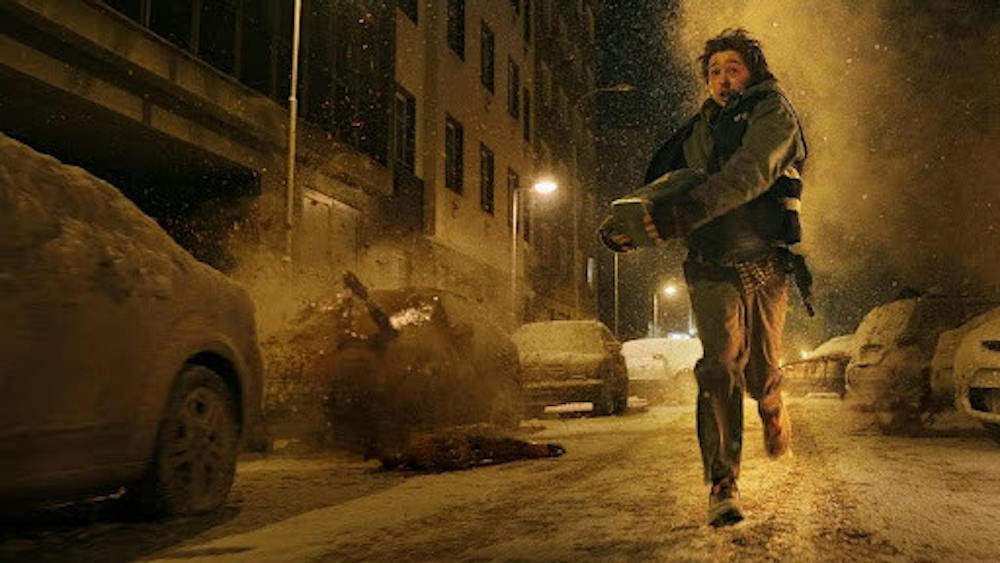
Rather than focusing on one of the franchise’s many established stars, the film instead follows an organ courier named Bryan Hodukavich, portrayed by Austin Abrams. While working a late night shift, he’s suddenly tasked with an urgent delivery to a hospital within Raccoon City. However, unbeknownst to him, an outbreak has taken place within the town’s borders, leaving Bryan vulnerable to the most unprecedented sequences of life or death.
Within the video game franchise, the research and development of biological weapons controlled by the core antagonists, the Umbrella Corporation, would release numerous strains of viruses into the local populations causing horrific mutations. In its aftermath, players follow the stories of action heroes as they navigate once familiar environments desecrated by the zombie outbreak. Attempting to find answers, protagonists must solve nerve-wracking puzzles, maneuver through thrilling gunplay and survive the apocalypse as players follow the franchise’s complex lore.
“Resident Evil” was a major pioneer within the survival-horror video game genre, shaping the foundations of its modern scene and has garnered massive amounts of respect over time. Due to its esteemed legacy, heated debates have emerged online from both critics and long-time fans as Cregger's film deviates from the source material.
As PC Gamer said, “People have complained about it existing outside of the games—running parallel to the events of ‘Resident Evil 2’ instead of a shot for shot imitation. The fact that it will include some liberal interpretations of what the T-virus is capable of has also ruffled some feathers.”
This is further exacerbated by “Resident Evil’s” notorious reputation in film due to previous live action adaptations falling short to many audiences’ expectations. After watching the second film in the original run, an unimpressed reviewer at IGN said, “You simply don't identify with or care about these characters in any way, shape or form. They are just talking heads racing through a videogame to kill, kill, kill! Even the brief moments of the actual ‘Resident Evil’ videogames seemed to feature more developed and interesting characters than these film adaptations do."
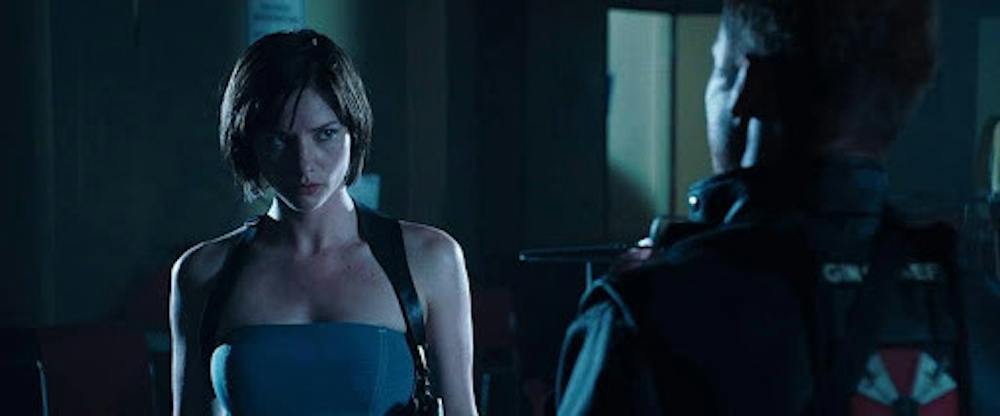
Sienna Guillory as Jill Valentine in Alexander Witt’s “Resident Evil: Apocalypse." (Photo courtesy of IMDb)
Featured trailers of the film have shown much promise for the franchise. However, with little relation to the video game’s main storyline and infamous film reputation, many fans have dismissed the reboot, claiming it is a glorified zombie flick abusing the “Resident Evil” brand. Conversely, these claims couldn’t be further from the truth as Cregger’s vision in the film encapsulates the spirit and core of “Resident Evil” through its combination of comedy and genuine survival horror.
Cregger’s writing for the film is reminiscent of the early entries in the video game series featuring serious plots sprinkled with light-hearted jokes. Remarkably, the film also manages to adapt gameplay mechanics in its entirety from the annoying resource management to its numerous locked puzzles. The film is comedic at times, but Cregger manages to cut through with a more serious tone, fleshing out the main character through his emotional turmoil while he’s forced to face the apocalypse head-on. Although “Resident Evil” has evolved significantly from its humble beginnings, the film manages to recreate aspects of the original atmosphere and suspense, even if it isn’t perfectly accurate to the games.
Austin Abrams preserves the role of the unprepared protagonist as he struggles and overcomes each challenge thrown at him. Given his past synergy with Cregger for his previous work in “Weapons,” Abrams manages to illustrate the film’s vision, being an overall good fit for the role. His character’s lack of composure and inexperience create a sense of relatability for audiences, but at times seems infuriating for longtime fans. Eventually, through his flurry of foul-mouthed curses and haphazard self-defense, he uncovers the importance behind his delivery leading to a decision defined only by selflessness and bravery.
Compared to the film’s writing and portrayal, the cinematography and soundtrack surpasses all, beautifully capturing the exploration of the apocalypse. It creates fear through its realistic usage of body horror for each mutation combined with excellent audio cues to match. The camera work is also excellent as it feels similar to the games. Switching from full body shots to first person perspectives, “Resident Evil” keeps the viewer on the edge of their seats, unaware of what could happen next.
While it may drag at times, Cregger’s “Resident Evil” is still a well-made film that respectfully pays tribute to the original games. It should be given a fair chance by fans of the franchise even if it doesn’t always manage to stay one-to-one to the original source.
For those unfamiliar to the franchise, there may be some confusion regarding the plot as it’s not your typical horror zombie movie and more of a homage to the games. However, there are still moments all audiences can enjoy while it’s in theaters. Hopefully, following this film, “Resident Evil” continues to refine itself as it returns to the cinematic world.