
By Jack Salaki
Opinions Editor
This piece contains brief spoilers of “The Social Reckoning.”
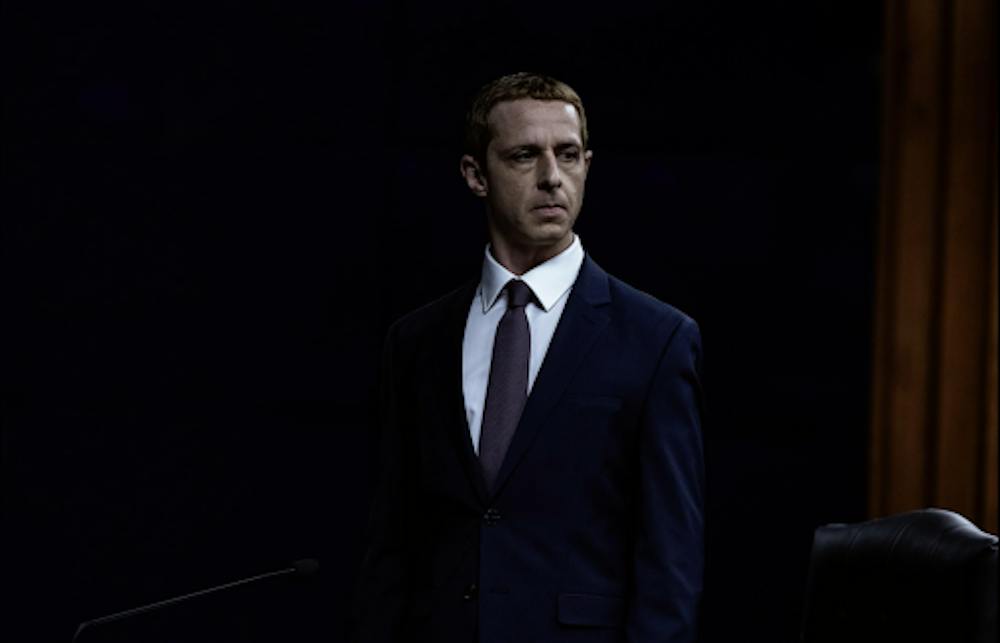
Making a movie about Facebook's controversies should be easy. Making a good movie about the social media behemoth is not so easy. “The Social Reckoning” understands the first part, but struggles with the second.
The sequel to “The Social Network” has lots of material to work with — Facebook's massive, documented role in spreading misinformation through its negligent fact-checking, promotion of extremist content and contributing to mental health issues among young users.
Aaron Sorkin, the vaunted writer-director of “The Social Reckoning,” chose to focus on the Facebook Files investigation by The Wall Street Journal. These files involved an employee at the mega Meta corporation blowing the whistle that Facebook knew the problems its platform caused and chose to ignore them for the sake of profit. It is a solid topic with a lot of evidence.
In fact, most of the film is straightforward and competently told. The performances are strong, the story is well-structured and the corporate sequences feel realistic.
But Sorkin fails to tell an engaging story around them, and the film feels like a dramatization of news events rather than a unique story. In 2010, Sorkin paired with director David Fincher for “The Social Network.”
While Sorkin tackled the sequel by himself, pairing with Fincher allowed him to balance his weaker instincts in the prior film. Sorkin is a brilliant writer, known for his sharp dialogue and entertaining character interactions, but he also has tendencies that hold him back. He is an unabashed patriotic liberal, believing in the power of institutions and good people to always win in the end. This can work for some stories, but for others it can make things overly simplistic, lacking the nuances of real life.
Fincher doesn’t have that problem. He tackles difficult subjects that result in films with ambiguous endings. These two were a match made in box office heaven. The duo made magic happen in “The Social Network.”
The acting in the film was superb, with strong performances by the leads with Jesse Eisenberg as Mark Zuckerberg and Andrew Garfield as Eduardo Saverin. The editing is crisp, the score is memorable and overall, there’s a lot to like. Most importantly, it tells a layered story.
“The Social Network” doesn’t beat you over the head with the message that Zuckerberg is a villain or that ambition can lead you down the path to moral disaster. That film showed that most things are more complicated than you may think. Eisenberg’s portrayal of Zuckerberg showed the tech founder’s brilliance, insecurity and loneliness. He is a human, not a comic book villain.
“The Social Reckoning” lacks any of this subtle complexity.
Sorkin presents events through his worldview — Mark Zuckerberg is the bad guy, Facebook is an evil corporation, and good looking journalists will always save the day.
The result is a movie in which the audience may be clobbered with a message but not gain a substantial and deeper understanding of the subject matter.
The first film left viewers with intriguing questions and made you think about how power can tear relationships apart and if a person's success is inseparable from their flaws.
But “The Social Reckoning” treats its conclusions about corporate power and social media as facts the audience already knows. The film exposes problems without providing an equally fresh perspective.
One example is how the film tackles the Jan. 6, 2021 Capitol riots.
Sorkin delivers a clear answer why these events happened - Facebook’s algorithm spread misinformation and radicalized people. Trump took advantage of this. And Facebook should have done more to stop it.
It’s not that these conclusions are not valid, but they are presented without nuance as if it is a progressive graphic novel. Sorkin’s black and white worldview shines through the fog of reality in a heavy-handed and cringeworthy way.
Another example of this is at the start of the film when a woman is recording the police. Her car has broken down and she instigates a fight with the police, calling the pair a variety of racial slurs. We learn that she was formerly a very open and progressive person, but has been radicalized because of social media. Again, can people be radicalized by their algorithms? Of course. But this is presented as a cause and effect without exploring how or why it happened.
I have no issue with a writer, liberal or conservative, injecting politics into a film. But it has to be done well. In “The Social Reckoning,” the political insertions aren’t done well and come off as more of a lecture rather than anything important to the plot.
Ultimately, “The Social Reckoning” is a competent film that never quite becomes a great one. It settles for dramatizing conclusions audiences already accept. “The Social Reckoning” has plenty to say about the greedy antics of Facebook, but not enough to say about anything else.