By Ally Uhlendorf
Editorialist
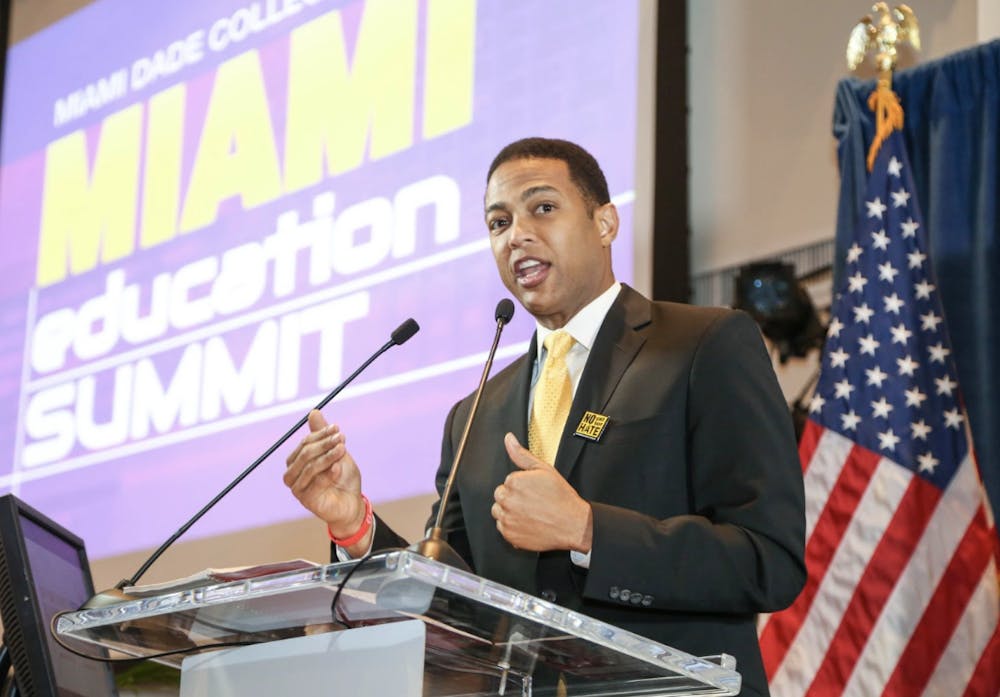
In the past week, federal officers arrested two journalists on the premise that they had broken the law by covering an anti-immigration protest at a Minnesota church. On Jan. 30, Don Lemon, a former CNN anchor and the host of “The Don Lemon Show” on YouTube, and Georgia Fort, a reporter from Minnesota who runs BLK Press, were taken into custody.
“You cannot be neutral about the dismantling of our democracy and still expect to be protected by it,” Fort told Columbia Journalism Review days before her arrest. “If the Constitution fails to protect U.S. citizens, it will fail to protect the media, the free press. It’s not like there is a reality where constitutional rights don’t exist for American citizens but they continue to exist for the press,” she said. “That’s not how this is going to go.”
Arresting the storytellers does not change the story. Arresting journalists for simply doing their job of telling a story goes directly against the First Amendment. Today, it seems as though freedom of the press and speech apply only to speech that the government agrees with.
The First Amendment is not conditional. It does not protect only agreeable coverage or journalists who maintain a comfortable distance from conflict. In reality, this amendment exists precisely for moments like this. This amendment protects free and fair coverage, no matter the event. Courts have long recognized that journalists have the right to observe and report on matters of public concern in public spaces, including protests. That protection is meaningless if it disappears the minute reporting becomes uncomfortable for those in power.
Lemon and Fort did not pose a threat to the public; they were covering a protest of a significant matter in our country right now. Whether you agree with the protest or not, that was not the point of their coverage as journalists. They were fulfilling the most basic function of a free press: bearing witness and informing the public. They did not interfere with or participate in the protest; they were attending to document how power is exercised.
Criminalizing the act of reporting on an event does nothing to enhance the safety of the public. If anything, it takes away the right of American citizens to hold knowledge and awareness of what is occurring in their country. Transparency itself is now perceived as a threat to our government.
The First Amendment is not conditional. Any public event, no matter what it may be, is free to be covered by the press. If Lemon and Fort were not breaking any sort of law while reporting on the protest, there should be no reason for their arrest.
Yes, journalists must follow the same rules as everyone else. However, Lemon and Fort were technically not participating in the protest; they were attending for the purpose of reporting on a public concern. In practice, there is a long-standing understanding that enforcement must be tempered by constitutional values. In normal times, there is an expectation that even when a journalist’s conduct might technically fit the legal elements of a crime, such as jaywalking to get footage of a protest, prosecutors will use their judgement to not apply the law in a manner that chills the free press.
Journalists being arrested for doing their job not only puts their rights on the line, but also the public’s right to know what is occurring in America. We, as a country, cannot be a functioning democracy when accountability is being treated like an obstruction. The government is slowly silencing dissenting voices, going against our very own constitutional amendment. Silencing reporters does not give others freedom. Freedom of the press is not optional, but essential, especially in times like these.