By Zo Terrana
Staff Writer
College campuses across the United States are levying their voices to create a more sustainable campus for their students and community. The College is no exception in trying to achieve these goals.
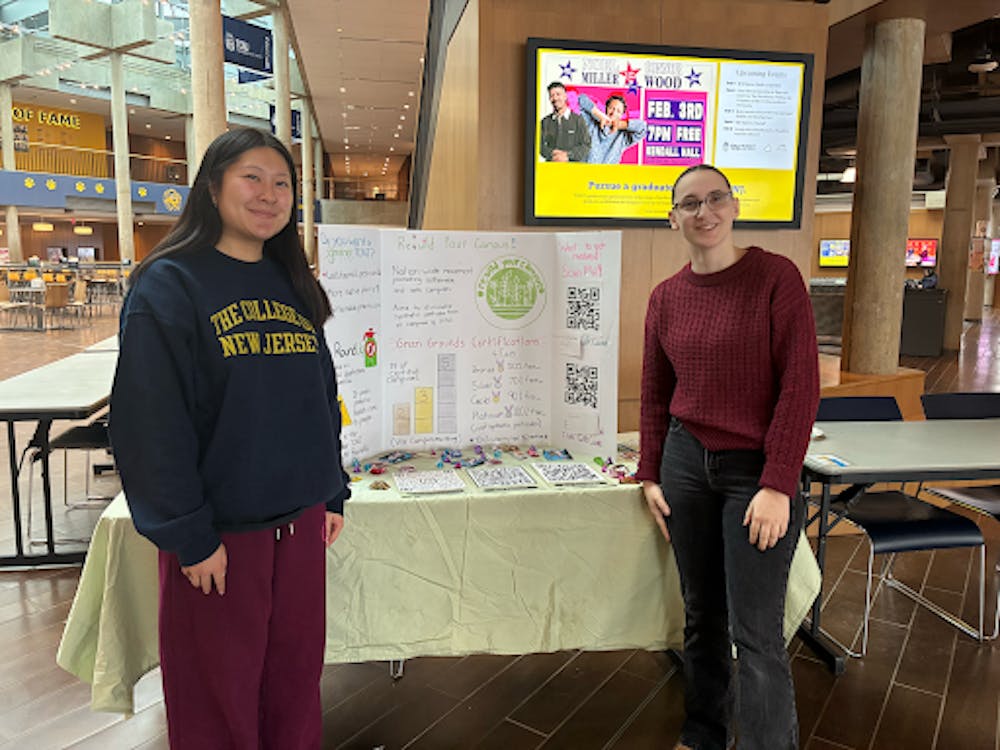
President of the College’s Environmental Club, Brigette Wixted is embarking on new ways to advance sustainability on campus and in surrounding communities to help combat the global threat of climate change.
Wixted, a junior political science and environmental studies dual major, has taken charge of the club this semester. With her new leadership Wixted is trying to advance the College’s climate initiatives and sustainability this spring with specific projects whilst furthering the Ewing area’s environmental goals.
Even before embarking on her college journey, Wixted has always had a passion and calling for the environment.
“In high school senior year I took an environmental studies course and then I really fell in love with it,” Wixted said. “I really fell in love with trying to protect our environment and our only home that we have.”
Wixted started out as the treasurer of Environmental Club during her sophomore year, and was later named president the following year.
The College’s Environmental Sustainability Council works to implement initiatives to reduce greenhouse gas emissions through three themes of energy conservation, sustainable transportation and recycling and waste reduction, according to the College’s ESC website. The ESC works in tandem with the Environmental Club to achieve a more sustainable campus life and overall future.
A recent project that Wixted has forwarded with the College’s Environmental Club is the national climate quilt project. The project is spearheaded by Pam Mischen, an environmental studies professor at Binghamton University and climate activist.
The project is designed to spread awareness of climate change on campuses across the U.S. This semester, the College’s art gallery is open to working with students on campus, offering quilting workshops in a call for climate activism.
“I am really excited about the climate quilt project we're contributing to,” Freya Sewell, an Environmental Club member and junior environmental studies and history double major said. “It’s an art project that always gets good engagement.”
The Environmental Club is also pursuing a food forest project. A food forest or forest garden is a diverse plantation of edible plants that mimics an ecosystem similar to nature. The College’s medicinal food forest will be planned near Decker Hall, according to Wixted.
“The food forest is really important to me,” Sewell said. “Having more native plants on campus is a huge deal ecologically, especially for bugs, which rely on specific plant species. It is especially important because of the biodiversity crisis the world is experiencing right now and people need to have opportunities to get out in nature or to learn about ecosystems that make our region unique.”
The food forest will also help feed the local Ewing community through "sustainable food production,” Sewell said. The food that is produced through the food forest will be donated to food pantries while helping sustain a local ecosystem.
These projects and initiatives are designed to bring the College into the climate justice conversation within New Jersey, according to Wixted.
“If you travel an hour away to Stockton University, they’re so environmentally sustainable and there's more initiatives,” Wixted said. “I was completely amazed by how much they had. Rutgers, even though they have more funding than us, are so environmentally evolved.”
The College has received little funding from the state due to funding cuts and the College also doesn't fund environmental initiatives. “We have to start looking for other options, like applying for grants,” Wixted said.
To advance the College’s sustainable outlook, Wixted said that revamping and adding plant life to the campus environment would assist in sustainability around the campus.
Plant life “boosts urban biodiversity, providing vital habitats for pollinators and beneficial insects,” according to consumer advocacy group Community Gardens.
The College has strived for having a voice in helping with the threat of climate change with students and professors alike taking action.
“I think TCNJ has made significant strides in both the operations and the teaching,” said Miriam Shakow, an anthropology professor at the College. “The college president signed a university Presidents' Climate Commitment, committing the college to carbon neutrality by 2040, Energy Manager and Sustainability Director Paul Romano has created a ‘decarbonization’ plan for campus energy use, and Dr. Diane Bates has led the recent creation of TCNJ's new environmental studies major.”
Shakow has called on the College’s students to get in contact with elected state representatives such as Assembly members to help fund renewable energy initiatives.
Wixted said that to move the College towards a more sustainable future, the student body must prioritize the present issue of climate change. However, with students facing various stressful challenges such as student loans, college course work and navigating the future job market, prioritizing a global issue like climate change can seem unattainable.
“I feel like people who worry about money, classes or whatever else is going on in their life have no room to even care about the environmental problems we're facing,” Wixted said. “People need to help themselves first before they can help the environment.”