By Isabella McHugh
Staff Writer
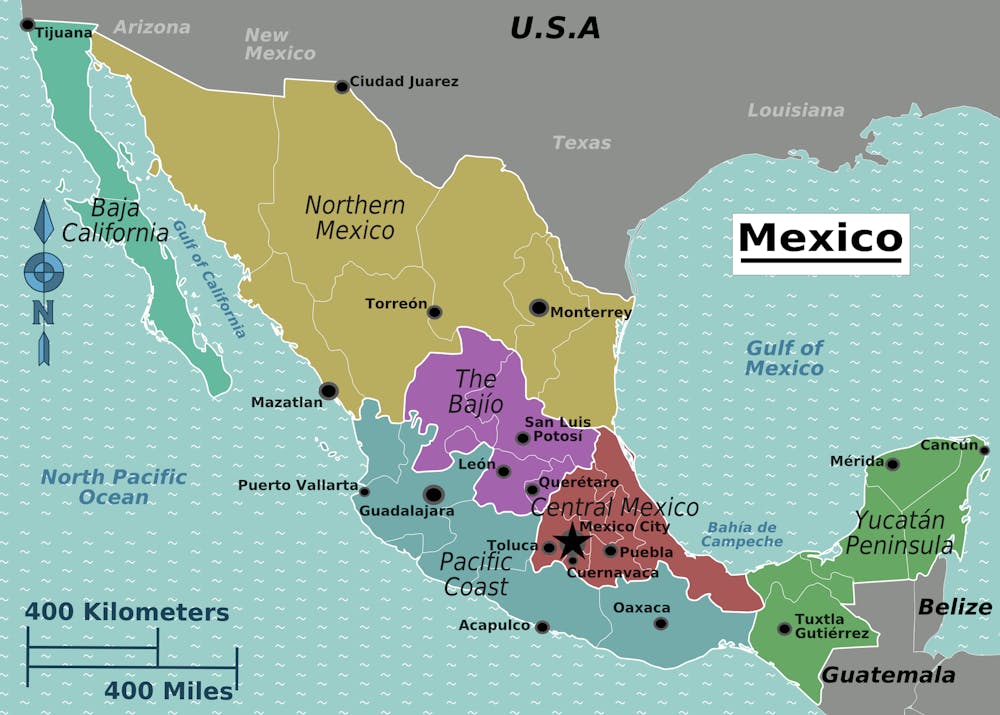
Citizens of Mexico experienced a surge of fear across the country after drug lord “El Mencho” was killed in a military operation run by Mexican authorities on Feb. 22, according to the New York Times.
His real name was Nemesio Oseguera Cervantes, and he was the head of the Jalisco New Generation Cartel, CNN reports. He was an infamous boss of a fast-growing drug-trafficking cartel in Mexico. Oseguera was known for trafficking fentanyl, methamphetamine and cocaine into the United States.
His death ignited a fury among the cartels, who responded with violence across the country, according to AP News.
Over the past week the country has been ridden with roadblocks, shootings and fire, the New York Times reports. Mexican officials have declared they arrested 70 individuals and killed 34 who they suspected were cartel members.
Schools are temporarily being closed as violence breaks out in the streets, according to AP News. Almost 10,000 Mexican troops were deployed to suppress the brutality, the New York Times reports.
Citizens in these drug war-zones describe their horrific experience. “The fear is everywhere and the fear is constant,” said Héctor Torres, a paramedic in a BBC report. The journalist states, “I spent with Héctor and Julio almost every incident they responded to ended the same way, with a dead body in a building or by the side of the road, and grief-stricken relatives nearby asking for answers.”
The BBC report also asserts that most victims of the cartels do not make it out alive. There isn’t anywhere that this violence doesn’t touch. It impacted schools, hospitals and even funerals.
The Mexican government’s recent action was taken soon after repeated insistence by U.S. President Donald Trump. Trump previously posed a threat that if their government didn’t crack down on the issue, the U.S. military would have to do so instead.
Oseguera had evaded capture for two decades, but was felled in “one of the most aggressive offenses against the cartels in more than a decade,” wrote the New York Times.
This mutual exchange in security has essentially reconstructed the U.S. and Mexico’s relationship, the New York Times wrote.
Many people are questioning whether it is still safe to travel to Mexico, and experts say it’s probably fine, according to ABC News. Every year, millions of tourists visit Mexico, and the vast majority end up fine.
During the violence this past week, no tourists have been harmed or targeted. Those impacted the most by violent crimes are citizens of the country, especially since tourists are mostly sheltered in resorts and doing low-crime-risk activities, according to ABC.
Tourism also helps fund Mexico’s economy, which is why security is taken seriously to ensure no loss in visitors, the New York Times reports.
The events that unfolded this week rocked the nation, nevertheless, with witnesses describing their experiences in chilling detail.
“I was making breakfast with a Netflix series on in the background,” said Tanya Dittmar, a trainee doctor on the northern edge of Guadalajara. “At first I thought I was hearing drills from a building site. But I have six dogs and they got very nervous. I paused the series and then I realised they were gun shots,” she told The Guardian. She hid in her closet for hours waiting for the shots to cease.
“I had never heard a bullet before,” she said When the sounds grew closer, she became even more frightened.
Susana Carreño is a local journalist who documented the damage in a city that had over 200 vehicles set ablaze by men dressed all in black. She said that nothing like this had ever happened before, according to The Guardian.
“Maybe some [tourists] left with the idea that this was a rare, isolated event,” Carreño said. “But when you see these kinds of things, I don’t think you fancy coming back, to be honest.”