By Isabella Darcy
Editor-in-Chief
Governor Mikie Sherrill on March 10 stood in the Assembly Chamber at the New Jersey State House to give her inaugural budget address for the coming fiscal year. Because New Jersey is earning less than it is spending, Sherrill proposed cutting state spending and scaling back some state programs.
For the state’s public four-year universities, the governor’s $60.7 billion plan would keep their operating aid at virtually the same levels as the current fiscal year. The College asked for nearly $36 million for FY27, but the governor is recommending it receive about $35 million. That’s a less than 1% increase from the FY26 budget.
“We’re grateful that we were not cut,” said Kari Osmond, the College’s associate vice president for government and community relations. “But, remaining flat is in itself a cut, because costs have increased, utilities have increased, healthcare has increased.”
There is still time for the College to receive more money from the state. The legislature is currently reviewing the governor’s budget proposal and holding hearings to decide what adjustments to make.
As hearings take place, the campus community is advocating for more state investment in the College. Administrators, faculty and students are telling lawmakers why the College deserves more funding.
Once hearings are over, the legislature will prepare the final Appropriations Act and give it to Sherrill. The governor can then either sign the legislation as is or use her line-item veto power to cancel specific spending items.
In the case of a veto, the legislature can override the governor with a two-thirds majority in both houses. The budget must be finalized and approved by July 1, the start of FY27, to avoid a government shutdown.
College administrators make their case in Trenton
Working closely together, Osmond, President Michael Bernstein and Raj Manimaran, the director of the Office of Government and Community Relations, are leading the College’s advocacy efforts in Trenton. The administrators are going to the State House and pushing for both immediate needs and long-term funding initiatives.
One priority in the effort is reevaluation of the state’s Outcomes-Based Allocation formula, which distributes aid based on performance metrics rather than enrollment. Currently, the College receives less OBA funding than most other public four-year institutions in the state. With the recent confirmation of Margo Chaly as the new secretary of higher education, Osmond sees an opportunity to push for a formula that more equitably supports the College.
Administrators are also urging the state to fully cover employee health benefits. Right now, the College absorbs the costs for hundreds of state-employed staff, according to Osmond.
At the same time, administrators are collaborating with the New Jersey Association of State Colleges and Universities to ask for a dedicated, recurring fund to address capital projects and deferred maintenance. Other states have this, while New Jersey does not. The College alone has around $68 million in “shovel-ready” deferred maintenance projects, which is part of a $1 billion statewide need.
“Students say campus facilities are a critical factor in their college choice. If you take a look at New Jersey where we’re bleeding out 25 to 30,000 students to outside states,” Osmond said. “If there is a stable recurring fund that addresses infrastructure needs on college campuses, that could potentially help mitigate this migration of college students.”
The president is echoing a similar message: that investment into New Jersey schools is an investment in the state itself. In meetings with lawmakers, including Senator Joseph Cryan, Senator Andrew Zwicker and Assemblywoman Linda Carter, Bernstein is emphasizing that increased state investment in the College directly benefits students and strengthens New Jersey higher education.
Faculty “ramp up” advocacy efforts
Faculty and other American Federation of Teachers union members at the College are making plans regarding how they will get the message to legislators that “amazing things” happen at the College, according to Matthew Wund, the president of TCNJ AFT and biology professor.
Relative to other New Jersey public institutions, the College is underfunded. So, the AFT has “ramped up” outreach to legislators over the past few years, according to Wund. Each budget season, AFT members attend budget hearings and meet with legislators over Zoom to tell them that the College produces successful alumni, and maintains high graduation and retention rates.
“Right now TCNJ is faring pretty well with [Sherrill’s] proposal relative to other institutions,” Wund said. “That has to be a direct result of the AFT and the president’s office really getting our story out there.”
Even so, more state investment is needed. It would allow the College to maintain its good reputation and make improvements, rather than “hard choices” about where to tighten the belt financially. Wund said some places the AFT would like to see state dollars go towards include College employee salaries and campus infrastructure upgrades.
Like administrators, Wund said state investment in the College is beneficial for everyone. Students benefit from education, employees benefit from having a job, surrounding communities benefit from the economic activity that the College generates and the state benefits from graduates who contribute tax dollars to the state.
“There is room in the budget to support higher education, because that’s going to pay long term dividends and make the budget situation better in the future,” Wund said.
While faculty and administrators make their data-driven cases, students can make personal cases. This, Wund said, is why student voices are integral in getting lawmakers to understand why they should invest in the College.
“When students talk about their experiences, you can see that connection made with legislators,” Wund said. “You [students] are all a very powerful voice to advocate for TCNJ.”
Students bring their voices to lawmakers
Sarah Kasziba-O'Rahilly, a senior political science major and student government vice president of governmental affairs, has been collecting written testimony from students since March. The testimonies detail what students appreciate about the College and why they believe the state should allocate more money to the school.
“Students are very big on the community, big on the involvement and big on the campus size,” Kasziba-O'Rahilly said. “They really enjoy the campus itself, which is something you have to upkeep. I would love to see more funding so that we could add more stuff to the campus community that people benefit from.”
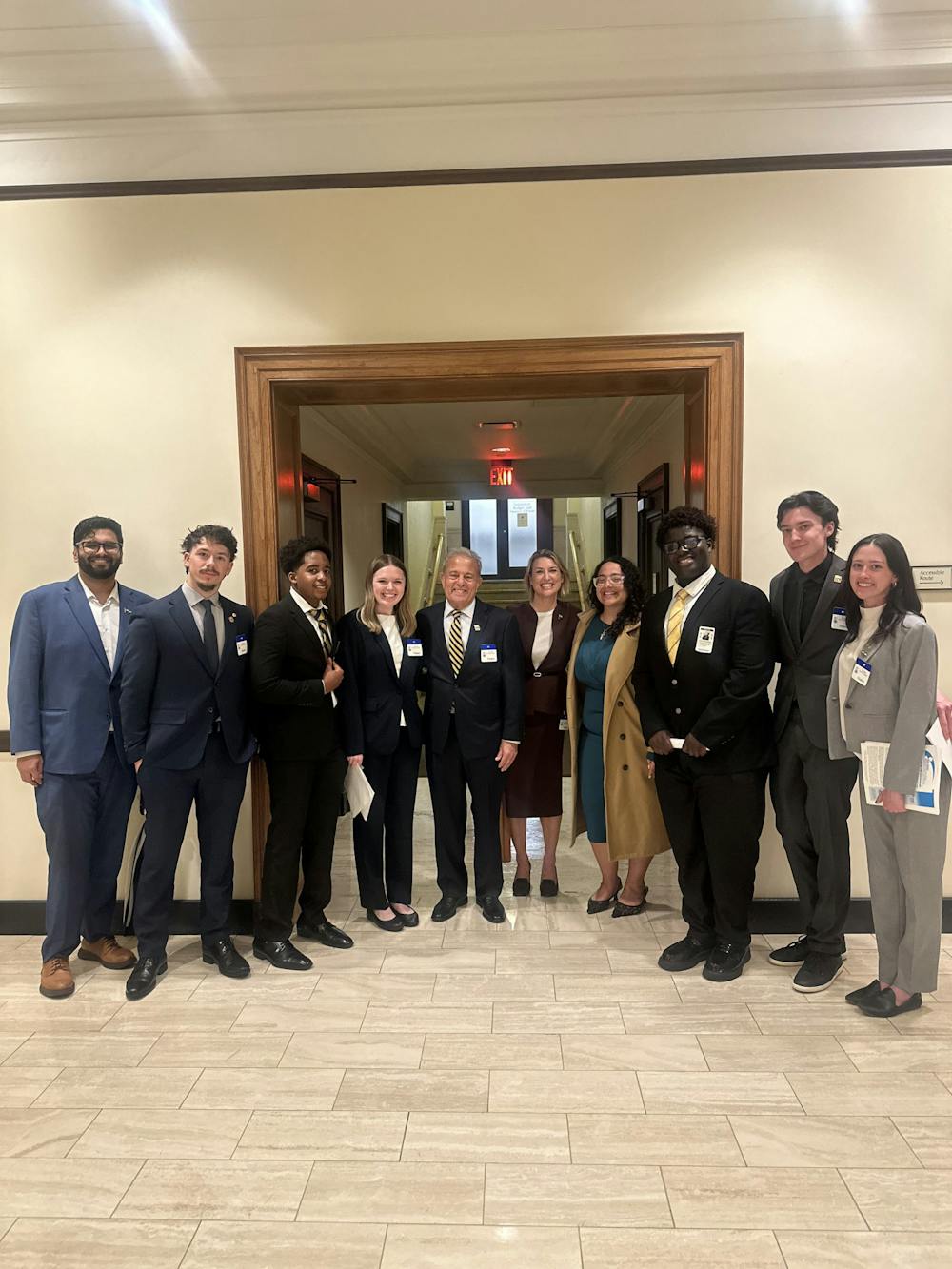
Kasziba-O'Rahilly, along with other student leaders from the College attended New Jersey Association of State Colleges and Universities Day at the State House in late March. The students met with legislators to advocate face-to-face on behalf of the College.
“They want to advocate for the student budget. They know higher education at the federal level right now is up in the air on how much funding schools can get based off what they’re teaching, based off who they’re bringing into their college and if they’re following guidelines that are changing left and right, so they’re trying to protect at the state level,” Kasziba-O'Rahilly said.
Student leaders, along with Osmond and Manimaran, have been and will continue to be going back to the State House in the coming weeks to continue their conversations with legislators at the Senate Higher Education Budget and Assembly Higher Education Budget Hearings.
“I will keep advocating a million times, because when you advocate there’s always a chance they'll say yes,” Kasziba-O'Rahilly said. “You have to keep pushing for it, otherwise nothing will change.”