

By Isabella McHugh
Nation & World Editor
Canada pushed back against U.S. tariffs with up to 50% tariffs on more than $20 billion of American goods, according to The Associated Press.
This list contains goods such as “steel, dairy products, appliances and farm equipment,” according to The Associated Press. The list also includes certain types of seafood, according to The New York Times.
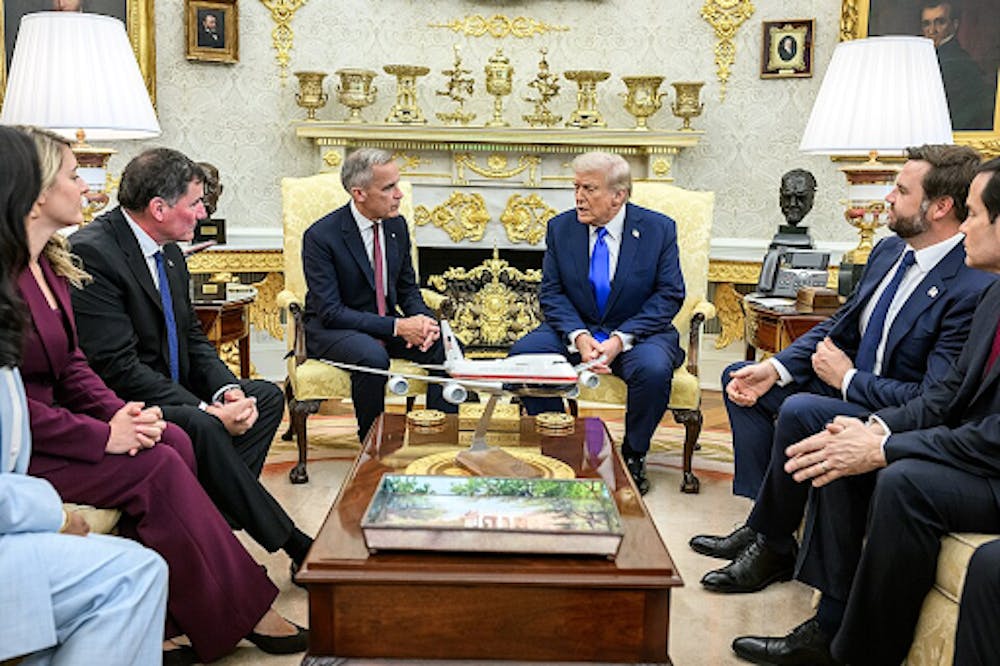
Relations between the two countries are growing more tense as the trade war escalates. CBS News reported Canadian trade officials’ recognition that raising the tariffs up to 50% on American goods is intended to place pressure on the Trump administration.
“We are picking products that will target states in the U.S.,” Melanie Joly, Canada's industry minister said Aug. 25, according to CBS News, adding, “We're being wise and strategic to put political pressure, and that's why we think it's the right thing to do right now.”
She also encouraged Canadians to purchase Canadian goods to help protect jobs in the country and establish a “movement of resistance,” according to The Associated Press.
Economists estimate that these tariffs may be a heavy blow to the Midwest and Northeast in particular, according to CBS News.
The tariffs are set to go into effect after Labor Day. Canada’s tariff rates will match the rates imposed by the Trump administration, according to The Hill.
“We did not choose this conflict, but when our economic integration is used as a weapon rather than the foundation for a win-win partnership, we need to stand up,” Finance Minister François-Philippe Champagne said in French, according to The Associated Press.
Canadian government data revealed that Canada is the top customer for exported goods in 27 US states, CBS News reported.
Mary Lovely, a U.S. trade expert and senior fellow at the Peterson Institute for International Economics, told CBS News that the retaliatory tariffs will affect states differently since they target hundreds of products across various industries that span across Republican and Democratic states.
However, a large portion of economists believe that Canada’s retaliatory tariffs will actually harm their companies. Many economists estimate that Canada’s economy is roughly 12% the size of the US economy, and therefore be less effective in the trade war, the New York Times reported.
White House spokesman Kush Desai said in a statement that “America's heartland states like Michigan and Indiana have been some of the worst hit by unfair foreign trade practices, including by Canada, and were resoundingly won by President Trump because of his pledge to put American workers, farmers and businesses first,” and further claimed that Canada had been “offered the best trade deal of any trading partner,” according to CBS News.
President Trump threatened to increase auto tariffs on Aug. 24, which would be a pitfall for Canadian car plants, The New York Times reported. He also threatened Canadian auto parts which are not subject to tariffs at the time being.
President Trump once again took to the offensive on Aug. 25, according to The Associated Press, saying the US was deeply considering renaming Lake Ontario “Lake America.”
The President signed an executive order invoking the name change, with claims that this action was “official,” and “effective immediately,” according to the BBC.
In regard to this, Canada’s Prime Minister Mark Carney wrote “We know that the U.S. is changing. Their trade relations, their foreign policy, their national monuments, their hydronyms,” adding, “Canadian women and men also know that things must be called by their name, and this lake is called Lake Ontario – today and forever.”




.jpg)