By Mary-Simone Collazo
Correspondent
Nepal and Tibet were hit with devastating flash floods on Aug. 26 at 8:37 a.m., causing significant destruction across the region and leaving thousands homeless, according to CNN.
As of Sept. 1, over 1,000 were found dead in Nepal and Tibet. More than 4,000 total people were reported missing in the two areas, with rescue efforts intensifying, according to AP News.
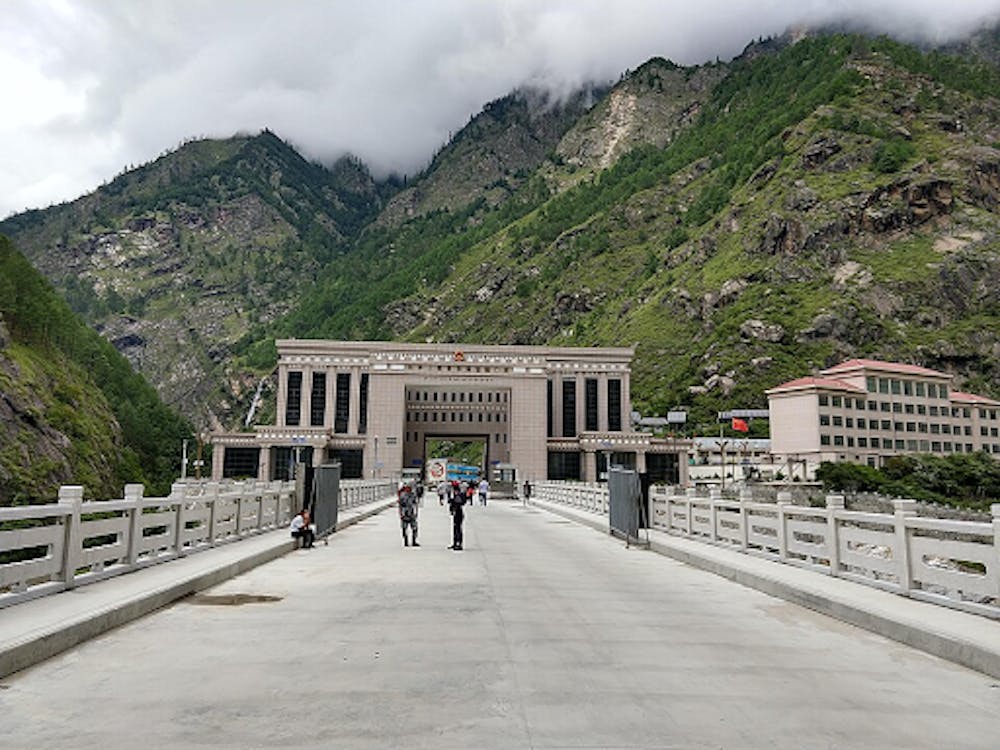
Nepal is a landlocked country between China and India. It shares an international boundary along the Himalayan mountain range with Tibet, an autonomously governed region of China, located on its northern border.
Several areas of ice in the Himalayas are melting because of global warming. A glacier collapse of massive proportions occurred at Langtang Lirung, a Himalayan peak on the Nepalese side, sending ice and debris tumbling. The piece of glacier was estimated to be over 2,000 feet wide, CNN reported.
“This incident has indicated that the risks we face in the Himalayan region are increasing with climate change. Therefore, this region must be alert, and at the same time, it is time for us to strongly raise the issue of disasters caused by climate change before the international community,” said Nepal Prime Minister Balendra Shah in a social media post Monday, according to the Associated Press.
The U.S. Geological Survey mistakenly reported a magnitude 4.1 earthquake due to the shaking from the debris.. It is believed that a landslide occurred at the same time. The mud, rock and ice combination fell into the Lhende Khola and Trishuli rivers, which flow from Tibet into Nepal.
The fast-moving stream of water caused avalanche debris to pick up other sediment, creating a monstrous flood wave moving at 120 mph, according to CNN. The dense, tar-like flood wave swept across various river valleys, swallowing villages, bridges and roads, while trapping Nepalese workers inside hydropower plant tunnels.
Officials are struggling to identify bodies mutilated beyond recognition, according to The Guardian.
In the district of Bharatpur, DNA samples were taken from every single body. Bodies were given location numbers, tied up with a plastic bag, and placed in a surface-level grave, so they may be identified by loved ones in the future, The Guardian reported.
Pictures of those recovered by relatives were placed on PowerPoint slide shows and uploaded to the Nepal police website. Photos of those who have not been recovered are being posted on the outside walls of the morgue of Nepal’s capital, Kathmandu, according to The Guardian.
“It felt like I was flying over an entirely different landscape. I can see the pain in their eyes. It’s heartbreaking,” said Bimal Sharma, a rescue helicopter pilot who frequents the area, according to the Associated Press.
Hydropower workers make up the majority of the missing. Nepal’s hydropower industry was flourishing, but now more than 900 workers are trapped inside the underground hydroelectric tunnels that the flood wave sealed, according to The New York Times.
At the Trishuli 3A Hydropower site in Nepal, a team of 90 people, composed of police and rescue dogs, are attempting to free the trapped worker. A 2-by-3-foot-hole was created in the tunnel as the rescue crew descended on ropes, but efforts to make contact with the workers inside proved futile, reported The New York Times.
The team has been working 24 hours a day to reach the workers, and “blasting operations” are next on the list of methods. Tourists from around the world who were swept up in the flood wave are also part of the missing persons count, including 90 Americans, according to BBC News.
Rescue efforts continue around the region, with the Nepalese army using helicopters to reach citizens. Humanitarian organizations across the globe are raising money to send aid to Nepal and Tibet, focusing on medicine, healthcare and daily supplies, according to the Associated Press.
Dan Hovey, vice president of emergency response at Direct Relief, which provides medicines and health care to disaster-struck areas, said, “Nepal is a very disaster-prone country,” he said. “On the disaster vulnerability indexes, it’s one of the highest – from earthquakes, floods, drought, wildfires.”