
By Jack Salaki
Opinions Editor
Modern Hollywood is often worried about losing its audience. It’s said that people have flocked to streaming and won’t come back, and that theaters are going to die out soon.
Hollywood’s solution?
It’s usually to offer up more of the same on a different colored platter: lazy sequels, remakes and half-baked concepts turned into feature films.
However, 2026 has proven that audiences will still show up and swarm to the theater in big numbers if studios take more than ten minutes to make a movie.
According to industry analysts, the box office this year is tracking to be the largest it's been since the pandemic days. Sure, tickets are more expensive than they used to be, but that doesn’t explain everything. And it isn’t just that people are going back to the movies because they’re bored. There is starting to be a reason to go back to theaters.
Earlier in the year, “Project Hail Mary,” an original movie adaptation of Andy Weir’s novel of the same name, became a monster success.
The movie grossed $684 million and showed that when presented with a novel concept, people would show up. And it was about space, which tends to help.
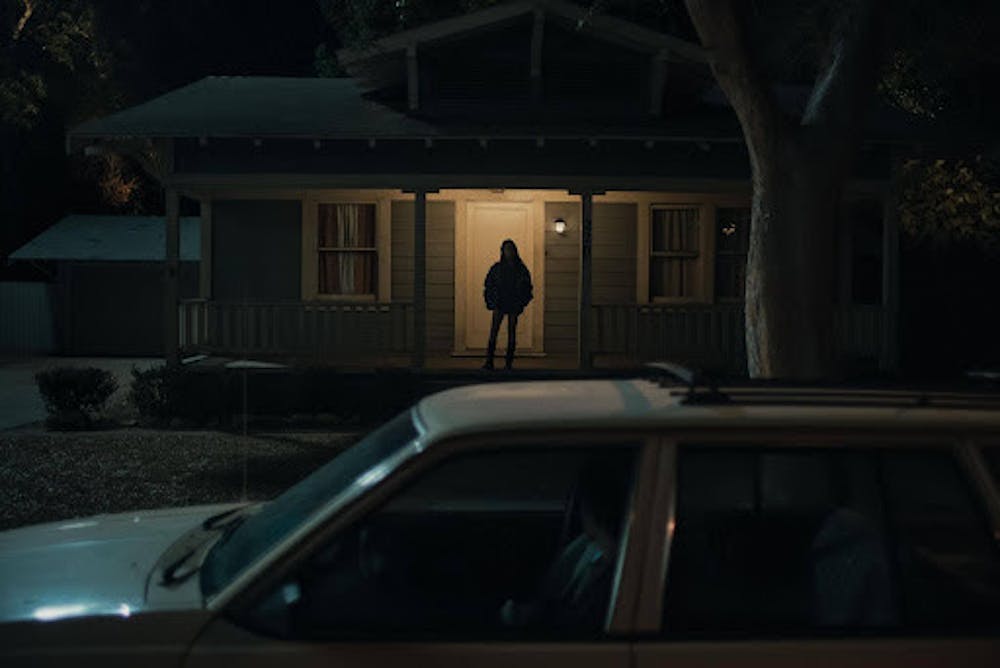
Then there was the dual horror explosion of “Backrooms” and “Obsession,” with both of these movies shattering box office expectations.
“Obsession,” specifically, was filmed on a shoestring budget of $750,000 and grossed 600 times that. It became a massive success, especially among Gen Z, and had an incredible word-of-mouth advantage that helped its numbers increase even after the opening and subsequent weekends, something that is extremely rare.
Both of these movies became pop culture phenomena virtually overnight. And they were both directed by members of Gen Z. Kane Parsons, director of “Backrooms” is twenty-one years old. His counterpart, Curry Barker, who made “Obsession” is 26.
Ironically, it was not Hollywood where they got their start, but YouTube. Parsons currently has over three million subscribers, primarily consisting of videos about the “Backrooms.” Barker, along with his close friend Cooper Tomlinson, run a successful sketch comedy page with over one million subscribers.
As filmmaking barriers break down, it’s become increasingly easy to create high level content online, even without the formal training. These two Gen Z directors are the clearest example of this idea.
Both filmmakers understand how young audiences discover things, how word of mouth spreads, and how to transform movies into something people feel drawn to see.
And at the same time, it’s not just new properties dominating the scene as even Hollywood’s glitziest blockbusters have demonstrated that audiences are still willing to show up.
Nolan’s “The Odyssey” became his first movie exclusively filmed on IMAX cameras, and because of that, it drove massive excitement and crushed box office numbers.
“Spider-Man: Brand New Day” is a sequel, but its dominance was more about the emotional story that it crafted, as it was loaded with pulpy comic book references, well-written characters, and an exploration of trauma and connection.
The problem isn’t franchises, but uninspired franchises. Modern movie studios can’t expect people to show up to every movie. It’s just not worth it in the age of streaming.
However, the solution isn’t to blame streaming. It’s just another natural evolution of technology, which makes entertainment more accessible to a larger audience.
The solution for Hollywood is simpler: creating communal events.
That doesn’t mean putting more money into something or researching to build a market friendly movie, but figuring out how to build a movie that people talk about and tell their friends about.
Some of these movies can be dumb, but also extremely successful.
Look no further than the Minecraft movie last year, which crushed box office expectations and became an overnight sensation.
The common denominator is that no matter if a movie is original, a sequel, or something in between-if it creates a sense of cultural urgency and gives people a reason to see it-that’s what will lead to its success.
I also acknowledge this isn’t possible for every movie. Some stories just cannot be made into fully fledged events. But in the age of streaming when studios can choose to offload many films to different streaming services, the stuff that makes the cut to the theater should have to go through the ringer to make it there.
A movie doesn’t have to be the scale of The Avengers for this to work.
It just needs to be large enough in scale and ambitious enough to do something different to make me want to see it in a theater.
After all, what is the point of going to a movie other than experiencing something incredible?