

By Jack Salaki
Opinions Editor
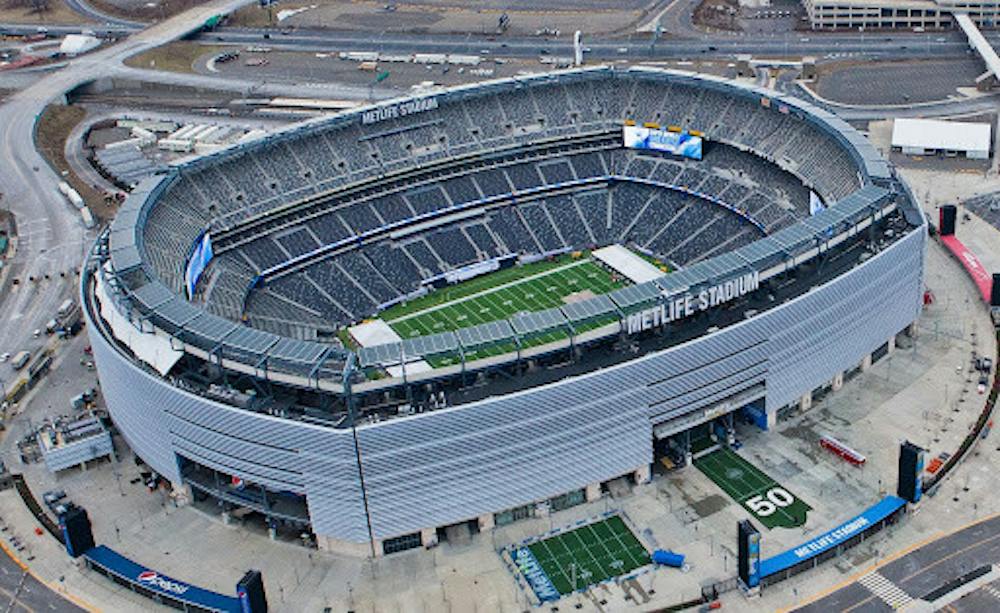
MetLife Stadium has been a source of fan complaints for many years. The stadium, which houses a variety of entertainment events throughout the year, most notably the World Cup recently, is the home of the New York Giants and the New York Jets, two of the biggest football teams in America. And it cost $1.6 billion to construct, when it was built over a decade and a half ago.
So you’d think that such an expensive stadium for such important events would be pretty good, right? Well, if you want to answer that question, then go no further than your average Jets or Giants fan.
In my case, I’ve been a fan of the Giants for a decade. I’ve been to many games at this stadium, and my opinion on it hasn’t changed since. Most recently, I attended the Giants-Titans game, in which the Giants narrowly won a tight game with a key defensive interception near the end of the game. The crowd was great, but I was once again reminded of the stadium’s many problems.
Culprit number one: the turf. MetLife has gained a gnarly reputation among players and fans for its turf field and the injuries that seem to come with it.
One of my first games at the stadium was the infamous October 2017 game between the Giants and Chargers. The Giants’ star receiver Odell Beckham Jr. fractured his ankle and that ended his season. Brandon Marshall, another receiver, suffered a similar fate with another ankle injury. Sterling Shepard, another Giants receiver, also sprained his ankle. Dwayne Harris, the Giants’ notorious kick returner, fractured his foot.
Coincidence?
The NFL Players Association, the NFL players’ union, gave MetLife an F- mark as a home game field.
There are some good aspects of the stadium. It is a marvel of crowd logistics. With a capacity of 82,500 seats, there is an incredible fan atmosphere during big game moments.
However, that atmosphere exists in spite of the stadium’s layout, not because of it.
MetLife is designed around luxury seating. It has some of the most luxurious seating in the NFL, with 10,000 club seats and four lounges with premium amenities at premium prices.
Premium seating is not inherently bad, but the large number of premium seats raises questions about how the average fan experience could be improved.
Then there’s the character of the stadium or, more accurately, the lack of character.
Lambeau Field, the home of the Green Bay Packers, or Arrowhead Stadium, the Chiefs’ stadium, have character. Because they host only one home team, unlike MetLife, those stadiums are infused with the identity of their teams.
Lambeau Field, which hasn’t surrendered to the corporatization of stadiums, is covered in green and yellow so you know immediately who is playing there. The same goes for Arrowhead, which is overwhelmingly red and has a unique architectural design. Both stadiums have real grass fields and target a fan-first experience.
On the other hand, MetLife is designed to be as neutral as possible. It is gray and explicitly designed to serve two NFL teams, so it can’t have too much character or passion attached to it. The building is not an expression of anything because it has to be an accommodation for everything whether it’s switching between two major football teams or getting ready for a concert.
The architecture of MetLife is designed around flexibility, neutrality and changeability. Imagine if you got rid of everything you liked in your house and had to change what was inside every week to accommodate guests. Well, it probably wouldn’t feel very warm, would it?
The same goes for this.
The location is also in the middle of nowhere, surrounded by industrial storage facilities and commercial development. It feels disconnected from the fan experience, which can be more impactful for a football game.
Getting into the stadium can also be a frustrating experience. The stadium is surrounded by major highways and once you are inside the stadium then everyone is funneling into a single gigantic parking complex.
Ultimately, the Giants and Jets both deserve a stadium that feels more like a home. Both teams have a rich history and incredibly loyal fan bases despite a $1.6 billion building that fails to function as a truly great home field.
MetLife can host almost anything. It can host two NFL teams, major concerts, international soccer and enormous crowds. What it struggles to host is a sense of identity. MetLife is a capable venue, but it struggles to feel like a true home for either football team.




.jpg)