
By Emma Alejandro
Staff Writer
Twenty-eight-year-old Darya Shipilova, a laboratory worker at a Russian research facility specializing in plague prevention, died at the start of October. She died after developing pneumonia of unknown etiology, according to Reuters.
Rumors of a second case raised alarms about a possible infectious disease exposure in Siberia, according to The BMJ and CBC News in “Front Burner.” However, Russian officials later dismissed the reports as false, according to PBS NewsHour.
As reported by The Associated Press, Russian authorities introduced precautionary public-health measures by placing approximately 200 people who may have come into contact with Shipilova in quarantine.
By Oct. 8, officials reported that health checks had been completed, nearly 5,000 samples had tested negative for dangerous pathogens and most people under observation had been released, according to Reuters.
One unconfirmed theory of the outbreak suggests that Shipilova may have dropped a test tube containing plague bacteria, potentially exposing her to the pathogen. However, this account remains unverified, and Russian authorities have rejected the reported explanation, according to CBC’s “Front Burner.”
Shipilova was employed at the Irkutsk Anti-Plague Research Institute of Siberia and the Far East, a public health facility that has operated since the 1930s. As mentioned by CBC’s “Front Burner,” the institute studies plague and other regional infectious diseases to develop diagnostic tools and medical countermeasures.
Shipilova’s death prompted international attention because of the facility’s work with dangerous pathogens and the possibility that she had contracted pneumonic plague, according to CNN.
However, Russian authorities have not confirmed plague as the cause of death. The country’s public health agency reported that tests had not detected microorganisms associated with the worker’s professional duties, according to CNN. The World Health Organization has sought additional information to establish what caused the illness and whether any public-health risk remains.
Gregory Koblentz, a biosecurity expert at George Mason University, questioned the limited information coming from Russian officials, saying, “the Russians really have not been forthcoming about this.” According to Koblentz, lack of transparency matters because without a clear account of the illness, laboratory procedures and test results, outside experts have limited information with which to assess the risk.
The country’s political environment adds another layer to the uncertainty. From CBC’s “Front Burner,” Koblentz discussed Russia’s authoritarian system and the heavy-handed nature of its response, and how the Russian government's control can affect public understanding of a public-health incident.
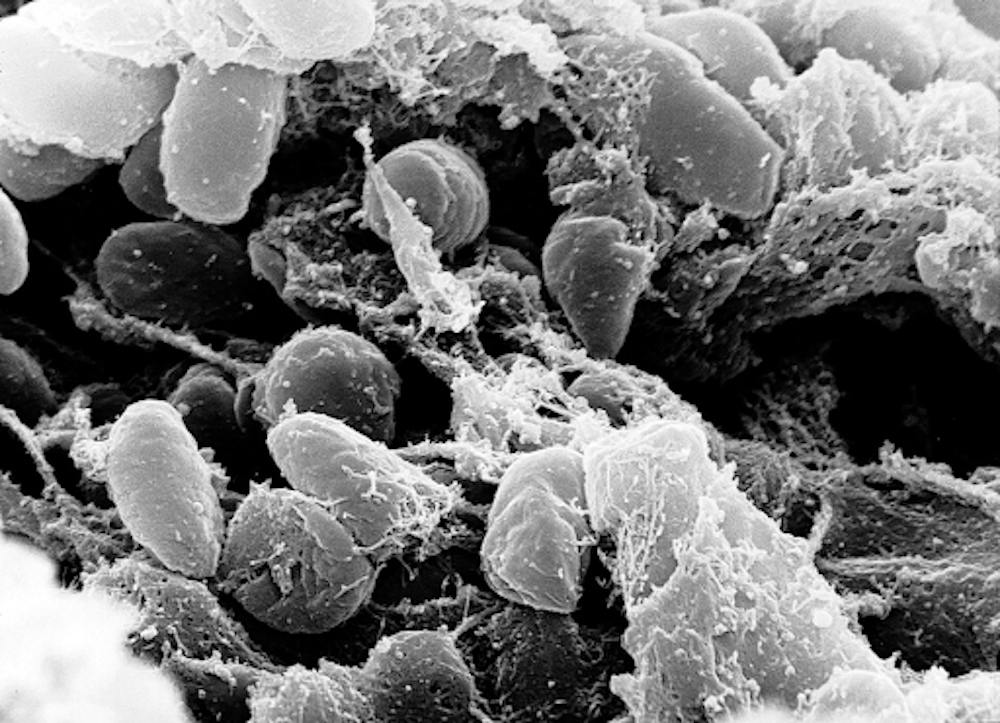
Pneumonic plague is the form of plague that attacks the lungs, caused by Yersinia pestis, the bacterium behind the disease. The Centers for Disease Control and Prevention explains that infection can develop when the bacteria reach the respiratory system, triggering a severe case of pneumonia. While bubonic plague primarily affects the lymph nodes, the pneumonic form can also pass from person to person through respiratory droplets during close contact.
The situation has prompted comparisons with the early days of the COVID-19 pandemic.
However, pneumonic plague presents a different set of circumstances. Unlike COVID-19 when it first emerged, plague is a well-studied bacterial disease, and antibiotics can be effective when treatment begins promptly, according to CNN’s medical explainer.
Experts from the University of California, Riverside explain that pneumonic plague generally requires close respiratory contact for person-to-person transmission.
Koblentz told Front Burner that people in North America should be “much more worried about measles in your neighborhood or your schools” than about the suspected case in Siberia.
The incident has also drawn attention from U.S. officials. According to The Washington Post, U.S. authorities sought more information from Russia about the worker’s death and the precautionary measures that followed.
The uncertainty surrounding the case has raised questions about laboratory safety and the transparency of public-health investigations on a global scale. According to The Associated Press, Trump claimed he had a call scheduled with Russian President Vladimir Putin and intended to discuss the suspected infection.
As of Oct. 10, the WHO reported that the cause of the worker’s pneumonia remained undetermined, and that available evidence did not indicate ongoing transmission linked to the case, according to Reuters. Russian authorities also reported negative test results among the worker’s contacts.