By Mahnoosh Arsalan
Staff Writer
Films speak to every individual differently, reinforcing the transcendence of film throughout time. Richard Linklater proves his particular sentiment to film in his latest creation “Nouvelle Vague,” detailing the unique filming experience of the 1960 French film “Breathless” directed by legend Jean-Luc Godard.
Linklater has proven time and again just how much he loves film. From “Before Sunrise” to “Boyhood,” Linklater has mastered the art of storytelling. “Nouvelle Vague” is a succinct, poised expedition that honestly feels like a love letter to cinema, seeming to be a film Linklater has been wanting to make his whole life.
The entire film felt joyous and exciting, while also making you realize the difficulties of revolutionizing, ultimately immersing you into the process of filmmaking. It was extremely obvious that Linklater was having a fantastic time creating “Nouvelle Vague,” further enhancing the sense of delight and playfulness the film brought out.
One thing about this film that astonished me was its attention to detail. In Linklater’s perspective, every single detail about the film was intentional and held a deep purpose, just like how each moment and imperfection in Godard’s “Breathless” did as well. Linklater highlights Godard’s especially eccentric production style, emphasizing the specificities and peculiarities in the 1960 classic, regarding Godard as one of the most influential filmmakers to have ever lived. Additionally, the stylized nature of the film transports you into France in the 1950’s, you feel like you’re witnessing history.
A key component to fully understand and appreciate the art that is “Nouvelle Vague” is to watch Godard’s “Breathless” first. “Breathless” follows the story of a French runaway convict falling in love with an American girl, who soon discovers his ways.
The film holds an immense cinematic power as one of the most influential films ever released. Its release brought on a long, historic trend in film known as French New Wave.
French new wave breaks away from traditional filmmaking and storytelling, directors like Godard and François Truffaut pioneering the movement. Godard specifically stood out due to his messy, choppy, irregular pace and presentation, a technique that had never been truly highlighted in cinema before.
Because this film is a retelling of the true making of an iconic film, as an audience member, you’re able to learn a lot about filmmaking. Being behind the scenes of some of the most iconic scenes in cinematic history gives viewers a sense of authority and control behind a story, which acts as an exigence for one to begin their own creative journeys. The way “Breathless” has made millions of people fall in love with film, “Nouvelle Vague” makes you appreciate that love and deepen it.
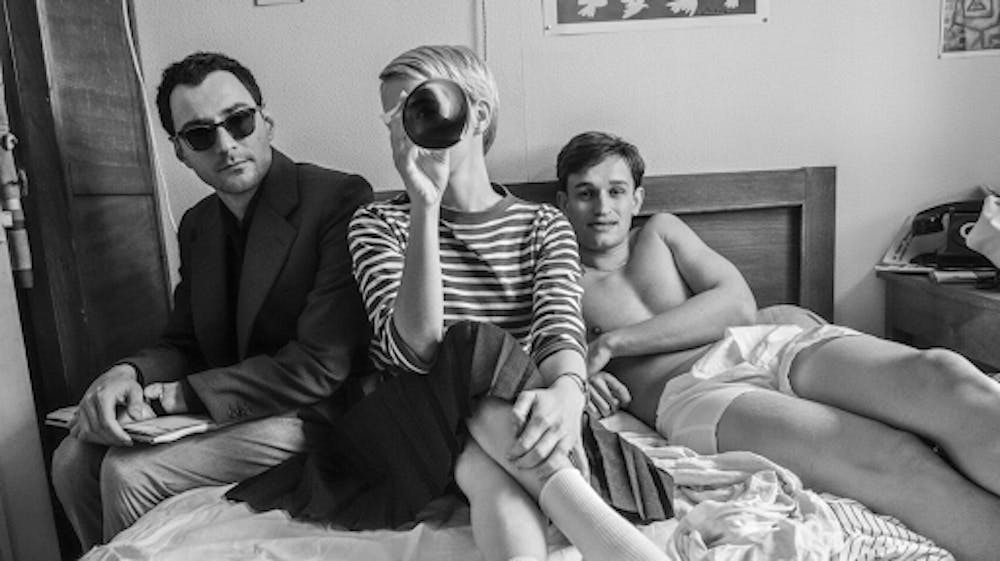
There were two extremely impressive components of Linklater’s film. First is the phenomenal cast. Guillaume Marbeck, Zoey Deutch and Aubry Dullin were the heart and soul of the film. Their particular trio-dynamic blurred the line between friendship and professionalism, highlighting the complexities of the filmmaking process. One of my favorite aspects of the character portrayal was Marbeck’s suave, eccentric portrayal of Godard, never taking his sunglasses off once. I felt as though I was really watching Godard at work through Marbeck’s excellent performance.
Secondly, the film itself was downright impressive. Due to “Nouvelle Vague” being a depiction of the “Breathless” creative journey, Linklater made sure to stay true to the 50s. Through subtle camera movements, random shots in the film that you think make no sense, Linklater wanted this film to feel like it’s from the 50s. The film's authenticity is impeccable, and undoubtedly unmatched.
Linklater’s “Nouvelle Vague” is a warm hug and an ultimate ode to film. The film expands on the struggle yet perseverance to continue creating film despite all odds. “Nouvelle Vague” is for the lovers and creators of art.