By Isabella Darcy, Eddie Young & Alena Bitonti
Editor-in-Chief & Managing Editors
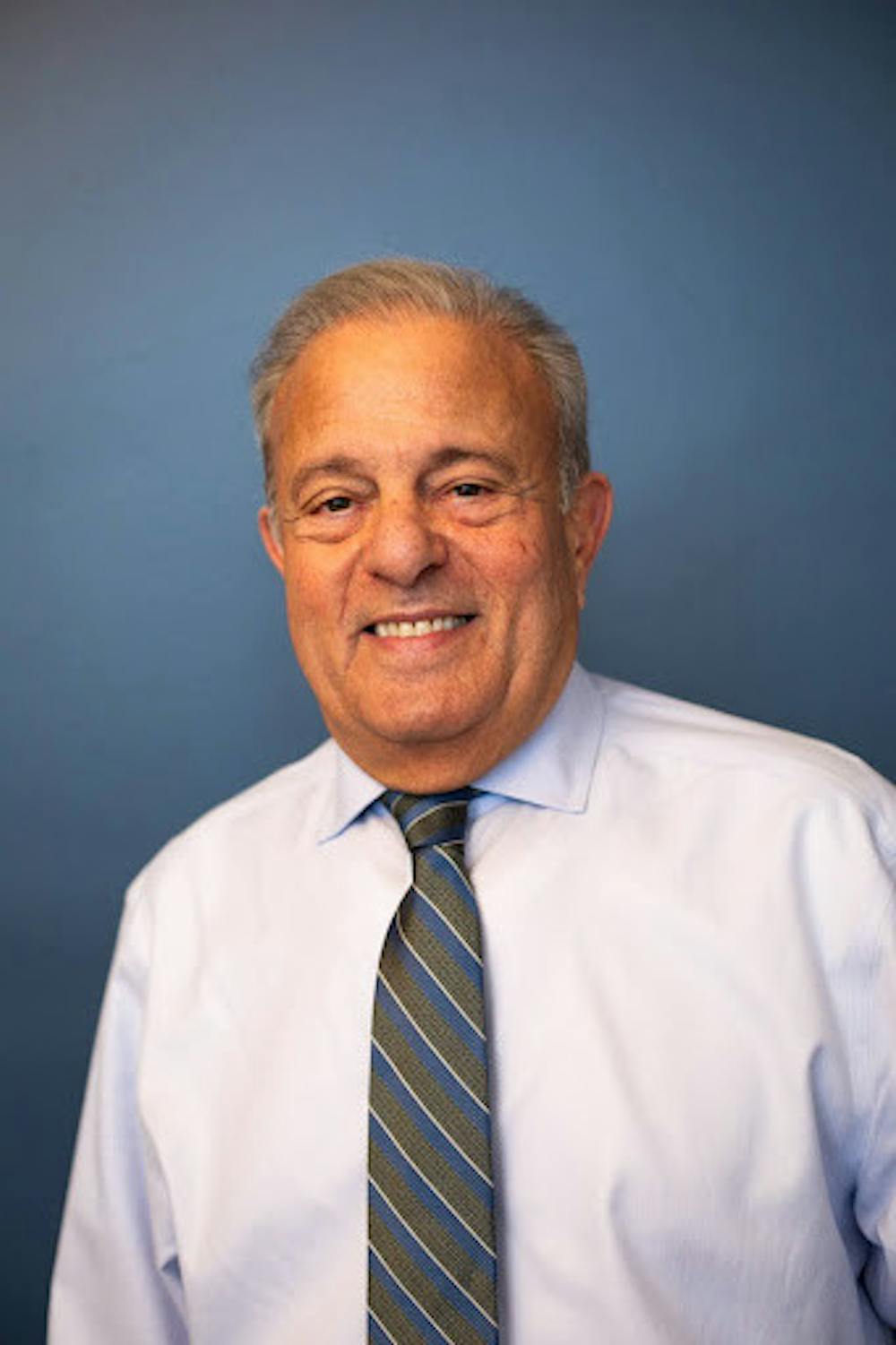
The College’s President Michael Bernstein sat down for an interview with The Signal on Feb. 18 to discuss recent nationwide Immigration and Customs Enforcement activity, updates to campus and finances.
With a background in economics, he has focused on reducing the College’s debt while maintaining its status. Bernstein joined the College in July 2023 as interim president and was named president the following summer, making this semester his sixth in the role.
“I think the semester’s off to a great start,” Bernstein said. “Minus the cold and living in the tundra,” he added with a laugh.
Here’s what the president had to say:
Independent rating company says the College’s financial status has improved
The College sat on just over $360 million in debt in June 2023, just before Bernstein started his interim term. The debt was reduced to $353 million by December 2025, according to the College’s Chief Financial Officer Qadim Ghani.
The independent financial rating company S&P Global Ratings revised the College’s bond rating outlook to stable from negative on enrollment and operating performance in January. The stable outlook indicates that the company sees the College continuing to manage and grow its finances in a responsible manner, according to a S&P Global Ratings report.
The company also maintained the College’s “A” investment grade, meaning it has a strong ability to meet financial commitments, but is somewhat susceptible to economic conditions and changes in circumstances. The highest attainable investment grades are “AA” and “AAA.”
“I think this is a real vote of confidence, not only in us, but what we’ve accomplished in the past two and a half years with the budget and operations,” Bernstein said. “With a stronger rating, our interest rates are lower, so it has an actual practical impact on us in addition to the reputational impact.”
A nationwide uptick in ICE activity
Since President Donald Trump returned to office for his second term in January 2025, ICE activity across the United States has risen.
The number of people held in ICE detention on any given day increased by over 75% by January 2026. There have also been dramatic increases in the number of ICE facilities used for immigration detention and the number of people with no criminal record being held in ICE detention, according to the American Immigration Council, a non-profit, non-partisan organization that advocates for immigrants.
There has been no ICE activity on campus thus far, and the president says he does not anticipate any activity.
Bernstein in an email to the in the campus community earlier this month advised that anyone approached by federal agents should cooperate and direct them to Campus Police or the Office of the General Counsel.
“Don’t get into a conflict with that,” Bernstein told The Signal. “You could be subject to arrest.”
In the instance of an arrest, the College would “be mobilizing to support our community member,” Bernstein said. “But if you’re placed under arrest, you’re placed under arrest. We can’t make that go away just by showing up.”
Support would include making sure the person arrested has advice, counsel and support. Additionally, their family would receive notification of the arrest.
“We will follow the rules of the state, but also as a state agency we don’t have the authority to just defy federal authorities,” Bernstein said.
Forcina and Trenton Hall renovations
As construction on Forcina Hall nears completion, the Department of Nursing has settled into its new space, making way for another round of renovations in Trenton Hall.
The project will include offices, rooms for meeting with prospective applicants, improved staging areas for tours and a new alumni lounge for the Alumni Association.
“As they say, it’s [Trenton Hall] the front door of campus,” Bernstein said. “You see it right now in the lobby of the building, but we want to expand that.”
Bernstein said that the plans include larger reception areas that would be used not only by Admissions, but also for events, activities and even instructional space.
While there is no official timeline for the project, Bernstein expects it to take close to one year to complete, with construction beginning later in the semester to avoid disrupting classes and other operations in the building. There may be some initial demolition work, but the project will carry on through the next academic year.
Applications and admissions updates
Undergraduate admissions currently has received 14,400 applications for the upcoming fall semester, which is a record for the College. “We’ve got many offers out, it’s all about the yield in April,” Bernstein said. “We’re very optimistic and very excited about that.”
Bernstein said the College will be staying close to its typical target number of undergraduate admissions for the fall, which is around 1,500.
“We have to make sure that we have the right number of faculty and staff to educate you, the right dorms, the right facilities,” Bernstein said. “You can’t just expand the number of students overnight.”
This past year, its target was around 200 for transfer student admissions, which was exceeded with around 250.
The College also exceeded its target number of pathway students this past year, which was around 280 to 300, according to Bernstein. Through the Pathway Program, students are provisionally admitted on a non-matriculated basis for the fall. Upon successful completion semester, these students will fully matriculate into their major in the spring.
Bernstein said that the College’s School of Graduate, Global, and Online Education enrollment numbers are continuing to grow, which he expects to continue with the increased interest in online education and Master’s programs.
Cell phones banned in NJ K-12 classrooms, to stay at the College
Bernstein was supportive of former Gov. Phil Murphy’s cell phone ban for K-12 students in New Jersey, but assured that there was no need for a ban like that to come to the College.
“There is a difference between people who are 8- to-18-years-old and people 18 and above,” he said.
However, he did not want to infringe upon professors who feel the need to take phones out of the classroom.
“It’s incumbent on the faculty and administration to set standards on devices and their use,” he said. “I think it’s totally reasonable for a faculty member in a class to say ‘close your computers, I don’t want you to use your computers for the next hour or so.’”
Artificial intelligence at the College
Bernstein was excited about the College’s newest attempts to integrate the use of artificial intelligence into the classroom. With the College recently signing up for a Google Gemini subscription for students and faculty to make use of, Bernstein wants to see every major have some knowledge of how to use AI without problems in academic integrity increasing.
“One alum, he said, ‘I understand there is concern about academic integrity and AI, but frankly, we’re looking for new employees,” Bernstein said. “If they don’t have some facility with AI, we don’t interview them. We don’t have the time for that in our field.’”
On the academic integrity front, Bernstein acknowledged that there would be hoops to jump through, but compared this to the worry any new technology, like calculators, entering the classroom has caused over the years.
“I think the faculty are actively engaged with it,” Bernstein said. “The Center for Excellence in Teaching and Learning has a series of workshops for faculty. They are packing these workshops to talk about what is best in their fields. I’m excited about it.”