By Isabella Darcy
Editor-in-Chief
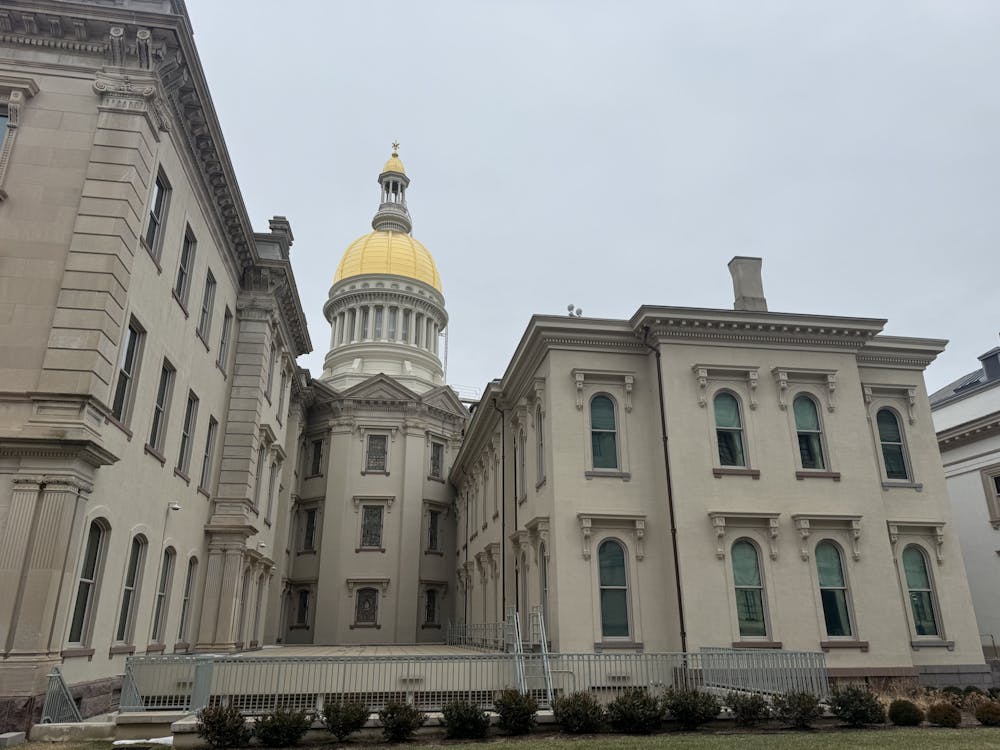
From the State House is a series that spotlights proceedings in the New Jersey Legislature. The Signal reports on hearings and legislative activity directly from the State House in Trenton.
New Jersey law enforcement agencies would not be allowed to share certain data collected by license plate readers with other states under a bill sponsored by Sen. Linda Greenstein, a Democrat from Plainsboro. The restriction would apply to investigations involving reproductive health care services that are legal in New Jersey.
The Senate Law and Public Safety Committee held a 20 minute hearing on Bill S1290 on Feb. 19 before unanimously voting to release it.
New Jersey law enforcement agencies gather information on vehicles using devices that scan license plates. When a person travels to New Jersey from another state to seek reproductive health care, their attendance in the state could be confirmed by these devices.
Abortion and other reproductive health care services are legal in New Jersey, but not nationwide, forcing some patients to cross state borders for care.
Kaitlyn Wojtowicz, public affairs executive director at Planned Parenthood Action Fund of New Jersey, testified in favor of the bill, telling the committee that the state’s 19 Planned Parenthood health centers see roughly 100 patients each month who are from out of state.
“The hundreds of people traveling to New Jersey every month to receive abortion care should not have to worry about whether their license information will be tracked in New Jersey and used to criminalize them in their home state,” Wojtowicz ‘10 said.
Pro-life opponents of the bill told the committee that they view it as a politically motivated measure that would hinder sex trafficking investigations and set the precedent that the state can choose which out-of-state law enforcement investigations it cooperates with.
Sen. Owen Henry, a self-proclaimed pro-life Republican from Old Bridge, pushed back against the idea that the bill would impede sex trafficking investigations. Henry said he didn’t see how opponents could make the “jump” to believe anything other than investigations into reproductive health care would be protected, considering that the bill is “pretty specific.”
Skeptical that other states may be “figuring out how to surveil people in New Jersey,” Sen. Declan O'Scanlon, a Republican from Holmdel who also identifies as pro-life, expressed support for the bill because of its “anti-Big Brother” nature.
An identical version of the bill was passed by the Assembly in December and introduced in the Senate. Not heard in committee before the end of the last legislative session, the bill died but was pre-filed to be reevaluated during the 2026-27 session. The Senate and Assembly must approve the bill before it goes to Gov. Mikie Sherrill, who can sign it into law.