By Isabella Darcy
Editor-in-Chief
The New Jersey Office of the Secretary of Higher Education in January awarded the College $20 million in grants to fund campus repairs, infrastructure upgrades and an energy savings project.
Led by Vice President of Operations Sharon Blanton, a team of representatives from the College applied for the grants last summer. The College was one of 23 institutions statewide selected to receive funding for development projects from the OSHE, a state agency that administers funding to higher education institutions.
“It’s a lot of money and it will go really far to take care of our most critical needs,” Blanton said.
Work on grant-funded initiatives has already begun. Those considered most urgent — especially those that would improve campus safety — are being prioritized, according to Blanton.
Modernizing aging campus infrastructure
For years, limited funding has forced the College to delay non-urgent repairs and upgrades to campus infrastructure. The grants allow for deferred maintenance to be addressed in a more timely manner.
“It’s hard to think of buildings that won’t be touched by these projects,” Blanton said.
One of the College’s focuses is fire safety. A three-year fire alarm system upgrade, already underway, will be completed in one year. Fire doors, dampers and shutters will also be upgraded, according to Blanton.
“We are modernizing … to enhance our ability to be as safe as possible,” Blanton said.
Grant funding will also support Campus Police’s transition to New Jersey’s new digital 911 system, which uses geolocation technology to locate callers and more accurately direct calls to the closest call center.
“If a caller cannot give an accurate location, the GPS will allow first responders to reach the caller,” said Timothy Grant, the Chief of Campus Police. “Ensuring the 911 calls are sent to the right [911 call center] will increase response time.”
Additionally, funding will be used to add ID card swipe access to buildings that do not have it, like some Townhouses. Roof repairs, elevator replacements, Americans with Disabilities Act compliance upgrades and some building-specific improvements will also be supported.
Improving campus energy efficiency and sustainability
The College generates a portion of its electricity from solar panels and the Central Utilities Plant. It does not make enough to power the whole campus, so it buys from an electric company to meet its needs.
“We are always trying to figure out how to reduce the amount of electricity we purchase,” Blanton said. “Electricity has become outrageously expensive, so [you do] anything you can do to reduce those costs.”
Grant funding will allow the College to upgrade existing electricity production systems and invest in new ones. The Central Utilities Plant uses cogeneration, a process that produces electricity and harnesses the steam generated during production to provide heating, hot water and cooling to almost all campus buildings.
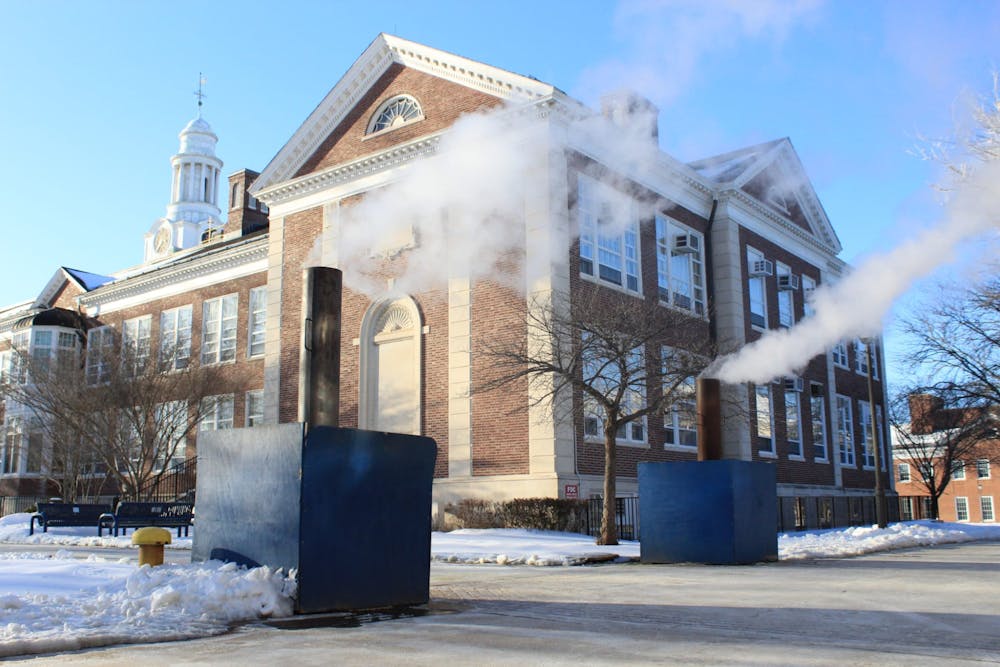
Steam is infamous on campus because of the geyser-like eruptions found outside of Green Hall. Repairing the cause is at “the top of our list,” Blanton said.
Additional priorities include replacing a control system in the Central Utilities Plant, modernizing plant equipment and renovating Kendall Hall to reduce heat loss.
It is unknown when all the granted-funded initiatives will be complete, and there will always be more maintenance to address. Having funding to pursue infrastructure improvements is “absolutely critical,” according to Blanton.
“It would be better if we had state funding that we could just rely on,” Blanton said. “Instead of us always wondering ‘hmm I wonder whether there might be another program available to us.’”