By Isabella McHugh
Staff Writer
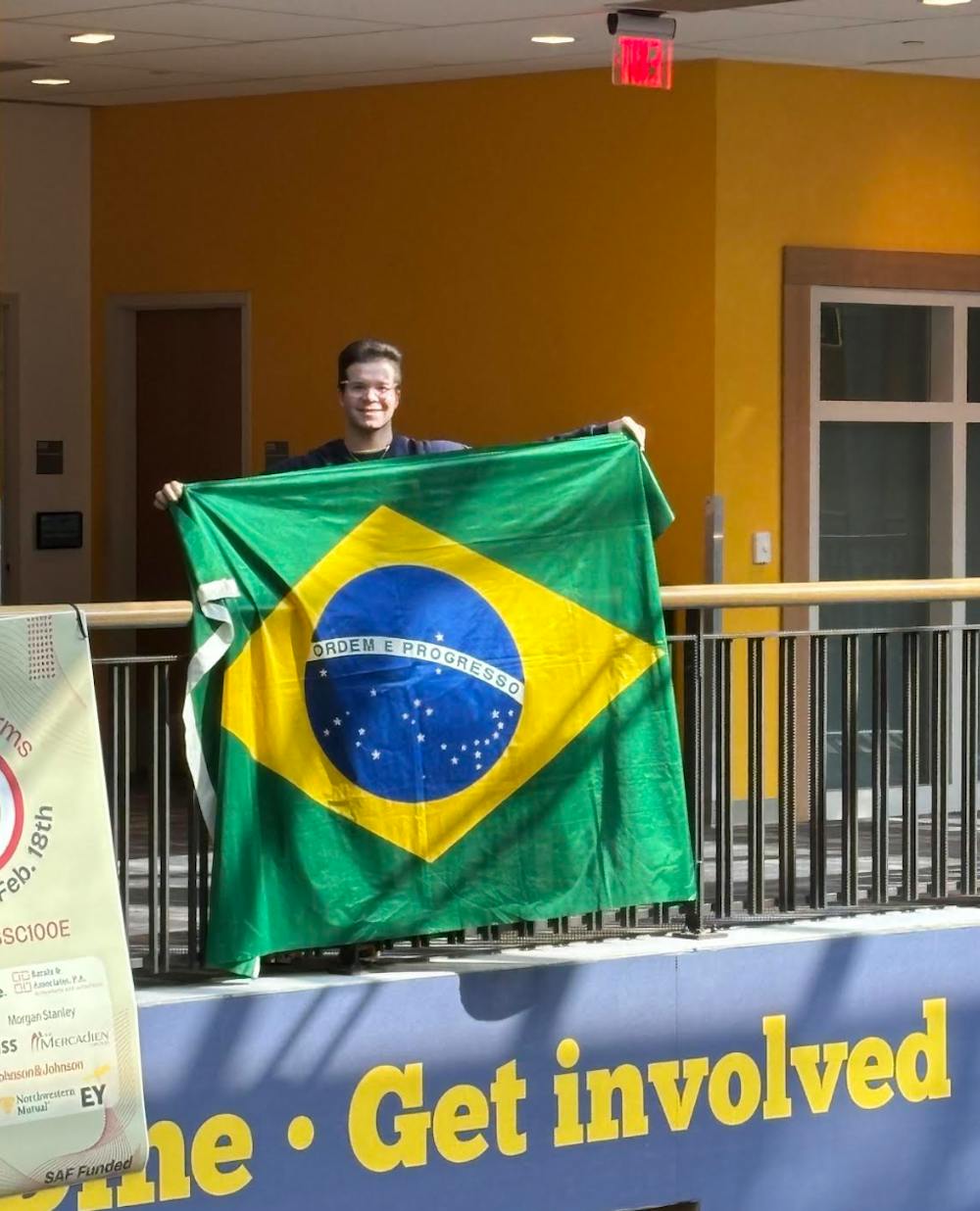
Inspired by his own Brazilian heritage, freshman accounting major Enzo Manfredi aims to deepen the College’s cultural color through BRASA, the Brazilian Student Association, a club created to foster community among students of Brazilian heritage and non-Brazilians interested in its rich customs and traditions.
The College is home to a diverse selection of organizations, many highlighting different cultures on campus, Manfredi told The Signal. He is an active member of Unión Latina, a large cultural organization dedicated to preserving Latin culture in college.
Manfredi has attended events to learn more about his own culture, as well as Hispanic culture. He noticed the club was not specifically geared toward Brazilian culture, which prompted his desire to establish BRASA at the College.
“We're still in the planning phase of everything,” Manfredi said, “but, the Brazilian student association is basically a club for people who are maybe of Brazilian descent or have any kind of background, who kind of want to find their community on campus and just connect with other people.”
Freshman elementary education major Claudia Da Mata manages the recently created Instagram account for BRASA and has been working toward establishing the club alongside Manfredi. Da Mata is half Brazilian and takes pride in that, something she hopes to reflect through BRASA’s efforts. She said Manfredi was the first Brazilian person she met at the College.
Da Mata described Manfredi as very passionate about his Brazilian culture, saying that passion drives him to remain resilient even when facing the challenges of starting a club.
Manfredi encourages students of other backgrounds to join and learn about the diversity of the Brazilian experience. He said that the media often portrays the most popular dances and events like Carnival, but there are many other holidays where people in Brazil gather together to dance.
He discussed one example being Festa Junina, which takes place throughout June and around that time people see many children dancing together.
Manfredi also explained how the media really only highlights funk music, but that isn’t a truly accurate representation of Brazilian music as a whole. Through BRASA, he hopes to offer a new lens on how people view Brazilian customs.
His warm welcome encouraged freshman undeclared business major Dean Rousos, whose background is rooted in Argentine and Greek heritage, to join.
Rousos energetically expressed interest in learning about Brazilian customs. When Manfredi was promoting BRASA on social media, he specifically highlighted that “the club’s open to anyone who has any interest in Brazilian culture and not just for people of Brazilian heritage.”
Rousos added that he wanted to join since Brazilian culture plays a significant role in the United States, pointing to popular art forms such as samba and bossa nova, as well as foods like pão de queijo, or cheese bread.
Rousos said that he “really related to his passion for his culture, and [he felt] a similar way.” He also characterized Manfredi as being very “driven and dedicated” to achieve his goal.
Manfredi credits his cultural exposure for the pride and joy he feels in his identity. His eyes lit up as he discussed his upbringing in a Brazilian-American household, with his mother having immigrated from Brazil more than 20 years ago.
Through her stories, Manfredi learned “how much the culture means to her.” He was born in Long Branch, which he said has a large population of Hispanic, Brazilian and Jewish residents. He has also visited Brazil multiple times throughout his life.
Manfredi believes there is a larger Brazilian population that many don’t realize, and by establishing BRASA, it could become a community where students of that heritage feel seen. However, to realize this dream, there are obstacles to overcome.
So far, the greatest challenge in the process has been “finding ways to get the word out there about the club,” Manfredi said. He has been reaching out to students via GroupMe and Instagram. At this stage, he has mostly been trying to “advertise and build up rapport and get people familiarized with it.”
Manfredi said that 30 students follow the Instagram account, but this number has almost doubled since then.
Da Mata encourages students who know about BRASA to fill out the forms sent via GroupMe and to continue staying up to date with the latest announcements.
Rousos expressed his excitement about supporting an organization being built from the ground up. “Learning about different experiences and traditions is important,” he said, adding that he appreciates how open Manfredi has been in making the club an inclusive, safe space for everyone.
BRASA is a global nonprofit organization, Manfredi said. “The Brazilian student association is basically a club for people who are maybe of Brazilian descent or have any kind of background who kind of want to find their community on campus and just connect with other people.”
The organization currently includes more than 600 members from the U.S., Brazil, Europe and Latin American countries, according to the American Political Science Association.
“I want to showcase that representation for people who — maybe they don't feel represented,” Manfredi stated. “I really think that if we continue working towards it and pace ourselves, we can definitely achieve our goals and create this club. Because it would definitely be a dream. It's definitely a dream for me.”