By Tasnim Oyshi
Staff Writer
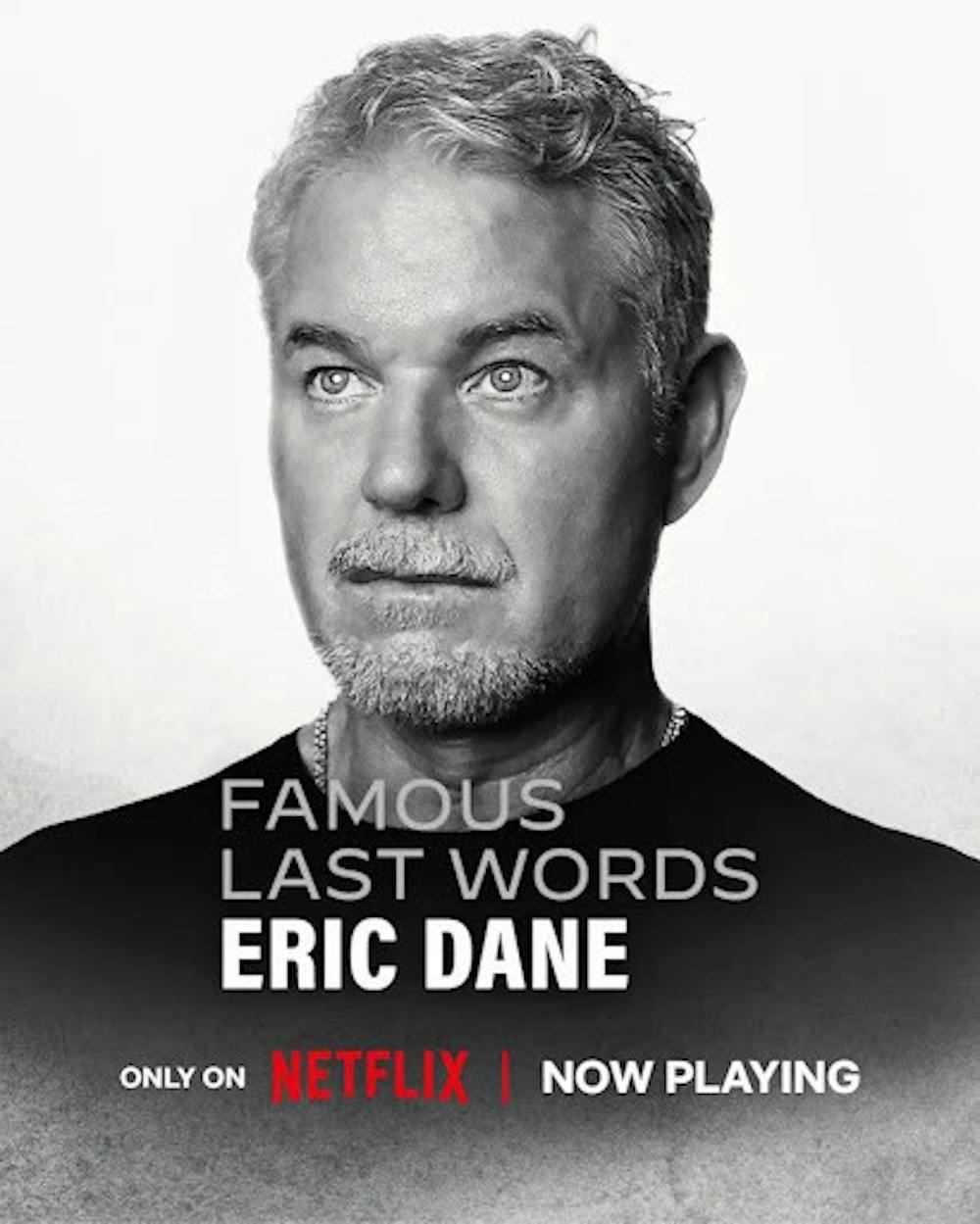
Netflix released Eric Dane’s last interview as a part of the series, “Famous Last Words” on Feb. 20. Hosted by Brad Falchuk, the series gives celebrities one final opportunity to share their final messages with the world. Dane’s interview is the second addition to the show, with Jane Goodall’s interview having come out on Oct. 3, 2025.
The 50-minute episode started with emotional, instrumental music playing while the following words faded in on top of a black screen in three lines: “When someone important dies, all you long for is a just a little more time with them”
The screen then faded to a set with two chairs sitting on a raised circular platform facing each other, as Falchuk urged the audience to imagine the chance to hear from a “cultural icon” after their death. “A chance for them to shape their own legacy,” he said. “To be heard one last time in their own words.”
What followed is a narration, not unlike a tribute, of Dane’s life and the iconic roles he played over the years as Mark Sloan on “Grey’s Anatomy” and Cal Jacobs on “Euphoria.” The camera then switched to Dane being wheeled on a ramp to the platform by Falchuk, starting the interview.
Dane and Falchuk were the only two people on set with the camera operators in a separate room, unable to hear their conversation. Falchuk made a joke about the two being stuck with each other before asking if Dane still had a humor about everything, to which he replied, “very much so.”
He explained how amyotrophic lateral sclerosis, the illness that he was battling and advocating for, and its mechanics interested him, going on to describe his attitude about his situation. “I’m a complainer,” he said, the words a little slow and strained. “I’ve always historically been, like, the guy that would b---- and moan on his way to do anything but my spirit has been surprisingly pretty buoyant throughout this journey.”
Falchuk mentioned how their intention for this interview was more specific than just allowing viewers to learn about the interviewee. Through this interview, Dane wanted his two teenage daughters, Billie and Georgia Dane, to know him through a lens they wouldn’t have the ability to.
Falchuck proceeded to read out Dane’s bio to him, mentioning his father’s death, his wife from whom he separated, his children and his famous roles. When Falchuk concluded reading, Dane revealed how hearing about his father is difficult. “Stuff about my father is always hard to hear, you know, because that was such a wasted life,” he said. “He was so talented.”
William Dane Melvin, who Dane’s first daughter is named after, died when Dane was 7-years-old. Having been intoxicated at the time of his death, there had been debate about whether it was suicide or an accident, stated Falchuk, asking what Dane thought it was. He thought about how his father must have thought he was not enough.
“I don’t think someone who’s that intoxicated would play with a gun in a bathroom by themselves for fun,” he replied, getting emotional. “So I think my father in that moment meant to do it. I just…I kept thinking about how lonely my father must have been and how scared he must have been.”
Dane confessed how he can relate to that feeling of loneliness, comparing himself to his character in “Euphoria” and how he has also led a double life with his struggles with drug and alcohol addiction. He had often felt “detached” from those around him and found it hard to connect with others.
The two also discussed how Dane’s grandmother, who he’d been living with at the time, died four months after his dad. Dane reminisced how she used to compare him to Dennis the Menace and played the same song every day. He sang a little of “Quando Quando Quando” by Engelbert Humperdinck, sharing a laugh with Falchuck.
They went on to talk about Dane’s relationship with his mother and he talked about how she has a “black belt in denial,” which was the reason she was still hoping for a “miracle cure” for ALS and didn’t want to admit the trauma his father’s death would leave on him. He then elaborated on his own role as a parent. “I’m a good dad,” he said.
He reminisced on a trip he took with his family, driving in the countryside of France. Dane thought his children would describe him as reactive, loving, endearing, compassionate, empathetic, trustworthy and resilient when he passed. He explained that although he wasn’t there for everything, he was there when it mattered, during Billie’s ballet recitals and Georgia’s beach volleyball games.
The topic of resiliency becomes a significant part of their conversation, and Falchuk asks Dane the difference between resilience and perseverance. He said resilience was a coping mechanism and perseverance was more proactive and something one chooses to do.
“I’ve always been envious of people who fight and persevere,” he said. “Rebecca’s a fighter, and she perseveres.”
Falchuk discussed how waking up every day and choosing sobriety was a conscious choice and that was a quality of perseverance. “Now that you mention it, Brad,” he said, chuckling. “I have displayed some perseverance in there in a few spots.”
He talked about how he has a warped sense of himself. “The warped sense is, as I am, I am not enough and I’m not deserving of having a great life,” Dane said. “I was absolutely more than enough”
Dane went on to discuss his regrets with drug addiction, how tough it would be to leave his daughters, and how he had let go of all his judgments. After their conversation, Falchuck left the set and allowed Dane to speak to his daughters.
Dane started off with a lighter tone, even making a pun about how his trips with his daughters were “heaven.” He left them four messages that he learned during his time having ALS. He told
Billie and Georgia to live in the present, find their passion, choose their friends wisely and to fight with strength and dignity.
The interview was personal and intimate, allowing Dane to share a few final words with the world in a private setting. Falchuck’s questions were engaging, and the episode came across as a deep conversation between the two rather than a final interview. Dane approached the episode with vulnerability and candor. With this episode, family, friends and fans can better understand Dane, who died Feb. 19.