By Lea Katzer
Correspondent
As the United States prepares for its 250th anniversary, visitors and residents in Washington, D.C. reflect a country divided over whether the milestone feels like a celebration of national history or a performance of power.
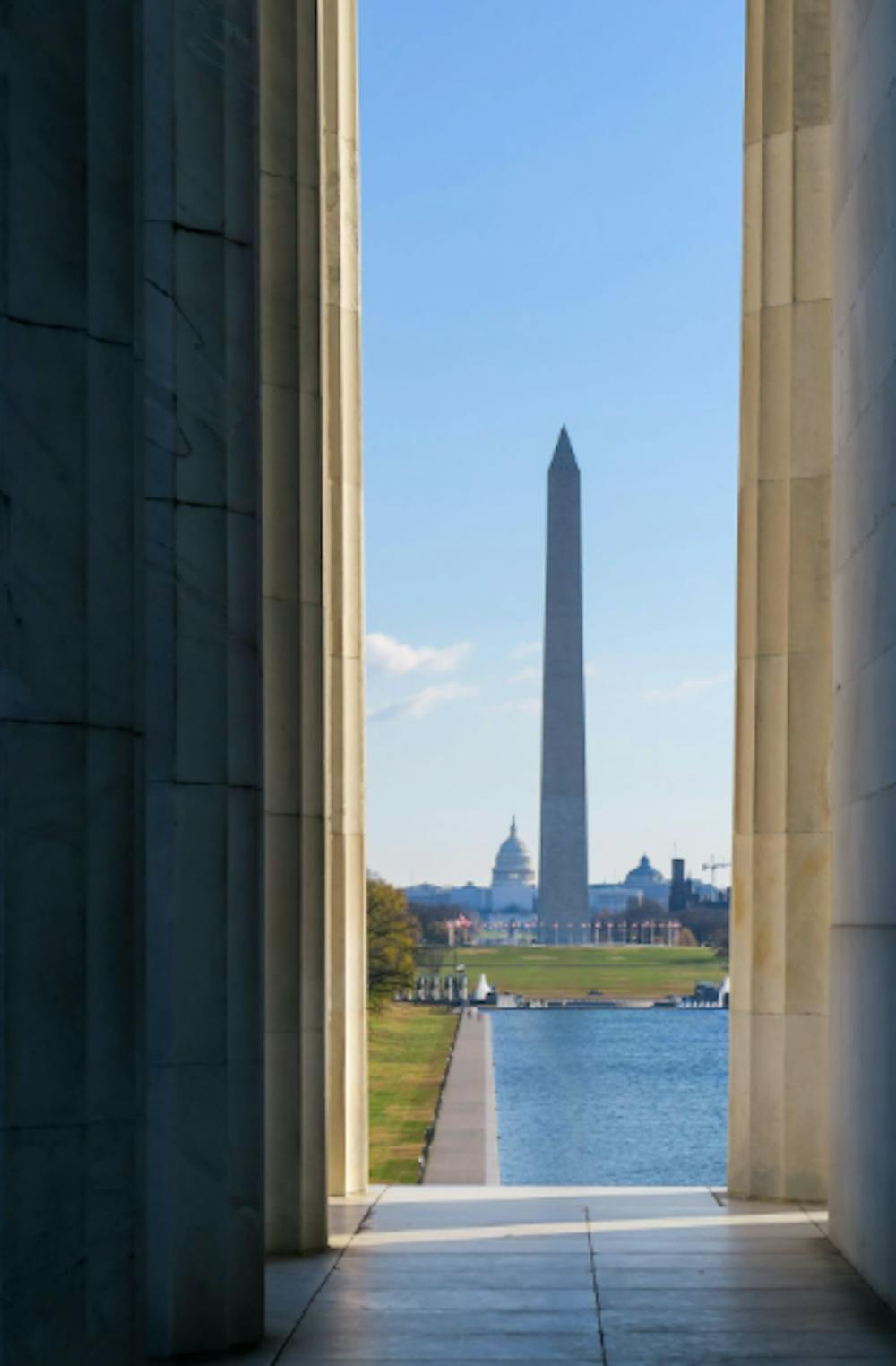
Tourists drift between the Lincoln Memorial and the Capitol, pausing for photos, pointing out inscriptions, tilting their phones upward to capture the skyline of marble and stone. In the capital, history is not tucked away in museums. It rises in stone, stretches across the National Mall and presents itself as something stable, shared and undeniably American.
As the U.S. approaches its 250th anniversary on July 4, the capital seems like the obvious place to take the mood of the moment. It is the symbolic heart of the country’s founding story, filled with monuments to unity, sacrifice and national purpose.
But not everyone standing before those monuments seems to be looking at the same America.
During a recent weekend trip to the District, conversations with visitors and residents suggest that the coming anniversary is stirring mixed feelings.
Some spoke about the anniversary with unmistakable pride. For them coming to the District was tied directly to the milestone. One visitor said it was their first time in the city and that 250 years of American independence felt like the right occasion to finally see the monuments and learn about the country’s history. Another described coming to see the historic sites as “a way of honouring my country. To see it makes me proud to be American.”
In those conversations there was the familiar optimism and the sense that America has built something worth celebrating.
Others sounded less certain.
A local resident said they felt split over how or even whether to mark the anniversary at all. “Under the Trump administration the anniversary doesn’t feel like a celebration of America at all. It’s all about himself. It’s really a staged event…”
That contrast points to the more complicated question hanging over the milestone: 250 years of America, but who exactly is celebrating whom?
Officially, the answer seems simple. This Fourth of July marks 250 years since the Declaration of Independence was signed, and the White House has already framed the anniversary as a major national event.
Through its Freedom 250 initiative, the administration has announced a broad program of celebrations, exhibitions and patriotic events extending through 2026, describing the anniversary as “the most important milestone in our country’s history.” The stated aim is to inspire renewed enthusiasm for American history and national identity.
The administration has already outlined a yearlong celebration built around spectacle as much as remembrance: a Great American State Fair culminating on the National Mall in July 2026, a nationally televised “Patriot Games” competition for high school students from all 50 states, a National Garden of American Heroes with 250 statues, patriotic decoration across federal buildings, projection shows in D.C., and mobile museums travelling across the country.
President Donald Trump has also backed plans for a 250-foot triumphal arch, a highly symbolic addition to the capital that would further tie the anniversary to monumental displays of national power. Supporters describe this plan as an overdue expression of patriotism. For critics, it reinforces the sense that the celebration whose imagery becomes increasingly imperial, personal and difficult to separate from Trump’s own political brand is more a grand political staging than a shared civic commemoration.
Even though anniversaries are never just about commemoration. Rather, they are also about narrative.
They reveal what a nation wants to tell about itself and what it chooses to emphasize and what it prefers to smooth over. In that sense, the 250th anniversary is not just about independence in 1776. It is also about who gets to interpret that legacy in 2026. Right now, it seems there is no consensus on a united understanding.
That debate is already visible in the way the anniversary is being discussed. Some voices describe the coming celebrations as taking place in a deeply divided society.
That larger political framing gives the reactions in the District more weight. The divided responses among visitors and residents are not just personal impressions. They reflect a broader uncertainty over what exactly is being celebrated. Is the anniversary meant to honor the country’s founding ideals? Its constitutional endurance? A shared national story? Or is it becoming something more selective — a celebration of a particular political vision presented as the nation itself?
The question matters because the American founding has always carried an internal contradiction. The Declaration of Independence announced principles of equality and government by consent that would become central to the country’s political identity. But those ideals were never fully realized at the moment they were written. Slavery remained. Women were excluded from political life. Indigenous nations were dispossessed.
At the same time, that opening between promise and reality created room for argument. Americans have repeatedly returned to the country’s founding texts to debate what they mean, who they apply to and how far they should reach. The Constitution has never existed as a finished object so much as a living framework, shaped over time by the people interpreting it. Its endurance lies not only in stability, but in its capacity to grow with the society around it.
That ongoing process is visible well beyond D.C. In New Jersey that still represents itself as one of the revolution’s key places, the 250th anniversary is taking shape through reenactments, public programs, and historical events at parks and heritage sites across the state.
This unique history may explain why the anniversary is prone to competing interpretations. National symbols can still inspire belonging, but they can also feel politically charged — especially when official remembrances appear closely tied to one administration’s image and priorities.
The District is built to project continuity and permanence. Its monuments suggest consensus. Its public spaces tell a story about nationhood that appears grand, coherent and intact. But the people moving through them bring their own readings.
And yet, the very fact that these competing views still meet under the same monuments may offer a measure of hope. The U.S. has never been defined by one fixed understanding of itself. As its arguments can be divisive, they also reflect a shared belief that common ideals still matter and are still worth claiming.
That may be the true story of America at 250.
Not simply that the nation is preparing to celebrate itself, but that even in disagreement, Americans are still returning to the same symbols, the same founding language and the same unresolved questions. If there is a measure of unity in this anniversary, it may lie not in a single version of patriotism, but in the enduring effort to decide together what America is, who it includes and what its ideals should mean in the present.