By Sarah Neil
Correspondent
In a warm, brightly-lit room decorated with local art and chairs every color of the rainbow, diversity abounds. Men, women, children, the elderly and the teen-aged, people of all religions and ethnicities gather in this humble Trenton building.
The Trenton Area Soup Kitchen serves thousands of meals every week to those in need. In addition to a restaurant-style meal service, TASK provides a salad bar, a coffee station and to-go meals.
TASK also provides computer assistance and art programs, which further aids in improving quality of life and access for patrons
“Trying to keep up with the demand is exceptionally difficult,” said Monica Smith, the volunteer and special events manager at TASK.
Food insecurity is on the rise across the country. According to the USDA, the percentage of households in the U.S. experiencing food insecurity jumped from 10.5% in 2019 to 13.7% in 2024. 3% may seem like a small amount, but it translates to nearly 4 million additional households throughout the nation lacking consistent access to food.
While New Jersey falls below the national average, the trend is the same: Food is getting harder and harder to obtain.
Trenton is being hit especially hard. In 2022, the New Jersey Economic Development Authority named Trenton as one of the most extreme food deserts in the state. Additionally, the Trenton Health Team’ Food Insecurity Index has given parts of the city some of the highest food insecurity scores in the state.
With food insecurity becoming more prevalent, many people are left wondering where their next meal will come from. That’s where TASK comes in.
But with hundreds of hungry mouths to feed, the two full-time dining staff can’t do it alone.
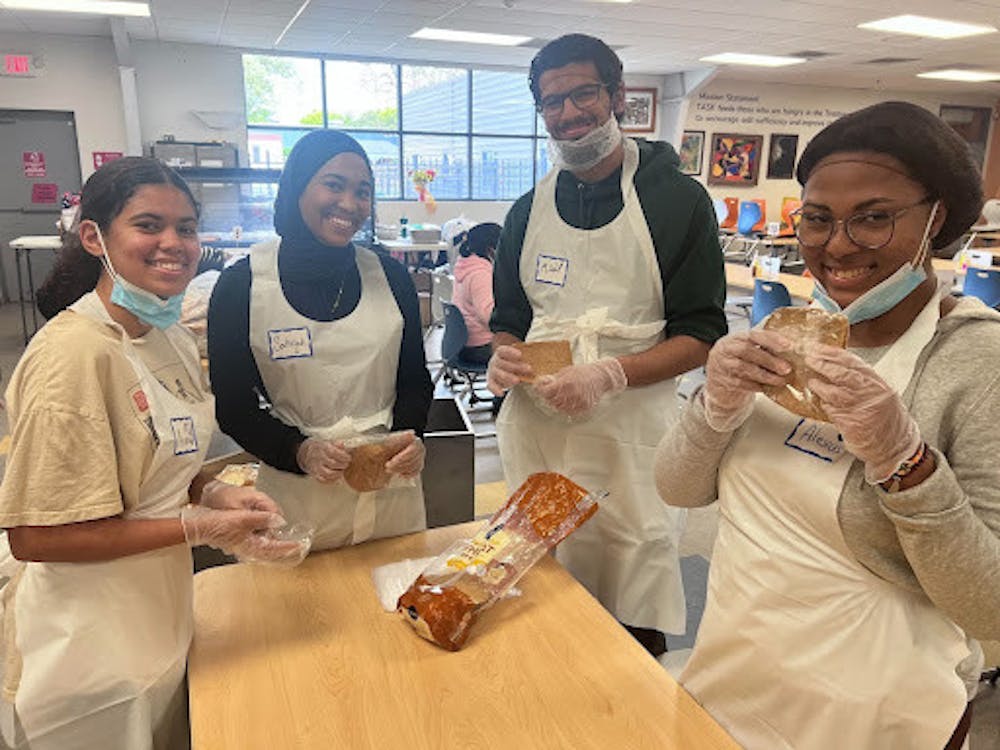
According to Smith, each week requires 80-100 volunteers. From behind-the-scenes kitchen prep work to handing trays to guests, there is always something to be done.
Volunteers can sign up to work a shift on TASK’s website. Many volunteers come from companies looking to give back to the community, but most of TASK’s most vital helpers come from the College.
Over 25 years ago, TASK started working with the Bonner Program through NJ AmeriCorp. Jamie Parker, director of radical hospitality at TASK, was one of the founders of this partnership, having been a Bonner student at Rider University.
The Bonner Program is a national initiative that encourages college students to become more engaged with their communities through service projects. At the College, students work with over 23 community partners, TASK being one of them.
One of the major advantages to having Bonners volunteering at the soup kitchen is their consistency. Students are expected to complete 150 hours of service every semester, so they end up gaining a lot of experience with TASK.
“That level of learning and understanding makes for volunteers that can be more impactful than someone who can volunteer two hours of their month,” said Parker.
For Bonner students, volunteering with TASK can be incredibly fulfilling.
Alexus Twyman, a junior communication studies major at the College and the TASK site leader for Bonner, finds deep value in her work with the soup kitchen.
“I feel very lucky to be able to serve and to see a side of the issue that a lot of people don’t get the opportunity to see,” Twyman said.
Over her years as a Bonner, her eyes have opened to the many intricacies of food insecurity and poverty. The people she has met, the experiences she has had and the lessons she has learned are all things she will carry with her for the rest of her life.
“The most impactful thing for me is just to see people’s faces when I give them a meal. You don’t really know what someone’s going through at a soup kitchen, and a hot meal can mean so much to them,” she said.
The Bonners and the soup kitchen have formed a sort of symbiotic bond, each benefitting from the other, but the ones who gain the most from this work are those sitting in the dining room.
For the hundreds of Trenton residents experiencing food insecurity, TASK provides them with vital resources: food, education and community. Every hot meal prepared by volunteers is one less person left hungry, every resume worked on is one less person left struggling to find a job and every smile shared between strangers is one less person left feeling alone.
“To us, it’s simple, but to them, it’s a lifeline,” Twyman said.
Editor's Note: Correction. A previous version of this article said that TASK requires requires 80-100 volunteers each day. TASK requires 80-100 volunteers each week. The article has been updated.