By Gabbi Pie’
Correspondent
Singer-songwriter Noah Kahan’s return to music has been highly anticipated ever since his third album “Stick Season” skyrocketed him to fame. After months of teasing new music, Kahan’s fourth album “The Great Divide” is out.
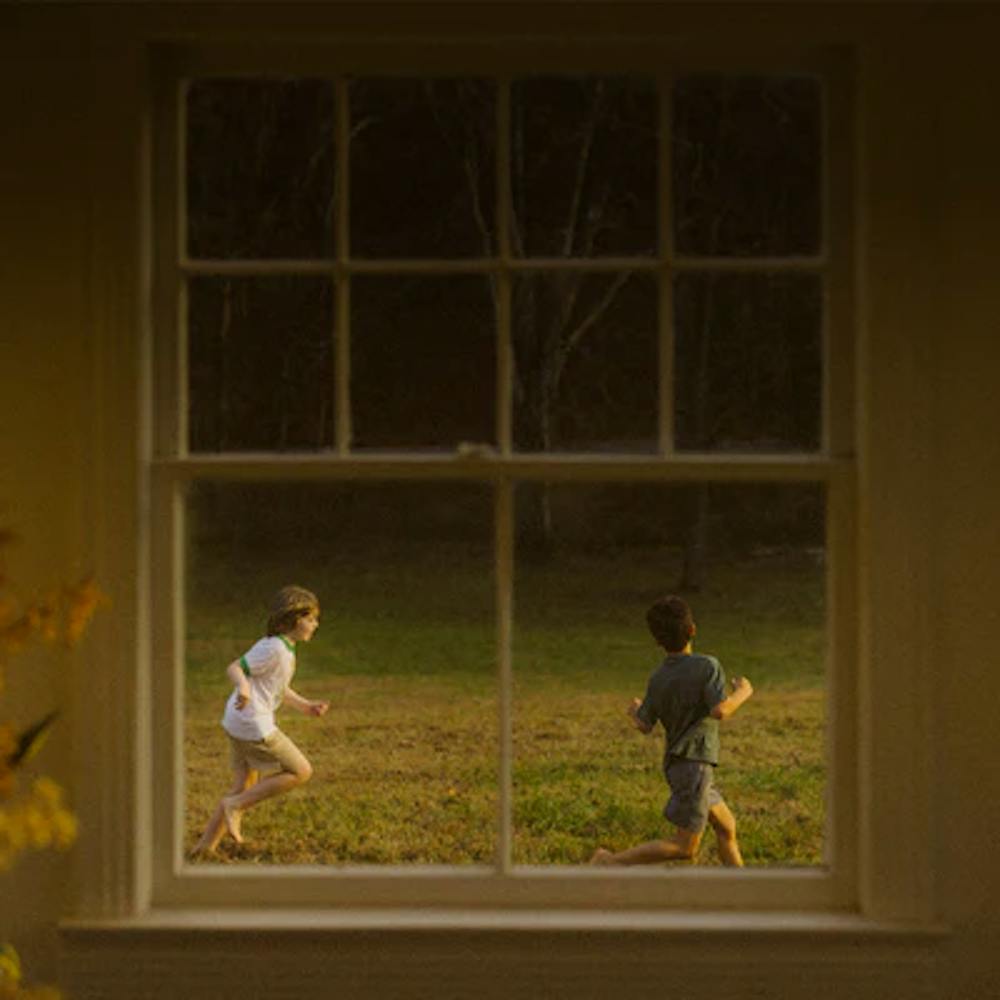
The title references the “divide” between individuals, accentuated by the album cover of young boys running. “Stick Season” was quiet, introspective and sorrowful, while “The Great Divide” is outspoken, resentful and angry with a more rock-influenced sound.
Kahan crafted the album’s sound with “Stick Season” producer Gabe Simon and legendary producer Aaron Dessner, known for The National and working with Taylor Swift and Gracie Abrams.
The opening track, “End of August,” is about the fleeting nature of things. “Everything you see out here will die…” The song slowly builds, with accentuated drum hits and horns before it ends with a little piano melody.
“Doors” is about the struggle of opening up to someone you care about. The spiraling sounds accompany Kahan’s spiral into why he feels as though his partner should leave him.
In “American Cars,” Kahan sings to a person who’s always there when he’s struggling: “you’re gonna fix it, you’re gonna patch it up.” The song discusses friendship and how it can help a person through tough times.
In “Downfall,” Kahan sings about someone leaving town, being happy but also “rooting for [their] downfall” and hoping they come back. There is resentment as Kahan hopes “[they] open up to someone kind, and they hold it all against [them].”
“Lighthouse” is a melancholy track about loss. “But I look out at the wreckage of you…I curse them…when they f–k up your story”. The lighthouse is a metaphor for searching and coming home.
“Paid Time Off” is about exhaustion with fame. Kahan reflects on how spending time away can help him, not caring about anything else but the present moment: “...you don’t care, and I don’t mind at all”.
“Staying Still” discusses the feeling of being stuck while everything else moves around him, lamenting that he “can’t keep on starting over,” asking his town if it’s “good at staying still.”
“The Great Divide” is about a childhood friend struggling with mental health. Kahan hopes he does well: “I hope you settle down, I hope you marry rich.” The song addresses how the trauma and troubles of those around us can continue to plague our minds.
In “Haircut,” Kahan talks about someone who left town and is full of themselves. “You grew your hair out long, now you think you’re Jesus Christ…” But Kahan sarcastically remarks he’s “happy for [their] haircut,” a symbol of change and abandoning roots.
“Willing and Able” is about a relationship with someone who only shows up to drink and argue with him. “...if I call you out, I'm an a—--e, but I tell the truth when I drink…” Kahan wishes he could improve the relationship: “...I wish I could know you much more sometimes…”
“Dashboard” is fierce, with Kahan essentially yelling at someone trying to escape town: “leave the pain you can’t solve with the folks you let down.” Kahan uses the imagery of the devil appearing on the person’s dashboard as a metaphor for being unable to escape your demons.
“23” reflects on someone struggling with addiction, and how Kahan wants them to be clean and come back: “...if…you could be anything I want, twenty-three, clean…” adding, “no one gets to talk s–t but the ones you’ve shit on.” This shows how those struggling with addiction can hurt those closest to them.
“Porch Light” is about the complicated feelings Kahan’s parents have about his fame and how it affects them. The porch light is used as a metaphor for Kahan’s constant invitation he has to come back home.
In “Deny Deny Deny,” Kahan sings about his complex relationship with his father, how “when [he asks] about the past, [he denies].” Kahan admits that although “[he wants to] know the dark that [he shares] a brain with,” “[he’s] too tired to watch [him] lie.”
In “Headed North,” Kahan sings about growth, saying he’s “...trying to scream less at the tourists.” He hopes the person he’s singing to is “bored and headed north,” acknowledging that “it was s–t before, but at least [he] had [them].” This gives the song a bittersweet flavor that contrasts its jaunty sound.
“We Go Way Back” is about Kahan’s wife Brenna and how a domestic life with her has helped him heal. There is still anxiety and yearning in the lyrics, but they are balanced with a feeling of calm and understanding.
“Spoiled” acknowledges generational trauma, when “[his] children get spoiled…so they can… blame it all on their dad.” This song delves into the darker parts of Kahan’s psyche, and the production is equally chaotic and destructive.
In “All Them Horses,” Kahan sings about feelings of emotional displacement that contrasted his fame: “I cannot go back, I’m always on my own…I’m high above us now in a big jet plane.”
In “A Few Of Your Own,” Kahan sings about a person who loves him for who he is: “I grew up with a feeling that what’s good must be fleeting…but I see that shitty beat-up car, oh, baby, there you are.”
“Orbiter” discusses sudden fame. Kahan acknowledges how he orbits his wife at big events. “I’m an astronaut, you’re the moon…I circle you.” The song builds as Kahan repeats, “I circle you,” and “if I’m gonna lose you either way,” adding a sense of helplessness.
“Dan” is about Kahan’s best friend. The chorus is a simple proclamation: “I’m with my best friend Dan now…where do we go when we die? I wouldn’t mind right here.” The last line is, “Before the moment tries to disappear, don’t the sky look pretty up here?” acknowledging how simple moments can ground you.
“The Great Divide” has emotion, strong imagery and deeply personal storytelling. It comes with a refined perspective courtesy of Kahan’s time away from home, giving it depth and beauty. The album is a strong body of work that further proves Kahan’s strength as a songwriter.