By Zo Terrana
Staff Writer
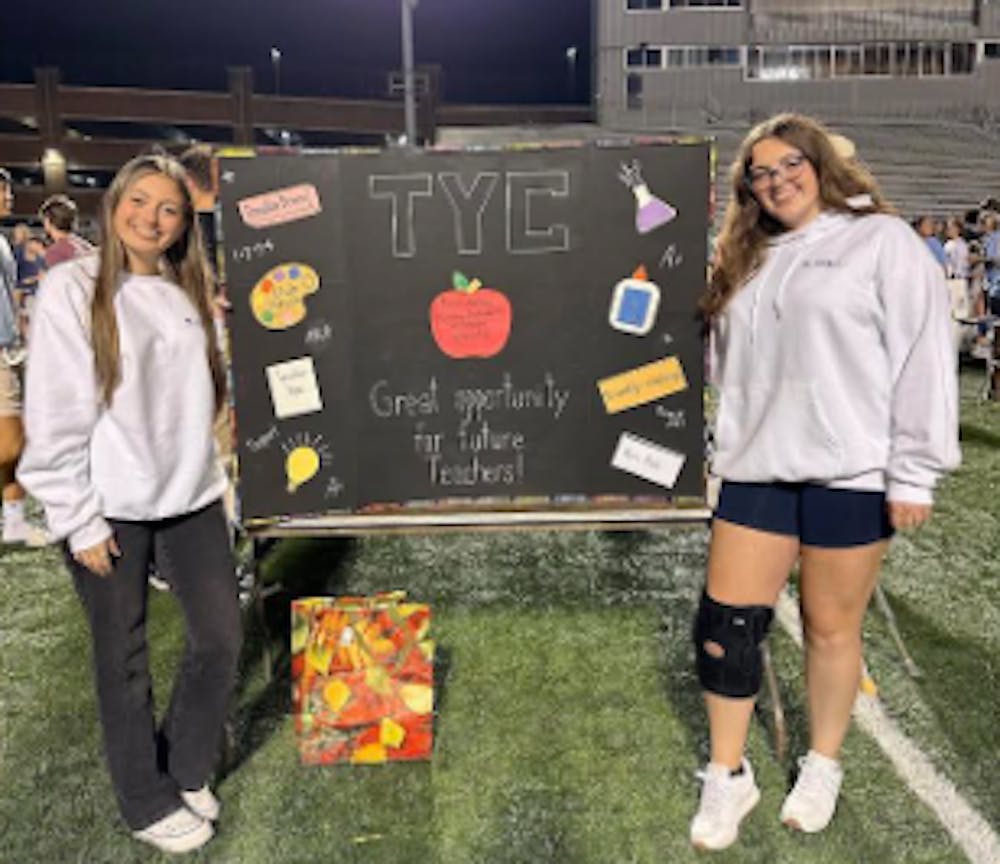
The College’s Teachers of Young Children Association and the School of Education are fostering the next generation of educators to help combat New Jersey’s long history with systemic inequality connected to the child educational sector according to the Civil Rights Project.
New Jersey ranks 34 in racial educational integration out of all 50 states, according to New Jersey Policy Perspective.
The Association has driven positive impact through working in Ewing and Trenton elementary schools, according to members of the Teachers of Young Children Association. They are establishing healthy connections with Trenton’s youth through volunteer work within the community.
The School of Education has provided the College’s future classroom leaders with the course work and class exercises to build foundational skills to teaching in diverse environments.
Adequate education can be seen as a vital need for children to become functional members in society. However, due to impoverished conditions, Trenton’s youth are stripped of this fundamental building block furthering systemic inequality. “Trenton’s public and charter schools lag behind statewide performance statistics, and graduation rates remain considerably lower than that of comparable communities,” according to Trenton250.
Future teachers at the College are bridging the gap between poorer communities to cater to a growing diversity in elementary schools by utilizing the College’s evolving coursework in the School of Education.
“Future teachers can make a meaningful difference by creating classroom environments that are
both academically rigorous and emotionally supportive,” Tamara Tallman, an instructor of Elementary and Early Childhood Education at the College said. “This begins with building strong relationships and recognizing the strengths that all students bring to the learning environment. Teachers who are prepared in culturally responsive practices and who understand the diverse experiences of their students are better positioned to create inclusive and engaging classrooms.”
K-12 schools across the United States have shown a growing diversity, according to a U.S. Government Accountability Office report titled, “Student Population Has Significantly Diversified, But Many Schools Remain Divided Along Racial, Ethnic, and Economic Lines” published in June 2022.
The College’s School of Education teaches future educators how to appropriately handle and educate a diverse classroom. The College facilitates internships within Trenton schools to have aspiring teachers gain valuable access to classrooms with students coming from various ethnic backgrounds, demonstrating real world environments.
“Just because these kids and families live in Trenton that doesn't define them, and they’re worth so much more,” Angela Natale, a senior Elementary Education major and the vice president of Teachers of Young Children Association at the College said.
With multiculturalism on the rise in schools, teachers must adapt to support children whose first language may not be English. Instructions are often printed in multiple languages including Spanish and Haitian Creole in Trenton school.
Last semester, the Association worked with local schools in the Trenton and Ewing area like Anthiel Elementary School in Ewing. The organization volunteers at local schools to aid in the lower income areas, striving to connect with children of disadvantaged families.
Natale began her practicum in Trenton-based Gregory Elementary School. In an “eye opening” experience, she saw the vast disparities that Trenton youth face.
“A very high percentage of students get a reduced breakfast and a reduced lunch,” Natale said. “It was very different from where I grew up. So being on the other side and being the teacher, you see how important it is to make those relationships and bonds with your students.”
Some children at the school, being economically disadvantaged, have experienced periods of increased living instability. Children at Gregory Elementary live house-to-house due to family circumstances or live in cramped apartment rooms with their families, according to Natale.
The Association, through volunteer work and student internships, breaks racial barriers between students by encouraging an inclusive classroom environment, where stigma gives way to acceptance.
“A lot of kids don't see their classmates as different,” Natale said. “They don’t have this stigma and biases in their head. So you want to keep it that way and make sure they can see their peers as themselves.”
The College provides extensive course work for education majors in educating students on topics such as Universal Design for Learning, according to Samantha D’Arcangelo, a sophomore education and English dual major. This educational framework is designed to offer flexible engagement and representation within the classroom to give all students equal education.
“Effective teachers use a range of instructional strategies to meet varied learning
needs, including differentiation, formative assessment, and opportunities for student voice and
choice. Social-emotional learning and restorative approaches can also support students in
developing confidence, communication skills, and a sense of belonging,” Tallman said.
There has been a historical lack of adequate funding for schools in lower income areas, producing constrained environments for teachers, according to D'Arcangelo.
“Big issues I know teachers are having are printing things and making their room feel welcome because they don’t have the money,” D’Arcangelo said. “Schools don’t have the money for baseline textbook materials, paper and ink for copying.”
Underfunded schools also hinder special needs education and offer inadequate care for children with disabilities, according to D’Arcangelo.
“Schools that have the funding can provide the students with communication devices that they need, proper seating and different working spaces,” D’Arcangelo said. “Schools that are underfunded or unequipped for that type of student can really harm their development.”
Education is fundamental in assisting special needs children in the classroom. The College tailors education majors to specific programs based on a preferred career path.
“I’m in a special education class and we have been talking about how in the past, people with special needs were misunderstood,” D’Arcangelo said. “When they yell, people will punish them for it but we have to think of it more as they're trying to communicate. They can be very bright and you just need to give them the accessibility and their form of learning, they need all of that to succeed and that's what we're learning.”
Educational policy is the backbone in advancing progression towards more equality for economically disadvantaged children, such as the children in Gregory Elementary.
“From a policy perspective, supporting elementary education in high-poverty areas requires a
comprehensive and sustained approach,” Tallman said. “This includes equitable funding models that ensure schools have access to necessary resources, as well as investments in early childhood education, literacy development and extended learning opportunities.”