

By Aidan Krause
Staff Writer
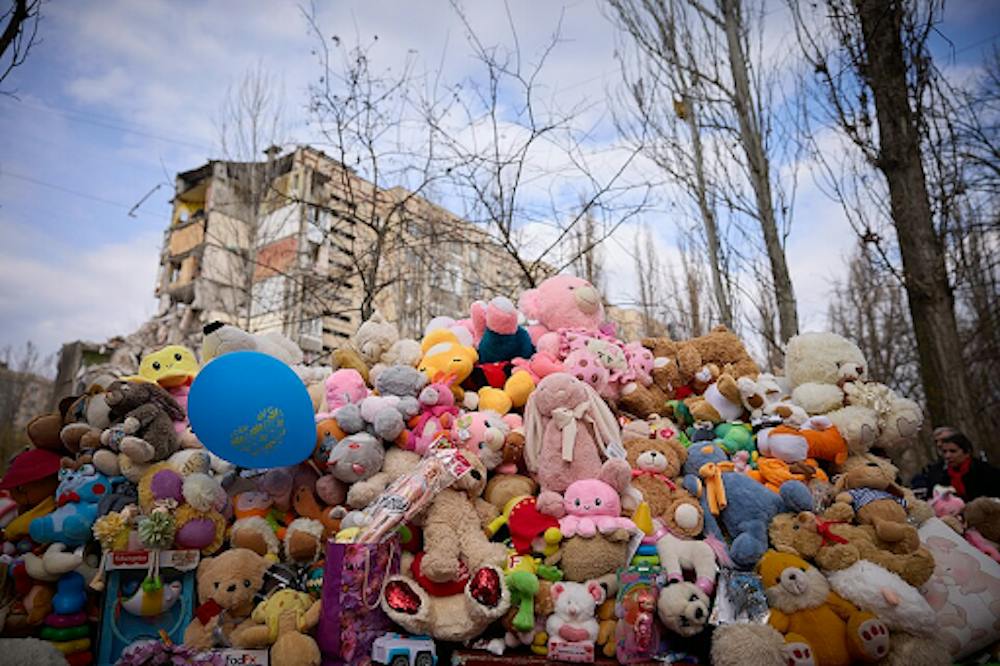
Russia fired another hail of attacks on Ukraine with 161 drones overnight. Among these were 82 jet-powered Shahed-type unmanned aerial vehicles which struck Kyiv, according to Kyiv Post.
Kyiv was repeatedly attacked by drones beginning on Sept. 23. “Air-raid alerts were issued four times overnight, with the final warning lifted at 8:02 a.m.”
The Kyiv City Military Administration spoke on the damage inflicted from the attack. “A warehouse facility in the Holosiivskyi district was damaged following a drone strike,” the administration reported.
Previously, a massive drone attack by Russia occurred in Ukraine's capital, Kyiv, causing damage to a hospital, a school and residential buildings and warehouses around the region on Aug. 20, according to CNN.
Ukraine has been able to repel most large-scale drone attacks, but its stockpile of Patriot missiles has recently dwindled, leading to some attacks slipping through.
Patriot missiles are surface-to-air interceptor missiles used to strike down things like aircraft, ballistic missiles and drones, and have been effective in the war against Russia. However, in a CNN report, Ukrainian President Zelensky said in an interview in early August, “Ukraine only has 10% of the interceptor missiles it urgently needs from the United States and other allies.”
Later, on Aug. 27, a warehouse in the town of Myla, near Kyiv, was struck by a Russian drone, which ignited the contents of the warehouse, including artillery shells, drones and munitions. The resulting blast damaged 50 residential buildings and killed 37 people, as reported by The Guardian.
Ukrainian prosecutors are investigating why the material was being stored so close to residential areas, and criminal proceedings have been opened on charges of negligence.
According to The Guardian, the Ukrainian prime minister Serhii Koretskyi expressed, in reference to the Aug. 27 attack, “Regret that mistakes had not been learned from a previous deadly strike on a munitions depot in Vyshneve, near Kyiv, in July.”
One of the more recent strikes occurred shortly after a brief cessation of conflict, during which President Trump's envoy Steve Witkoff and son-in-law traveled to Moscow and later Kyiv to try to restart peace talks, The New York Times reported.
The strike, occurring after the peace talks ended on Aug. 6, included a wave of Russian missile and drone attacks that hit Kyiv the next day, killing three people and wounding 10. There are plans for peace talks to continue at a later date, with food, energy and humanitarian aid to be addressed.
Russian strikes have fully resumed since the initial strike just after peace talks fizzled out on Aug. 6, with Russian attacks occurring on Aug. 11 and striking residential housing and cars, killing eight civilians and wounding dozens, according to The Associated Press.
The attacks coincided with Russian President Putin's comments made at a BRICS summit in India on Aug. 11, in which he stated, “If European governments send troops into Ukraine, it will mean a war with Russia.”
While some European leaders and military officials have pledged their commitment to establishing a peacekeeping force to bring an end to the Russian-Ukraine war, Russia has called the force unacceptable.
Putin conversely denied Russia's threat to Europe, saying, “there is no such threat and never has been,” and that “We do not threaten, nor do we intend to threaten, European countries,” as reported by The Associated Press.
The Russia-Ukraine war will soon enter its fifth year with no sign of peace on the horizon, and with both sides offering face-to-face meeting places, President Zelensky offered to meet Putin at the G20 summit of rich and developing nations, while a Kremlin spokesperson said, “If he really wants to meet with Putin, Putin has already said that he could fly to Moscow.” Both offers have reportedly been declined, according to The Associated Press.





.jpg)