By Carolyn Nguyen
Correspondent
Twenty minutes away from the College, the Princeton University Museum of Art offers free admission as a part of its mission to teach the world through artistic objects.
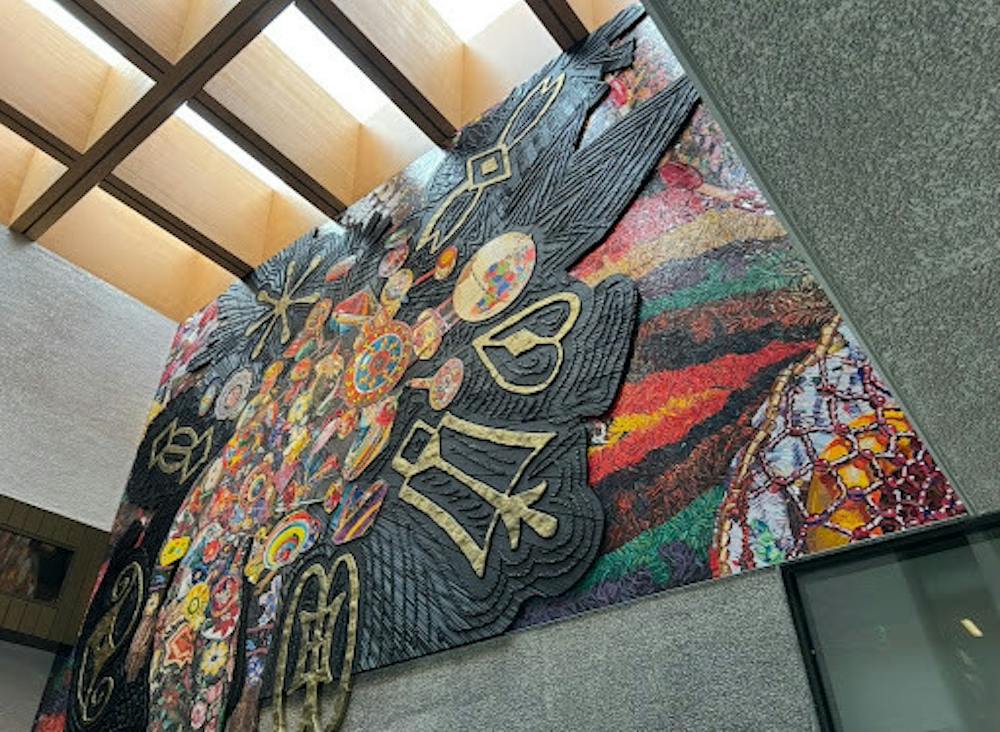
The museum has been open since last October after a six year hiatus dedicated to destruction and reconstruction. Though the old building has been demolished for a brutalist 146,000-square-foot complex, its original artistic essence lives on inside the decorated corridors.
The university’s collecting history dates back to 1755, when New Jersey Colonial Governor Jonathan Belcher gifted a portrait of himself to Princeton’s trustees. The trustees displayed it inside Nassau Hall, where a portrait of King George II and archaeological artifacts later joined. Though this collection was destroyed after the Revolutionary War and a fire in 1802, it outlined the museum’s framework.
In 1882, then President Josh McCosh called for the creation of an art curriculum, headed by William Cowper Prime and General George McClellan who established the Museum of Art. “The foundation of any system of education in Historic Art must obviously be in object study. A museum of art objects is so necessary to the system that without it...it would be of small utility to introduce the proposed department,” the two reasoned.
The museum initially only housed art from the Renaissance, but it grew to include prints and drawings, pre-columbian antiquities, illuminated manuscripts and American art. By the 1930s, the collection began to feature works from Chinese, Japanese and sub-Saharan African artists.
Today, the museum’s collection numbers over 117,000 objects that intersect art with culture, time and politics.
“I like everything here. It’s really hard to choose a favorite. A ton of these paintings are very realistic and full of detail,” Julia, an astonished 11-year-old aspiring animator and painter, shared. “I’m really happy that these artists took their time to make all these.”
Her father Shannon added, “I like to explore and read the details. I noticed how old some of these works are. You know, I think I saw one like 700 old and another that’s like 500 years old.”
The museum’s intertwining halls seamlessly blend the pre-colonial American oil paintings, Edo ink scrolls and 13th century Persian ceramics with newer pieces. “Clay Has Memory,” which will be on display through next July, focuses on the clay works of African artists throughout generations. The exhibit includes sculptures from the past, as well as those as new as the 2000s to show the endurance of African legacy despite the abrasions of time and diaspora.
The contemporary exhibit “What is an American?” is open through October and compiles various prints and illustrations crafted from American symbols, phrases and politics to explore the paradox of American identity.
Moreover, the university will host its “Re-visioning America” initiative on Sept. 24 from 5:30 p.m. to 7:30 p.m. to commemorate the country’s 250th anniversary. Events will be held in partnership with the Arts Council of Princeton, Morven Museum & Garden, Art Against Racism, Princeton Public Library, Historical Society of Princeton, William Trent House Museum, Garden Theatre, Princeton University Art Museum and the Princeton University Humanities Initiative.
All venues are free and publicly open to participate in exhibitions and accompanying programming. Programs include lectures, artist conversations, film screenings and a gallery crawl about America’s past, present and possible futures.
Hailey, a student at the university, emphasized, “Politics and art have hella intersections. I think almost every art is influenced by politics, and they are almost the same. So, it’s great to see different perspectives and different stories told through art. That’s how you learn about the world, and that’s a hundred percent important now. ”
Other exhibits currently showing include “What Photographs Look Like” and Takeda Hideo’s “Genpei: Defying Authority,” which will be on display until December and January, respectively. The former pushes viewers’ expectations of photography through composition and presentation, whereas the latter showcases Hideo’s colorful, silkscreen depictions of the Genpei Civil War.
Additionally, Princeton Art Museum is set to open a new exhibit this October titled “Basquiat, the Blue Ribbon Paintings, and the Art of Reproduction.” The exhibit focuses on American neo-expressionist and social critic Jean Michel Basquiat’s Blue Ribbon paintings and print works.
Atlanta’s High Museum of Art remarks, “Conventional narratives around Jean-Michel Basquiat…tend to emphasize his meteoric rise as a self-taught prodigy, often placing him outside the art historical canon rather than in dialogue with postmodern ideas and artistic networks. In contrast, this exhibition reframes Basquiat’s legacy by emphasizing his deep engagement with ideas around appropriation, identity, and reproduction.”
This season, the museum restaurant Mosaic also offers a monthly themed three course dinner outside of its small, but rotating lunch and bakery menu. The dinners cost $85 and are served for one day of each month. Themes include summer harvest, Filipino American History Month and the restaurant’s upcoming anniversary in November.
Students without a car can visit the Princeton Art Museum by taking the loop bus to Princeton. For museum hours, menus, events and additional information, visit the museum website.