By Molly Tursi
Staff Writer
Four seasons ago, Ryan Murphy’s hit anthology series, “Monster,” began to pose the contentious question: who makes a monster? Originating with the Jeffrey Dahmer story, the series revolves around notorious murder cases in American history and demystifies the “monsters” behind the crimes.
The newest edition of Murphy’s “Monster” series fictionalizes the grisly murders of Abby and Andrew Borden, who were brutally axed to death on the morning of Aug. 4, 1882, at their home in Fall River, Massachusetts. Lizzie Borden, daughter of Andrew and stepdaughter of Abby, was tried as the perpetrator, confounding the assumption that murder is solely a male act.
Following the disorderly two-week-long trial depicted in the show, the characterized Borden was acquitted of all charges despite circumstantial clues connecting her to the murder. In the face of public outcry, Borden returned to her home in Fall River, where she remained until her death in 1927.
“Monster: The Lizzie Borden Story” premiered on Netflix on Sep. 17, with all eight episodes available to stream. The series was created by showrunners Murphy and Ian Brennan, who boast long and successful careers in television.
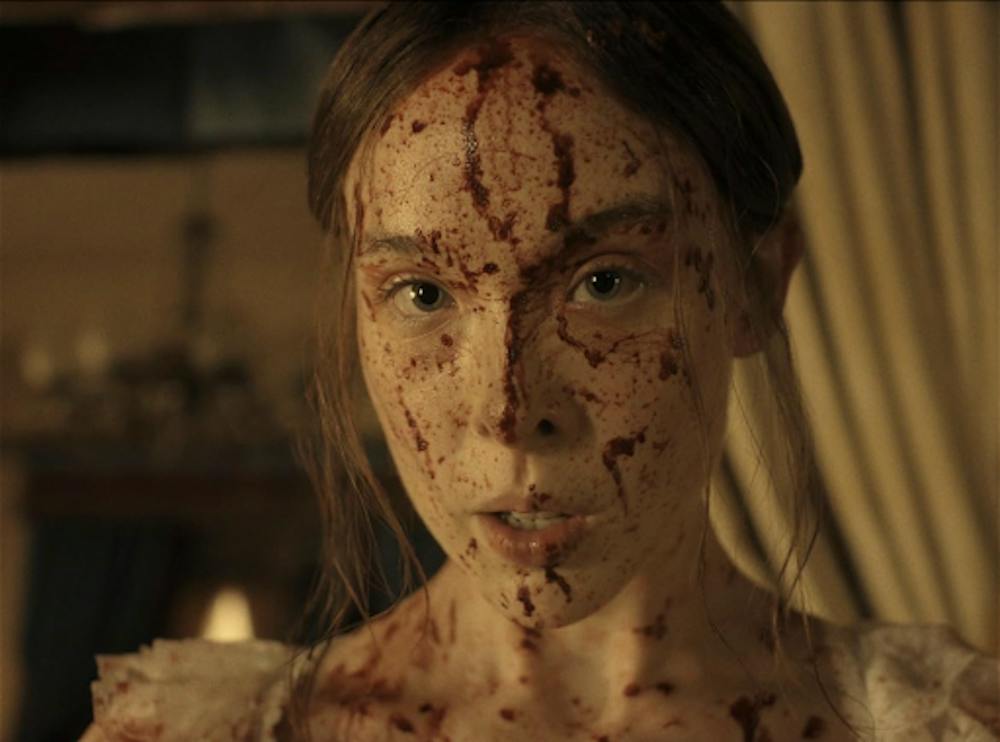
Directed in part by Max Winkler and Sarah Adina Smith, the season attempts to contextualize Borden’s nebulous motives. Played by newcomer Ella Beatty, Borden is portrayed as a timid yet tormented young woman, cloistered by her familial environment. Her wearisome life is disrupted by the recent arrival of the Borden family's progressive maid, Bridget Sullivan, or Maggie.
Maggie, played by internationally esteemed actress Vicky Krieps, is fundamental to Borden’s metamorphosis. As an Irish immigrant, Maggie awakens Borden to the world outside of her stifling home life, encouraging her to procure the meaning in life that she desires. The writers also forge an element of sexuality within Maggie and Borden’s relationship, as a sapphic romance kindles between the women.
With the accomplice of Maggie, Borden murders her heinous stepmother, who has inflicted a lifetime of belittlement on Borden. Her sleaze of a father receives the same treatment, as he is mercilessly bludgeoned to death with his own axe.
The series evades reality by taking the stance that Borden is, in fact, guilty of the 1882 murders. In actuality, the murder case has gone cold, while the suspicion of Borden lives in infamy.
The season’s thematic objective becomes manifest when another female serial killer is introduced to the story. Aileen Wuornos, largely regarded as America’s first female serial killer, spent ten years on death row following the murder of seven men between 1989 and 1990. Her crimes took place during her work as a prostitute on the Florida highways, where she experienced a horrific deal of perversion and sexual deviance. According to Wuornos, the murders were committed in self-defense.
The interplay between Wuornos and Borden’s stories serves as a narrative tool to help audiences better understand the making of a murderer. The series gradually devolves into a metaphysical crossing of timelines, relegating Wuornos and Borden’s characters to the same purgatorial plane of consciousness. Regarding Borden and Wuornos as victims themselves, the show attempts to humanize and extricate them from their murderer title.
Sarah Paulson puts on her best Wuornos; however, the fictionalization of her character produces a farce. Moreover, Beatty plays an unconvincing Borden, weighed down by amateur acting that is sabotaged by insufficient script material.
Counterintuitively, the most abrasive character is deserving of the utmost praise. Actress Rebecca Hall delivers an impeccable performance as Borden’s callous stepmother, making viewers seethe with empathetic rage alongside Borden.
The bulk of the show is plagued by superfluous theatrics and absurd creative directions, dimming what could otherwise be a decent show. While the storyline is satisfactorily entertaining, the inner theme of female liberation falls flat on its face.
The ending of the season places Borden within the Women’s Suffrage Movement, imagining the murderess as a proponent of women’s rights. This suggestion of feminism is rudely redundant, simplistic and distasteful, considering that there are real figures involved in the mobilization of women’s suffrage who weren’t axe murderers.
Even more, Borden and Maggie are portrayed as lesbian icons who murder to liberate themselves, ineffectually mirroring the real-life lesbian Wuornos and her fictional girlfriend Shelby. Wuornos and Borden are only connected in gender and sexuality, which provides a weak comparison for the nature of their crimes.
The glorification of murder is a flagrant criticism of the series, with real-life murders sensationalized to leverage a surface-level feminist and lesbian narrative. While it is important to recognize Borden and Wuornos as victims of their own suffering, the show makes no analytical recognition of the levity of their murders.
“Monster: The Lizzie Borden Story” is the weakest season yet, albeit its strength lies in its ability to answer the question: Who makes a monster? Luckily, the series is an anthology, leaving ample opportunity for the show to rebound with its next monster subject.