
By Emily Lindsey
Correspondent
Brazil is left without a winner after the first round of voting in their presidential election, as incumbent President Luiz Inácio Lula da Silva and right-wing opponent Flávio Bolsonaro both failed to garner more than half of the popular vote, according to The Guardian.
Brazil conducts direct presidential elections and features more than two candidates on the ballot, according to The Guardian. In this case, candidates of the Avante, Missão, Social Democratic Party and Novo parties all received less than 5% of the vote, whereas Lula of the Workers' Party received 45.16% and Bolsonaro of the Liberal Party received 47.03%.
Reuters recognized that support for Lula has diminished during his last term due to an uptick in gang activity, climbing costs of living and extreme household debt, although the rate of unemployment and inequality fell under his leadership.
While Lula champions public spending that inspires gradual economic growth, “Bolsonaro argues Brazil's hefty national debt is holding back the economy and a top campaign adviser has pledged to reduce it by slashing spending along the lines of Argentina's president, Javier Milei,” as reported by NPR.
According to The New York Times, Bolsonaro is confident that his edge in the first round will carry over to the second round of voting on Oct. 25. “It’s the end of the Worker’s Party” he said.
Lula publicly stated that he did not expect to lose, but still pledged that “starting tomorrow, we begin a new campaign,” as reported by Reuters.
NPR reported that this election is strangely redolent for Lula, who triumphed over Bolsonaro’s father, Jair Bolsonaro, in 2022.
“Bolsonaro hopes winning the presidency will allow him to free his father, who is serving a 27-year sentence for plotting a failed coup after refusing to accept he had lost the last election to Lula,” according to The Guardian.
The New York Times added that Bolsonaro has plans to impeach Supreme Court justices who acted against his father and achieve amnesty for Bolsonaro’s supporters who stormed federal buildings on his father’s behalf in 2023.
Still, Lula’s reputation does not exactly precede him, either. According to NPR, “Lula was jailed on corruption and money laundering charges in 2018, but the Supreme Court annulled his convictions in 2021 on procedural grounds.”
The victor of this election will have immense power over Brazil’s future.
“The next president is expected to nominate four of 11 Supreme Court justices,” according to NPR. Additionally, they “will also shape Brazil's economy and environmental policy, its relationship with the United States, and the future of its young democracy.”
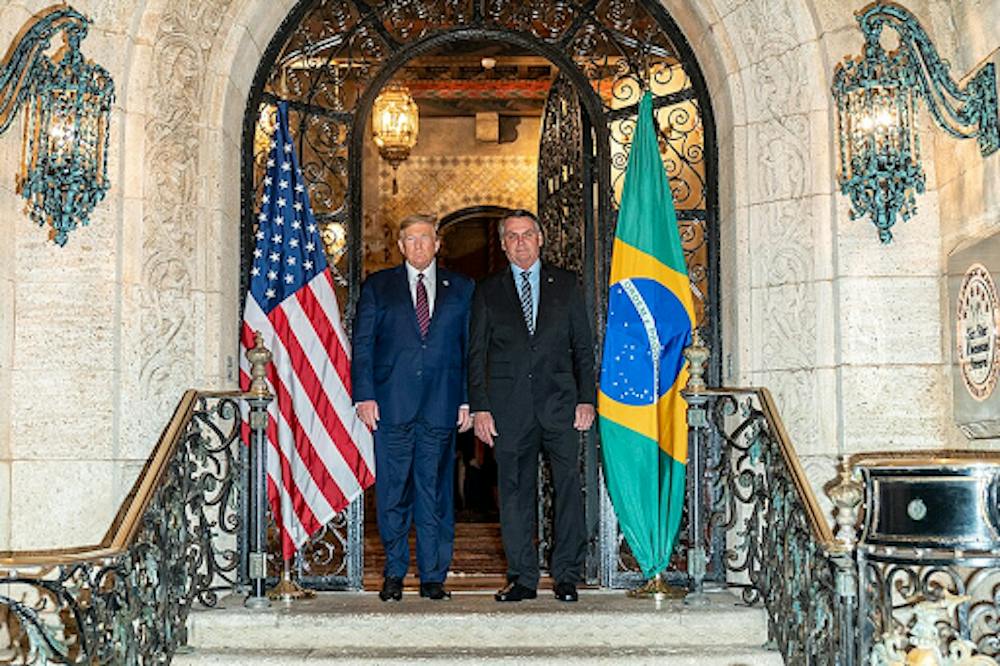
Trump hopes that his relationship with Bolsonaro will help substantialize U.S. influence over broader Latin America if the right wing candidate triumphs. Trump has already extended his reach to Chile, Colombia and Peru through a process of leaders being elected that are complacent with his policies, as reported by The Guardian.
In fact, according to Reuters, there is evidence that Trump previously abandoned plans to send U.S. officials to Brazil, and Lula’s confidants have advised that a victory for the incumbent after a tight race may result in the Trump administration denying its legitimacy.
Head Political Analyst Yuri Sanches at Brazilian polling and analysis firm AtlasIntel told NPR that, “if Lula wins the election by a close margin, then almost for sure we would have some Bolsonaro supporters questioning the results.”
According to The New York Times, the crucial factor in determining a winner on Oct. 25 will be the 8% of voters who voted for other candidates, and the 20% of voters who abstained from voting or spoiled their ballot.