
By Jack Salaki
Opinions Editor
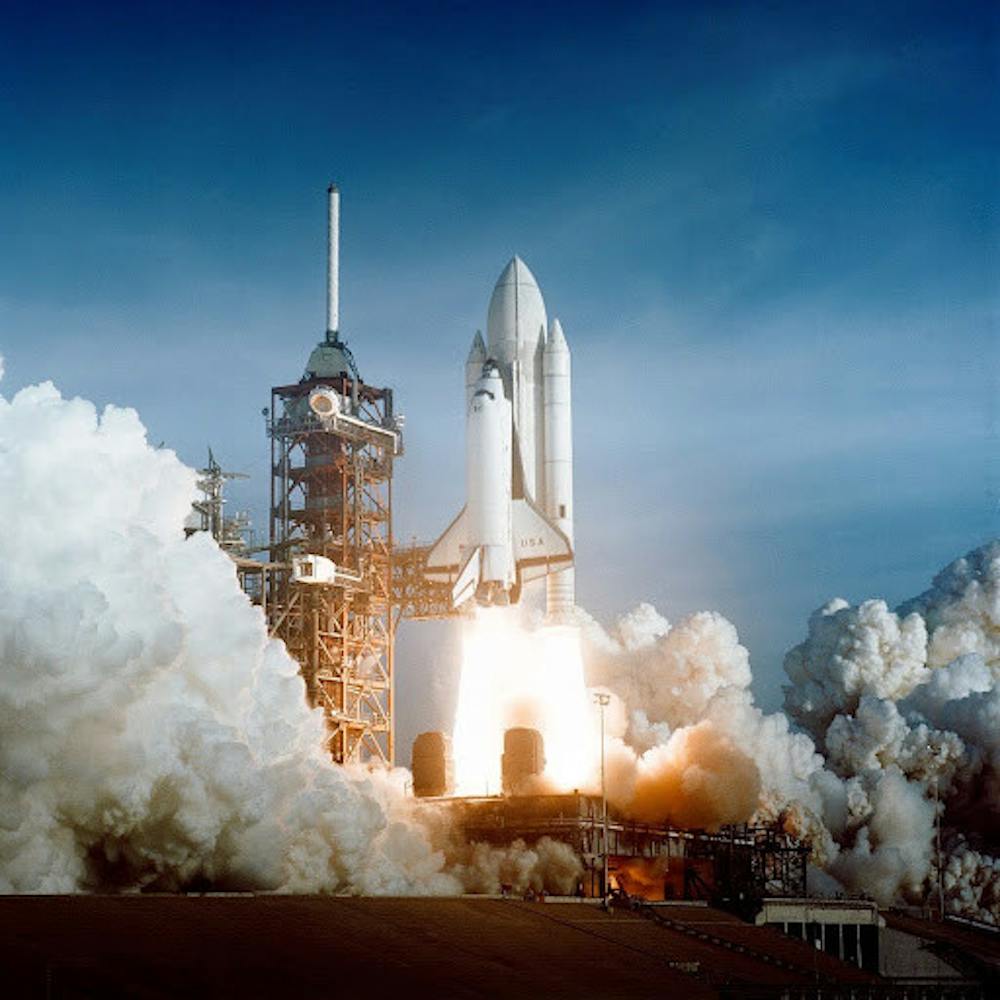
NASA launched their latest flight to the International Space Station out of Cape Canaveral, Florida on Oct. 1.
The Crew-13 mission took flight aboard a SpaceX Falcon 9 rocket at 11:10 a.m. EDT, carrying NASA astronauts Jessica Watkins and Luke Delaney, Canadian Space Agency astronaut Joshua Kutryk and Russian cosmonaut Sergey Teteryatnikov, according to NASA.
The crew docked with the International Space Station, in record time, recording a seven hour, 55 minute trip, making it the fastest launch-to-docking by a U.S. spacecraft. This is primarily due to optimal launch conditions, with director of NASA science and SpaceX’s Dragon program Julianna Scheiman saying, “We got lucky this time,” according to Space.com.
The launch came following a three-week delay while SpaceX raced to repair a leaking fuel system on the Dragon spacecraft. To avoid a multi-month delay, engineers performed an unprecedented repair by cutting and re-welding a replacement valve on the fully fueled spacecraft, according to Ars Technica.
Jessica Watkins, a geologist who worked with NASA studying the Martian surface, is making her second trip to space. She is serving as mission commander.
“Thanks for an amazing ride,” Watkins said after the launch.
The other NASA astronaut aboard the mission to the ISS is Luke Delaney. The Florida native and graduate of the University of North Florida is making his first trip to space. He worked in the Marine Corps and as a naval pilot before joining NASA.
Joshua Kutryk, a colonel in the Royal Canadian Air Force, is making his first trip to space, and will be aboard the ISS while his wife is expected to give birth to their third child around Thanksgiving.
Rounding out the crew is Russian cosmonaut Sergey Teteryatnikov, who worked in the Russian Navy, and is joining the International crew.
Despite tensions between their governments, the United States, Russia and Canada continue to work together aboard the ISS.
During their six-month mission, Crew-13 will conduct hundreds of research experiments on human health, disease and crop production, according to the International Space Station National Laboratory.
One of the experiments includes the astronauts using microgravity to produce human stem cell tissues for improving medicine and testing for conditions such as Parkinson’s and heart disease.
The crew’s tests on crop production will study how plants grow outside dedicated facilities.
The mission is a part of NASA’s Commercial Crew program, which works with private companies like SpaceX to provide transportation to and from the International Space Station. In this case, SpaceX is providing the Falcon 9 rocket and Dragon spacecraft used for the mission.
“Crew-13 is another demonstration of America’s unmatched capability in human spaceflight and the strength of our commercial partnerships,” NASA Administrator Jared Isaacman said.
The mission comes as NASA is making a renewed push to land on the moon, and eventually Mars.
A few months ago, NASA’s Artemis II mission saw astronauts orbit the moon for the first time since 1972.
NASA has two additional Artemis missions planned, with Artemis III planned for 2027 and Artemis IV expected to see the first humans on the moon since the end of the Apollo program in the 1970s.
While Artemis propels NASA farther into deep space, missions like Crew-13 continue the agency’s work in low-Earth orbit, allowing for the space community to perform experiments and develop the technology necessary for future deep-space missions.