By Jadyn Buccilli
Staff Writer
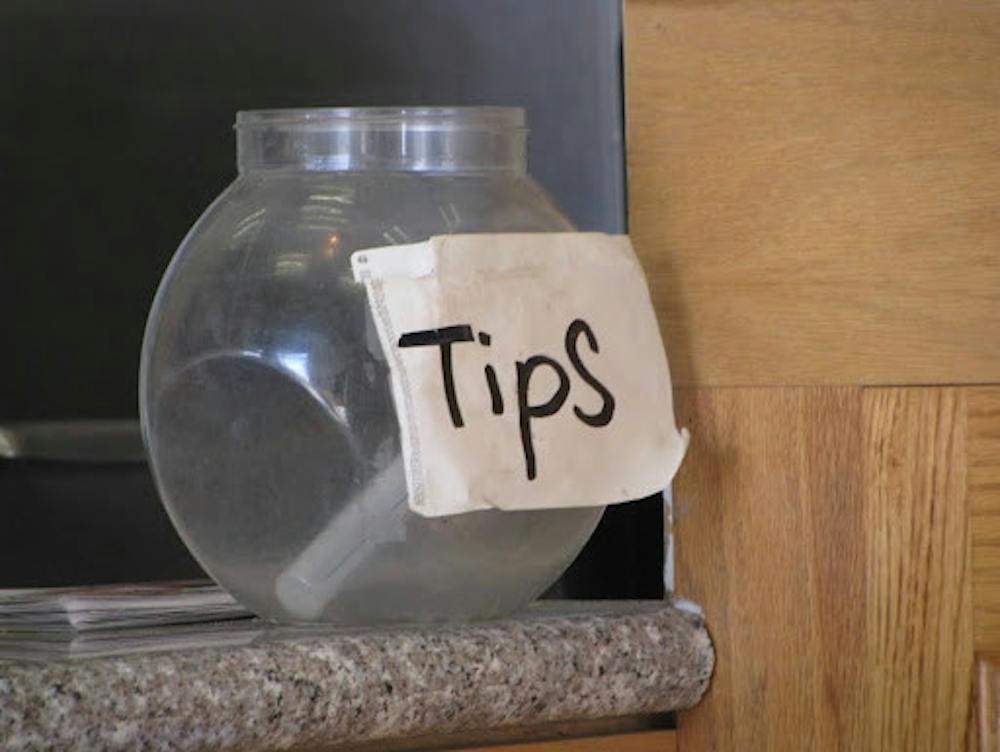
Tipping in the United States is basically unavoidable nowadays. It seems that no matter where you go, there is always someone flipping around a small tablet saying “It (the tablet) is just going to ask you a few questions.”
It was not always like this though. It was common for delivery drivers, waitstaff and hairdressers to receive tips in the past, and rightfully so. A ton of employees who are in these types of jobs are not paid the minimum wage, so tipping allows people in these positions to have enough money to live comfortably.
However, I have noticed that more and more places that have not usually asked for tips have joined the bandwagon. Quick service counters are definitely one of the first places I have noticed where this is implemented and it’s always via a small tablet.
For example, I frequent the nearby Panera and the Teamalaya because it is in Campus Town, where I am a resident. The infuriating part is I usually order on one of the tablets and do not interact with a single person besides getting my name called to retrieve my items, yet I am expected to give extra money for already overpriced items.
At these places, you also seat yourself and clean up after yourself as well, so it feels pointless. Still, my guilt creeps in and I manage to leave a couple of dollars, which I have no idea who it even goes to, if it even goes to any of the employees at all.
What’s even worse is that online stores have been implementing this as well. For instance, my mother recently ordered a phone case on a website and she was appalled to see a tip request when she had no human interaction while making her purchase.
Tip minimums have also gone up over the last few years, even at places where tips are more common. The lowest option at restaurants used to be 10%, with the highest being 20, but nowadays, 18 is the lowest and either 25 or 30% is the highest. Considering that all items are being priced higher and income is not being adequately adjusted due to inflation, something as simple as going out to eat becomes that much more expensive.
It is important to realize that this issue has nothing to do with the employees that work at these companies. Oftentimes, it is higher-ups who enforce decisions to include these tip screens, and the workers who have to face the customers do not deserve the blame. However, the tipping issue has gotten to a point where it is difficult to just ignore.
My solution would be that all workplaces are required to pay a living wage in the first place. Tips should be to reward exceptional services, but with the knowledge that employees are not paid enough, this “optional” practice of tipping becomes an obligation. Even if service is downright terrible, my family members and I have never left a zero percent tip at places where tips are expected. And since it is uncertain if employees actually keep some of these tips, especially for online tipping, the dilemma becomes that much worse.
I understand that this would not happen overnight, and before this happens I obviously would still tip at common places because employees deserve money for the time they put in, regardless if it is exceptional service or not. I just think that employers need to be responsible for the wages of their employees instead of placing it entirely on the customer. Many other countries already have these practices in place, and it’s time America catches up.