By Isabella McHugh
Staff Writer
EWING, N.J. — College is a major expense, but it can also be a valuable investment in a career-defining degree. Students across New Jersey pay significant tuition each year, making it crucial to understand how institutions are funded and how they allocate that money to shape a well-rounded educational experience.
In a virtual interview, the College’s Provost Margo DelliCarpini discussed the significance of funding programs that will help students grow the most successfully.
“We're always concerned about program outcomes in student success,” DelliCarpini said. “So, you know, we look at how students are doing in their individual courses,”
She pointed out that careers are disappearing rapidly as technology continues to advance. There isn’t a clear way to predict the next career that is swallowed by these ever-changing innovations; however, DelliCarpini explained that the College is designed to prepare students to be flexible and respond to such an environment.
DelliCarpini also cited major programs at the College, such as nursing, which she stated is currently filled to maximum capacity, as well as engineering and psychology.
A sustainable program needs continuous student interest and engagement, DelliCarpini said. This factor ties into the broader cost-versus-academic-benefit argument for continued funding.
“If a program or an academic department has a lot of interest, then that program is willing to get funded,” Student Government Executive President Jackie Anderson said in a virtual interview. She is currently a senior studying psychology and women, gender and sexuality studies.
Overall enrollment trends stem from this idea, outlining a broader reason for tuition fluctuations year to year.
Students often discuss tuition and the financial burden it places on them and their families. However, where that money is allocated is less frequently discussed. Student body Vice President of Finance Lorenz Storm-Matos said students may not be fully aware of where their money is going.
“I mean, even as a student myself, I look at my tuition and, like, what's a wellness fee? What is that going towards?” Storm-Matos, a sophomore political science major, said. She emphasized that it can be confusing to understand every detail of a college bill. Therefore, she encourages students to take a look at the College’s Student Finance Board website, which breaks down where the fees go.
There are also major economic factors that play into college funding, specifically for public universities. These schools rely heavily on federal and state funding. DelliCarpini said state appropriations are not always fixed and that the state of New Jersey determines its priorities each year when allocating funds. Once colleges receive the money, they distribute it across their own units.
Anderson said that the College has been very fortunate to be at “a stable fiscal point” whereas other colleges in the area, like Rider University, have faced more struggles in recent years.
Many higher education institutions faced a reconstruction phase after the COVID-19 pandemic according to DelliCarpini. She also said that the College was able to rebound faster than many of their peer institutions.
Storm-Matos said the College has a repayment plan for debt accrual and is well on track. “In terms of our financial future, we're doing really well,” she said. “We’re making those payments.”
Anderson said that “there's definitely been some attacks on higher education.” She said “knowledge is power,” and added that “knowledge is the one thing that nobody can take away” from a person. She hopes that students will continue to invest in their education, despite recent pullbacks on college funding and support.
While the College is very stable at this time, its neighboring school, Rider, has faced considerably more severe financial challenges.
It is important to acknowledge that the challenges Rider University experienced differ from the College’s, as the institution is private and relies “more heavily on tuition,” and endowments, DelliCarpini said. These “donor dollars” are “really stock market driven,” she added.
In October 2025, the university’s accreditation was placed on probation due to its financial state, according to CentralJersey.com.
Though there were several attempts to contact Rider administration to hear their perspective, the university did not offer a comment.
The university has received a hopeful glimpse in recent months, according to Nicholas Pieper, a full-time sophomore student at Rider majoring in biology.
“I was thinking about transferring,” Pieper admitted. “Mostly, I decided to stay here, of course, because, you know, things are looking up now, and are stable.”
In a virtual interview, Pieper discussed the university’s “March to Sustainability” plan, which he remembered included faculty layoffs. Pieper recalled a general chemistry professor who was laid off but did not know his name.
According to The Rider News, 30 professors were laid off on Dec. 29, 2025. The layoffs were reportedly decided based on seniority. The contract also stated that adjuncts and lecturers would be laid off before tenured faculty.
Pieper said that, thankfully, the university communicates its financial situation well with students. He receives emails often relaying this information, and the school frequently invites students to attend meetings.
Additionally, Mercer County purchased $8.5 million worth of land on Rider’s campus, “with the majority of funding coming from a combination of the County’s Open Space Trust Fund and capital budget,” according to the university’s official website. The 56 acres of land will be preserved, including “The Big Woods,” a forest that maintains historical significance. The county hopes to enhance natural trails for better accessibility and recreation.
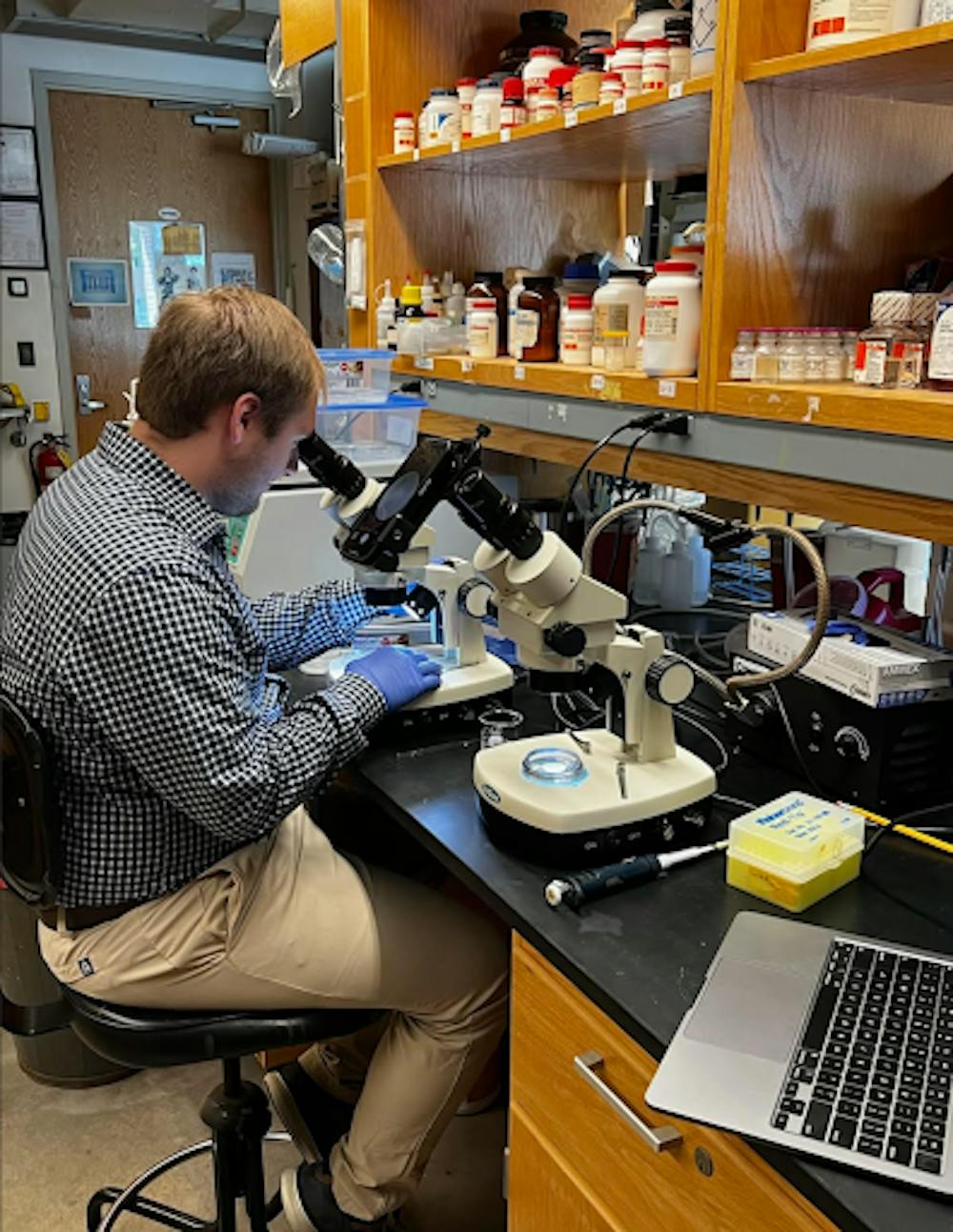
Pieper said he enjoys being a student at Rider and feels assured in his place because of the new president, John R. Loyack, who has been instituting major reforms. Looking toward his own future, however, Pieper said he feels concerned that Rider’s opportunities for student research will be diminished.
“They might not be able to spend money on funding research, which is a big part of what I came here for,” Pieper raised his eyebrows and chuckled, casting his gaze to the floor. “Hopefully, they don't, you know, shut down any labs, because we don't have a lot to begin with,” he added.