By Ryan Conway
Correspondent
There are many non-profit organizations that focus on helping people facing food insecurity. One organization, Meals on Wheels, is focused on not only preparing meals, but delivering them to those who are unable to get to a grocery store.
The Meals on Wheels program is a nationwide organization that provides nutritious meals to community neighbors who experience challenges in accessing nutritious food and support. It has served approximately 244 million meals annually across the globe, and has a branch based in Mercer County.
In fall 2016, it partnered with the College’s Bonner Scholars program. Students assisted in preparing and delivering meals to seniors, in collaboration with Rider’s Bonner Scholars program.
Kennedy Pettiford, a senior psychology major, enrolled in Bonner when she was accepted into the College, and has volunteered with Meals on Wheels since her first semester at the college. As the current site leader, she believes that many students in the country don’t understand how tough it is for some people, especially seniors who are limited in their mobility to get access to food.
“To get out and get your groceries is more of a privilege than people expect, because you need to be able to have a car, you need to have money, you need to have public transportation, you need to have a support group or service to get you to the grocery store,” Pettiford said.
The Meals on Wheels program also isn’t just about feeding seniors any kind of food; they are focused on feeding them nutritious meals to keep the elderly community healthy.
“All of the meals are made with people’s diets in mind, so when you’re an older person, you might have diabetes, you might have high blood pressure,” Pettiford said. “Some people may need more protein in their diet to help substitute for the lack of meals they are eating.”
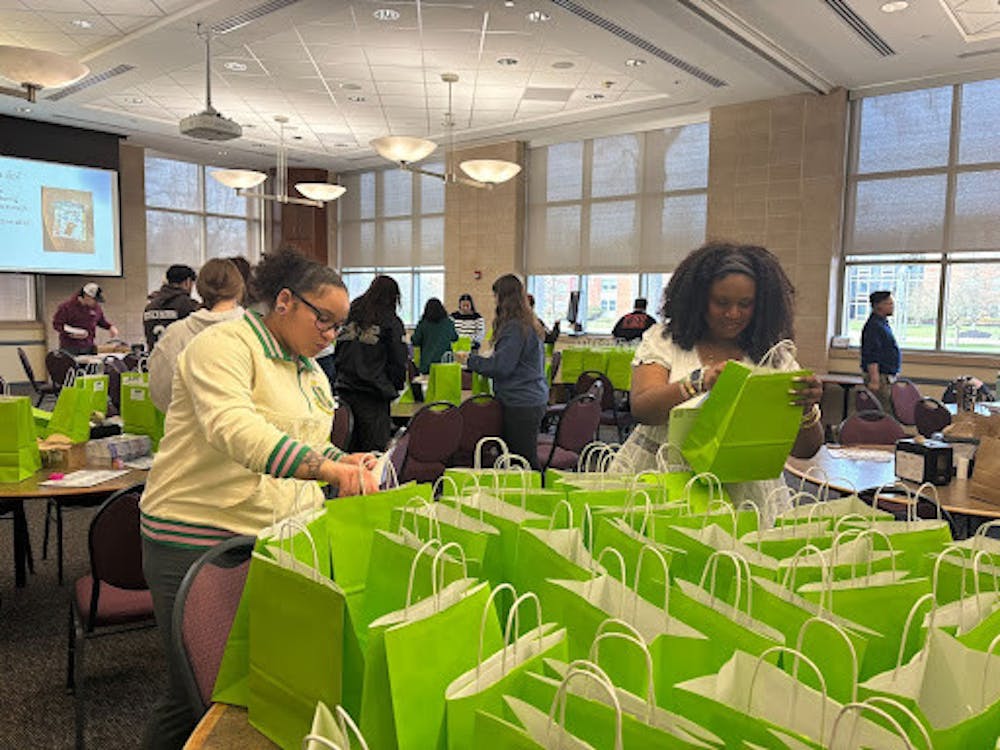
The setup in Mercer County is simple: Students at Rider University prepare the meals, while College students drop them to client’s homes. Pettiford credited Rider’s “amazing” kitchen for helping them put together so many meals.
As such, College volunteers are responsible for delivering food to those in need. However, it’s not that simple. These are seniors, many of whom may live by themselves and may be physically disabled. For some of these recipients, seeing a Bonner drop off their meal is oftentimes the only social interaction they’ll have throughout the day.
“It’s not just food and security when you think of things like Meals on Wheels, it’s actually addressing social isolation,” Rayjohn Felicia, a Bonner coordinator at the College, said. “One of the things that I try to instill in my Bonners is having that open perspective of trying to understand issues, even though they’re not always present. By interacting with the participants, just checking on their day or even having a full on five to ten minute conversation with them, it does make a difference in their own happiness.”
Preparing meals is one thing, but delivering it is a whole different story. The Meals on Wheels program had often struggled with finding delivery drivers, which made the Bonner’s at the College such a huge helping hand. They have their work cut out for them too: the Mercer County branch has 27 routes to make and drop off food to Ewing, Trenton, Princeton and other parts of the county.
However, sometimes nature gets in the way and we saw that twice in the past two months. Two massive snowstorms hit New Jersey in January and February, which could have impeded the Meals on Wheels’s task of delivering food to seniors. However, the program had procedures in place for these circumstances in the winter, and they came prepared.
“We do emergency food at certain parts of the season where we anticipate snowstorms,”Pettiford said. “We will get shelf stable meals that are typically put in the microwave and they are vegan friendly. We packed about 700 emergency meals [a few summers ago due to rainstorms] that would have about a week’s worth of food for each person of microwavable meals just to anticipate any inclement weather where we can’t deliver, especially over the winter.”
Sophomore and accounting major Syed Mohsin is one of these delivery drivers. He started volunteering for Meals on Wheels when he arrived his first semester at the College. He believes that the social aspect of Meals on Wheels makes it different from many Center for Community Engagement programs offered at the College.
“Every time I’m asked this question, the answer is the same: it’s the consistency that Meals on Wheels offers,” Mohsin said. “It’s something unique to Meals on Wheels that isn’t really there with a lot of other opportunities, which is that there needs to be people going out constantly and in turn, you can always be reliant on there being work to do and being able to go out there and do it.”
The human facet of Meals on Wheels is what makes it distinct and unlike many other programs. For Pettiford, she believes in one trait that is key to delivering these meals: empathy.
“To connect with somebody you need to be very empathetic because you are dealing with a certain population of people that have experienced so much loss in their life, dealing with food insecurity, [and] isolation that it really matters to have a happy smile.”