
By Jack Salaki
Correspondent
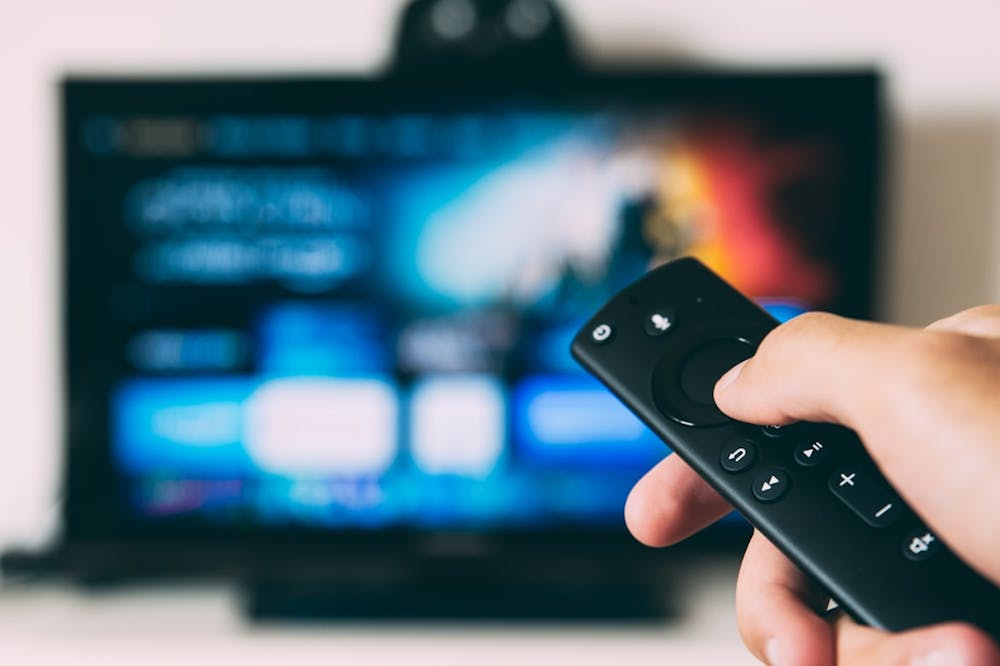
What was the last piece of media you consumed? Was it a piece of music or maybe a film? Or it could be something entirely different: maybe a short-form video or a news article. Many of us don’t really think about the media we consume. We live in a consumer-first culture, one in which we continuously take in new content without reflecting on it.
The idea of a media diet and being mindful of what we consume is not new. It has become a growing discussion point in recent years, especially with the growth of the internet, which has expanded access to different forms of information. Many times this idea is centered around politics or misinformation. Individuals are told to be careful about what they consume and who is telling it to them.
However, while this is important, I think a broader question to ask is how our media diets shape our psychology. This isn’t just in terms of political beliefs, which certain kinds of media certainly can influence. A person who solely consumes Fox News or right-leaning sources while ignoring outside viewpoints will lose touch with the political reality and what other people may be thinking.
Similarly, an individual solely consuming CNN and left-leaning sources may fail to understand the viewpoint of someone on the political right or be unable to grasp opposing viewpoints. This is the main context in which a media diet is discussed.
But our broader psychology isn’t discussed nearly as much. Media, like pieces of food, can change our composition in meaningful ways. A person who only consumes fast food will likely suffer from health issues. Yet this idea is not seemingly translated to what we watch, read and listen to.
I have noticed it in my own life. I’ve found that when I spend more time on YouTube videos or short-form content, attention becomes more difficult to come by.
After all, attention, like a muscle, needs to be exercised. When I watch longer films or read books, I find that I am able to think a bit more deeply. My mind doesn’t feel as cluttered. I’ve started to think of a media diet as having different parts. The first is the form of what you consume — whether it’s long-form content that allows you to focus, or short-form content that’s built for quick engagement. While consuming only short-form content may be fun, it may have long-term effects on attention.
There are different levels to this media and their effect on the mind. A media diet doesn’t necessarily mean eliminating certain forms of media entirely (although some people do take this route), but being aware of where you are spending your time and how it may be affecting you.
Another part of the media diet is the actual content itself. If you only consume negative content, then expect to be negatively affected.
For example, someone who reads about conspiracy theories, watches videos about the potential of WWIII and has an Instagram feed that highlights negative events will very likely have a cynical outlook on the world. But when you step back and examine their attitude toward the world, it is clear that it wasn’t something they truly developed, but something that they adopted. Whether we mean to or not, we often adopt what we consume.
Humans, as social creatures, tend to pick up mannerisms, social cues and ideas from those we spend more time with. By curating your feed more intentionally to include intelligent and uplifting content, you can gain greater control over this and ensure that your diet is beneficial to you.
This doesn’t mean that your media diet needs to be perfectly positive. Like many things, moderation is often the best solution. But being mindful of how music, movies, news, TV or social media content may be affecting your outlook on life is also important. I often notice how these small things can add up over time to change my viewpoint on ideas in small but meaningful ways.
I was recently thinking about how often I reflect on what I consume. Going back to my opening, it can be difficult to recall what we consumed last. There’s nothing wrong with this. In fact, even if I tried, I doubt I’d be able to remember everything that I watched, read or listened to.
Yet there is also something to say about reflection. Talking to someone about something you watched, writing about it or reading more into it can be good ways to reflect on a piece of media. That way you have the possibility to slow down and take it in more. This lets your mind “digest” the information in a certain manner and gain something out of it rather than just moving to the next thing.
By being intentional with consumption, you put yourself back in control. As of today, modern media algorithms are becoming more effective at understanding a person’s likes and dislikes. If we don’t choose our own media diets, algorithms will happily choose them for us.