

By Cooper Dey
Correspondent
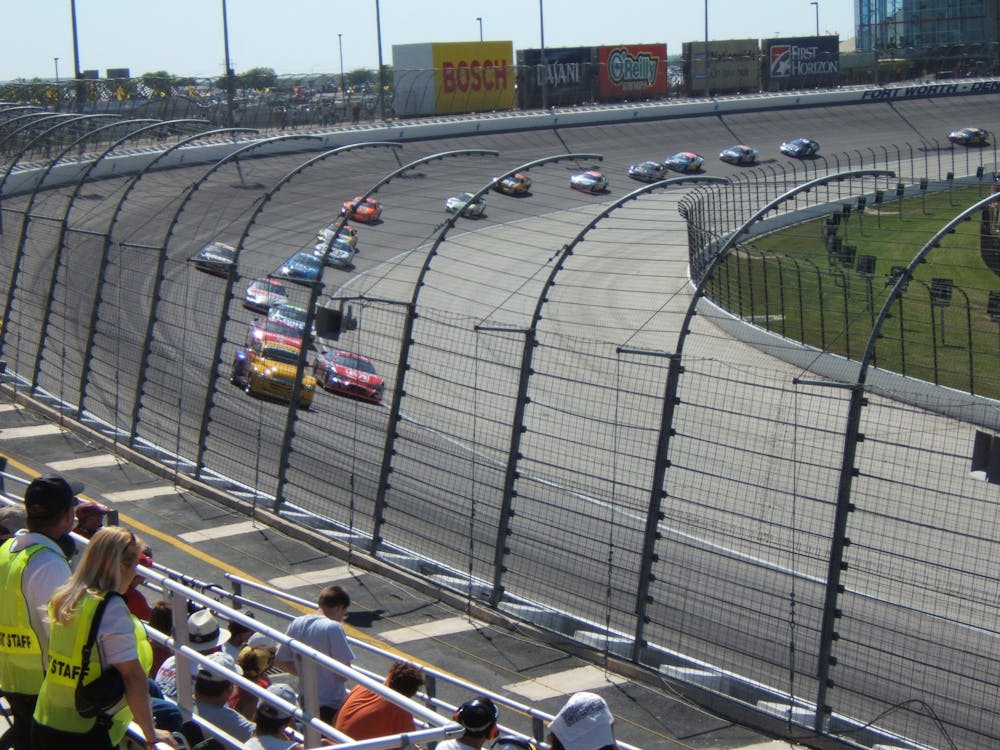
The 2026 NASCAR season has been historic in just three races. Tyler Reddick became the first driver in NASCAR’s 78 years to win the first three races of the season being the Daytona 500, Autotrader 400 and Duramax Texas Grand Prix. While drivers like Matt Kenseth in 2009 and Jeff Gordon in 1997 came close to winning the first two opening races, Reddick’s performance has lifelong fans to first-timers questioning if early season success should carry more weight in deciding NASCAR’s champion.
Reddick’s three peat highlights flaws in the current postseason playoff format “The Chase.” The Chase format will be formed at the end of the 26 race regular season where the top 16 drivers in points advanced to The Chase. The points are split up among these 16 drivers giving the regular season champion a 25 point advantage from second place, second place has a 10 point separation from third, and third and the remaining 14 drivers have only a five point separation from each other.
The Chase is made up of 10 races with no elimination unlike previous years and the finale is at Homestead-Miami Speedway where the driver with the most points at the end of this race will be crowned champion.
This means a driver could dominate the regular season, winning multiple races like Reddick is doing now, and still lose the championship if they struggle during the final 10 races. Regular season wins do not serve a big purpose overall as it is a good start to improve the points reset, giving the rest of the 15 drivers 10 races to save their season.
As where the points run, Reddick has a 105 point gap over second place while that can go down or even increase with a bunch of races left that gap will go down to 25 automatically at the start of The Chase making this historic start somewhat irrelevant in the postseason.
Seasons in the past like the 2018 season and last year’s 2025 season can be used as examples, where a driver or multiple drivers dominated and were the class of the field all season being flat out better in all categories compared to the rest of the other drivers and failing to claim the championship title because they struggled during the playoffs. The way the playoff format is shaped, a champion can be crowned without winning a single race or leading a single lap.
Before The Chase format, NASCAR used the Winston Cup Series points system, from 1971–2003, which awarded the championship to the most consistent and successful driver throughout the entire season.
Through dominance early in the year a driver could mathematically build a lead large enough that the title would be decided before the final races. While this format sometimes shortened the season, it rewarded drivers who consistently excelled rather than those who peaked at the end.
From a July 2025 report in The Daily Down Force, Dale Jr. who is a NASCAR first ballot Hall of Fame driver, race team owner and son of seven time Winston Cup Series Champion Dale Earnhardt Sr. Dale Jr., shared his opinion about the Winston Cup Series format saying, “It's very entertaining! Agree that it's the preferred method.”
The main reason NASCAR implemented the elimination style format was to maintain suspense and excitement throughout the season.
The traditional points system allows a driver to be able to dominate early and secure the championship before the season ends, while the playoff system ensures that multiple drivers remain in contention until the final races.
Another hot topic that Reddick has shown from his three-peat has to do with the Next Gen car that NASCAR is currently using. In a May 2021 report from Fox Sports, Bob Pockrass explains what the Next Gen hopes to achieve by stating, “Teams are getting parts and pieces now and won’t be allowed to modify them. That would seem to limit the ability for mechanics and engineers to have an impact on performance.”
In past seasons looking back to the 2000s era NASCAR teams were allowed to make their own parts, adjust suspension, and overall had a ton more freedom on crafting their racecar to make it the fastest for Sunday's race. Today NASCAR has limited teams to a tightrope and teams can only adjust so many parts to a certain point.
Joey Logano, a full time NASCAR Cup Series driver who pilots the number 22 Penske Pennzoil Ford Mustang who is also a two time NASCAR Cup Series Champion, simplified the next gen car by comparing it to golf, saying, “You can give everyone the same 9-iron, but the way you hold it, swing it, everything becomes what makes the winners and the losers when it comes to golf, right?”
NASCAR designed the Next Gen car to level the playing field making all the cars perfectly symmetrical to each other, putting a lot more control into drivers. If the Next Gen car is meant to create equality, shouldn’t dominance like Reddick’s carry more significance? The Next Gen car is supposed to make these races come down to which driver has the best skill.
Reddick’s historic start raises questions about what NASCAR values. Should the championship reward the best driver across the entire season or the driver who peaks late?
If the sport wants to award skill and award consistency with a car designed for equalness it may be time to reconsider a playoff system that ignores early season achievements.
Returning to a full-season points format, like the Winston Cup Series system, could ensure that victories like Reddick’s are not just celebrated, but truly matter in the championship race.






.jpg)