By Franc Romanowski
Staff Writer
Dusty floors, restricted areas and hammering and drilling in Forcina Hall will not stop the activity inside room 308, where the Anti-Violence Initiatives team resides, especially on a Wednesday.
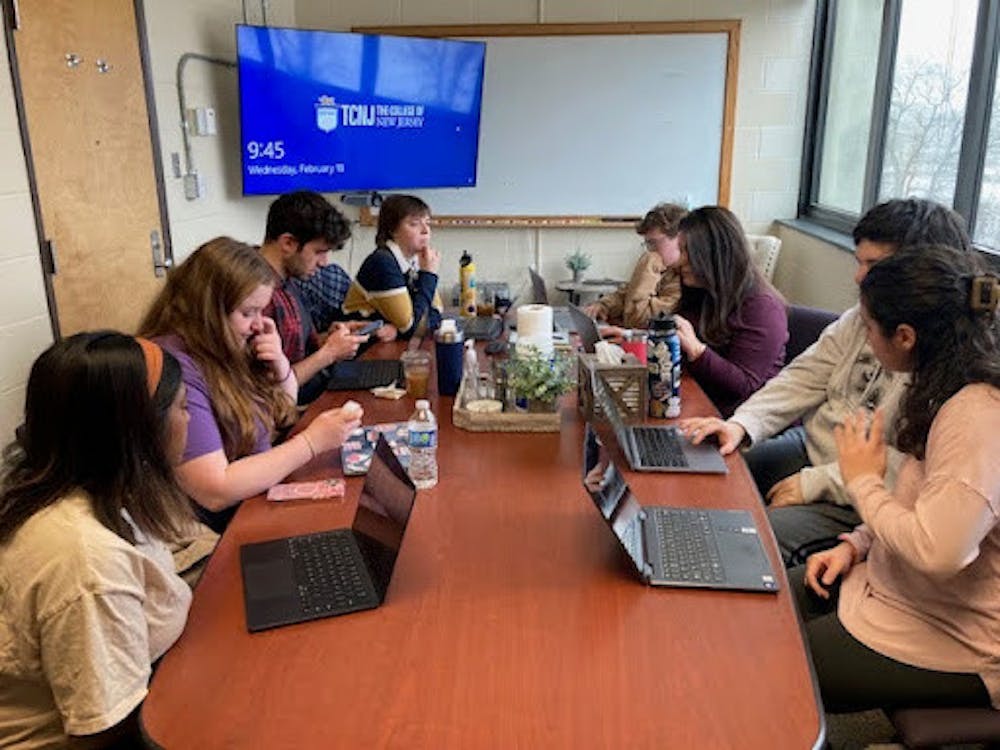
Wednesdays are AVI’s staff meeting days, which allows everyone within the department to come together and work on the variety of projects on the table.
Overseeing the activity is Michelle Lambing, assistant director of AVI. Sitting alongside her student staff members, she listens as the members of the Day to End Rape Culture committee discuss the information that will go on the flyer describing the event. As the meeting wraps up, everyone quickly heads over to the Education Building where the rest of the team, composed of about 20 members, awaits to begin the process of reviewing the applications of prospective students to become student anti-violence educators.
The work that AVI does is heavily student involved. That is why Lambing said she is in the process of recruiting undergraduates to join the department, as she looks to navigate challenges with outreach and funding. Lambing is seeking students who can help grow their perspectives and adjust to students across campus, wherever they may be. Three internship positions are open, with applications being accepted through April 17.
Lambing said she has been at AVI since the beginning. Formed in 2004, Lambing’s freshman year, AVI requested volunteers to join the office. For her gender and pop culture class, Lambing had to do some volunteer work, and the office’s request immediately piqued her interest.
“... I am a survivor of domestic violence, and so, you’re coming to this college and hearing about an office that was attaching language to the thing that I had experienced felt very validating,” Lambing said. “I had felt very seen in those moments and I wanted to be part of the work that was happening.”
She said she became a volunteer, sticking with the office and becoming an intern her senior year. After graduating with her bachelor’s in psychology, she got a job as the program assistant, working not only with AVI, but also the departments now known as Alcohol and Drug Support Services and the Accessibility Resource Center.
“[M]y heart is super tied to this institution because it’s given me so much,” Lambing said. She went on to add that, because of the opportunities that were provided to her, she feels she’s been able to give back to the College through her contributions.
Lambing is not the only one who has experiences that prepared her for this work. In fact, Lambing mentioned that many of the students who apply and are part of the staff know of someone who has had a power-based violence experience or have had one themselves, like Cathy Zheng, a Student Anti-Violence Educator and senior political science major.
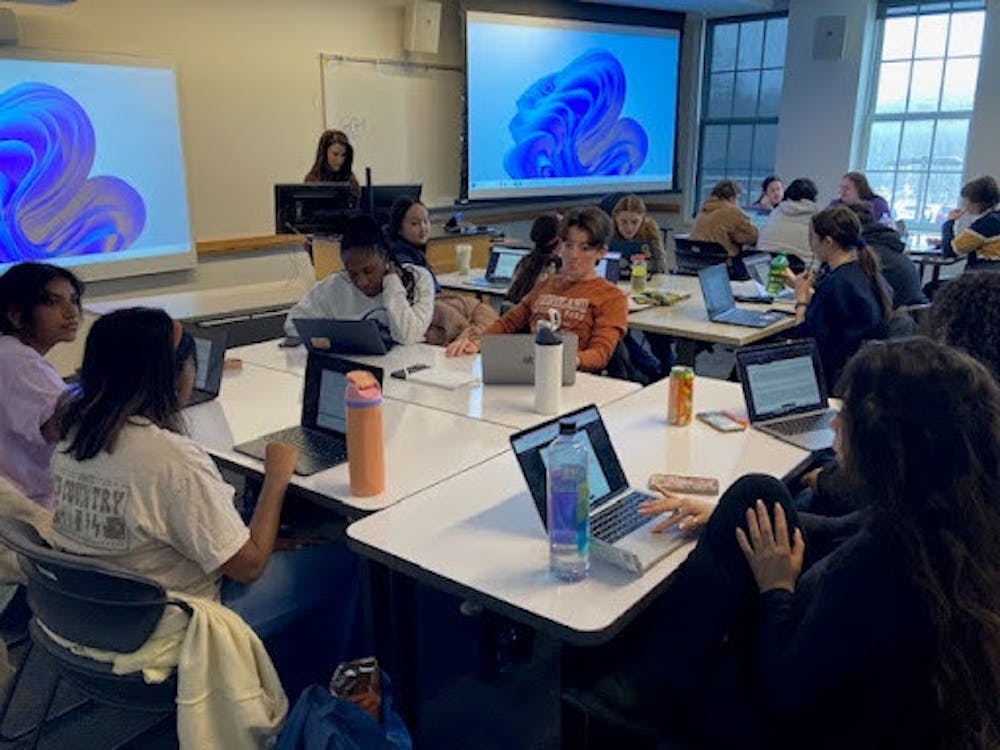
Anti-Violence Initiatives staff on Feb. 18 reviewing Student Anti-Violence Educator applicants’ responses to decide who will move on to the interview process. (Photo by Franc Romanowski)
“I had my own experiences with victimization,” Zheng said, affirming that the issue of power-based violence — which encompasses “sexual assault, domestic/dating violence and stalking,” according to AVI’s website — is prevalent in society. “And so, I think that if someone has experienced that before, it does take… a certain amount of healing to work this role.”
That’s why Lambing and her team are so focused on creating an environment where students can connect and be comforted.
“[B]ecause I think many of us have been in environments where we haven’t felt safe, we are very diligent about creating safety here, as teammates, as presenters, as friends,” she said.
But the department isn’t just about building connections. According to Lambing, one of its broader goals is to combat behaviors and messages related to power-based violence that have been normalized in the media, consumed by students and thus, gone largely unnoticed.
Lambing said she has tried meeting this goal by expanding the outreach of the department. Enter Zachary Gall, AVI’s staff therapist and prevention education specialist. Like Lambing, Gall interned within the department AVI was housed in when he was a student at the College. At the time, Lambing wanted to add programming to increase the involvement of men.
“She was talking about wanting to start these initiatives specifically about getting men involved,” Gall said, “and I kind of just walked in her office and said, ‘I want to do that.’ And it ended up being what I have always wanted to do, but something that I didn’t have words for until then.”
Gall has stayed with AVI ever since, continuing the work he started 10 years ago. He’s doing that by running focus groups centered on the experiences of men, to get a better understanding of their lives and the influences impacting them.
Unfortunately, over time, AVI has struggled to reach students.
“We work a lot with varsity athletes, with fraternity and sorority life or really any other organization that wants to bring us in,” Lambing said. “But then we also have to be mindful that, if you’re not part of an organization that’s bringing us in for these conversations, where are we going to find you?”
It’s just one of the problems Lambing said she has had to deal with as campus life evolves. She understands, too, that students aren’t as inclined to talk to adults about topics like sexual consent, or to stay for an hour-long workshop. That’s where the student staff comes in.
The students are “essential” to the functioning of the department, according to Lambing. They are heavily involved in everything the department does: planning events, presenting projects and, most importantly, being there to assist their peers. While the deadline to become a peer educator has closed, AVI is in the process of recruiting undergraduate students to join their team through three internships.
“A lot of us … have friends, or we have members in our social spaces that they know we’re AVI,” said Zheng, “and so, if they’ve experienced something traumatic, we are often one of the first people who they go to when they are in need of resources, but maybe don’t know where exactly to turn.”