By Natalia Tomczak
Opinions Editor
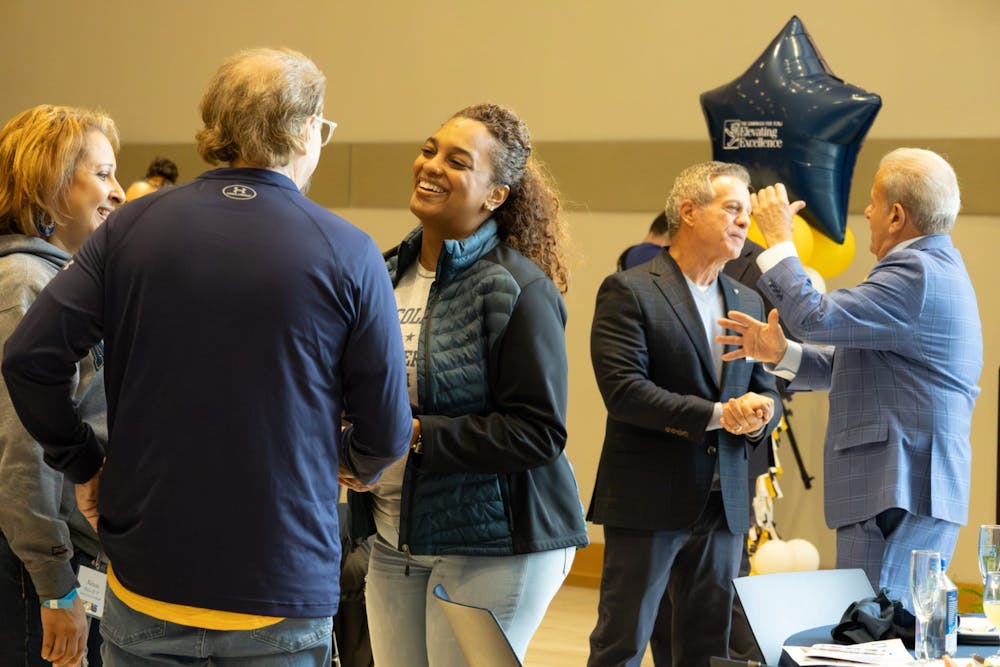
The College announced the public launch of its fundraising campaign, “Elevating Excellence” on Saturday, April 25. The campaign for “Elevating Excellence," the second fundraising campaign in the College’s history, launched an effort in July 2022 to fundraise $76 million across six years. The College has raised nearly $41.9 million to date, with two years and two months left to achieve their goal. The College is 55% of the way there.
The first campaign launched publicly exactly 11 years ago on April 25, 2015. This first comprehensive fundraising campaign was called “Innovate, Inspire, Engage.” It ran from July 1, 2012 through June 30, 2018.
When the College was considering its first campaign, they were told by a consultant that they would be likely to raise $20 million. President Emerita R. Barbara Gitenstein took it as a challenge, and doubled their goal to be $40 million. In the end, they raised $47.5 million. The college is aiming even higher with their second campaign.
This campaign is running exactly a decade later, from July 1, 2022 to June 30, 2028. A combination of endowed and annual giving will support the campaign’s four key priorities: academic enrichment, student experience, capital projects and access and affordability.
Academic enrichment programs immerse students and provide experiences. Funds for academic enrichment will go towards programs such as community-engaged learning, the Educational Opportunity Fund, endowed chairs/endowed faculty positions, global engagement, study abroad, internships, career-connected experiences, the pathway program and Mentored Undergraduate Summer Experience.
It was announced that Gitenstein and her husband Donald Hart have made a gift of $4 million — the campaign’s largest gift to date and one of the largest gifts from private donors in the College’s history, which will greatly support academic enrichment.
Three million dollars will be used to help fund, in perpetuity, one of the College’s top campaign priorities, the Mentored Undergraduate Summer Experience. They will also establish the Donald Brett Hart Undergraduate Research Fellowship, which will fund the participation of three students in MUSE annually, beginning this summer.
The other $1 million of this gift will go towards the Gitenstein-Hart Sabbatical Prize and the Library Endowment.
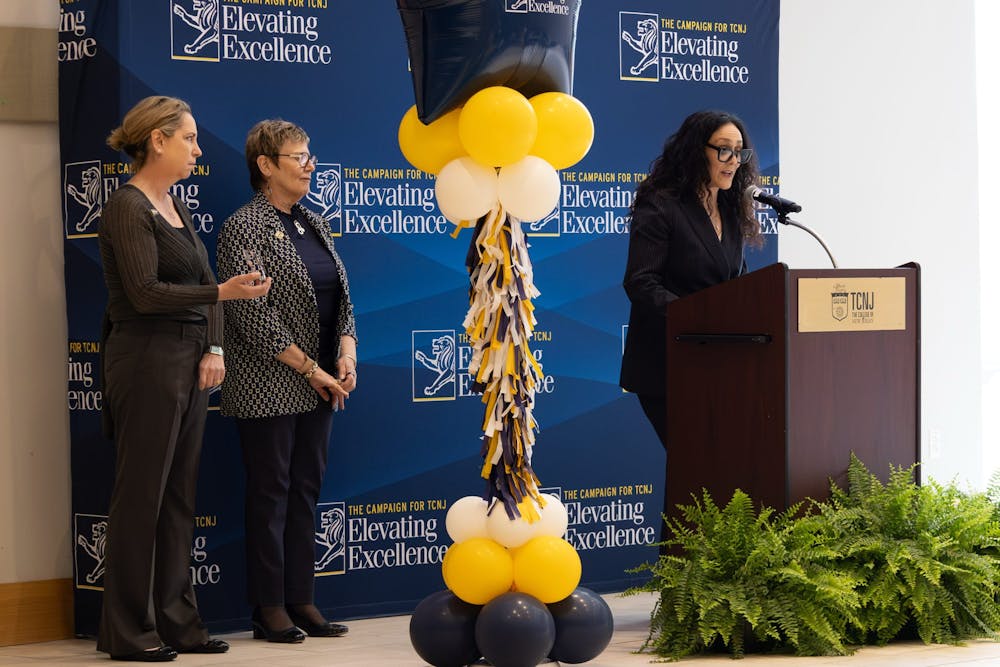
The budget campaign will conclude with a ceremony in 2028. (Photo courtesy of Kit Ackerman / Staff Photographer)
MUSE, one of the College’s signature experiences, was a priority. Barbara Pelson from the class of ‘59 has given a gift of $353,000 to fund two Barbara Meyers Pelson Student Fellows to participate in the program, beginning with the summer 2026 cohort.
In the biology department, to continue the legacy of Professor Emeritus Donald Lovett, who was known for mentoring undergraduates in his lab, a fund has begun to endow multiple students through the Donald Lovett Summer Research Awards in Biology. They have raised $83,000 so far and have increased their fundraising goal to $125,000.
In the School of the Arts and Communication, Andy and Maria Polansky from the class of ‘83 have decided to fund a new student-run public relations and design agency called Creative State. This program connects talented students with real clients, and is designed to give students experience in public relations, branding, web design, video production, digital fabrication and more, all under the guidance of expert faculty mentors.
Mike and Wendy Movsovich from the class of ‘86 have donated $250,000 to support the EOF and Pathways programs. This gift is especially timely given recent state funding cuts to EOF winter and summer session funding.
Co-chairs Gloria Weissbart from the class of ‘78 and Chris Berk from the class of ‘89 have also made generous contributions. Weissbart is contributing a planned gift of $600,000 to establish the Gloria Weissbart Endowed Faculty Fund, which will support faculty development and encourage the exploration of new pedagogical approaches, the integration of emerging technologies and the development of interdisciplinary or collaborative teaching strategies that enhance student learning.
Berk is contributing $500,000 to establish the Christine Berk Student Success Fund which will provide financial support to the operational and programmatic needs of the College’s Mentoring, Retention, and Success programs. The gift is split evenly between an endowment fund and a current use fund.
To support students’ holistic development, the College will continue to invest in student experience programs. This includes support for student organizations, varsity and club athletics, health and wellness, leadership and development programs, and music ensembles and performances.
In support of the College’s football team, alumni have launched an effort to raise $1 million to endow a fund in honor of their former coach, Eric Hamilton, that will benefit the program going forward.
Co-chair and donor Elaine Rocha from the class of ‘95 has chosen to support student experience programs and has provided a gift of $250,000 for programming and services within the Division of Student Affairs.
To meet the needs of students and faculty, the College will continue investing in modern and flexible facilities. The College is launching a few capital projects, including adding a Music Annex, renovating the R. Barbara Gitenstein Library and updating the Recreation Center.
The Music Annex will sit behind the Music Building and will take about a year to build. The fundraising goal was $2 million and the College aims to finish construction of the building by the fall of 2028.
The current rehearsal space was built during the 90s, when fewer students were practicing there. As the number of musicians grows, it creates too much volume for a room of that size and raises a concern for the safety of hearing.
Students have not been using that rehearsal space, but have instead been rehearsing elsewhere, which means instruments are being shuffled to different buildings, causing more wear and tear, and taking more time to set up and tear down for students and staff. The College has decided to make creating a permanent rehearsal space a priority, thanks to support from Professor Emeritus Buddy Mayo, President Michael Bernstein and the directors of the TCNJ Alumni Association.
Regarding the library, the College reviewed a white paper during the previous academic year to look at the ways in which students are using the library in the digital age. The greater need seems to be collaborative study spaces. Plans are still in the works for how to transform areas of the library to be more student-centric instead of book-centric. The first piece of this process is happening now, with the renovation of the first floor to accommodate the spirit shop.
The upgrades to the Recreation Center are being spearheaded by the College’s wrestling coach Joe Galante, specifically to improve wrestling facilities.
The College seeks to prioritize access and affordability in their campaign, making sure that there is scholarship support for students who are qualified and have enthusiasm for studying at the College.
Student Lynne Abraham, a psychology major and member of the class of 2026, spoke on Saturday about the impact of scholarships, as a Cooperman Scholar herself. She shared, “Financial support isn't really just about covering cost, it's about creating access. Because of these scholarships, I was able to spend time in research labs, take on leadership roles, study abroad, and pursue opportunities like presenting at a national conference and participating in a summer research experience at Princeton, rather than worrying about financial barriers.”
Gloria Weissbart, one of the co-chairs, spoke to the legacy of philanthropy at the College. “It’s also worth noting that we’ve already exceeded our previous campaign’s $40 million goal. This is a testament to the culture of philanthropy that the ‘Innovate, Inspire, Engage’ campaign helped to create,” she said.
This is a tradition that is likely to continue. There has been a decline in state funding for public colleges, so philanthropy is playing a much bigger role and there’s a greater need. David Muha, Vice President for College Advancement, notes that “Now the funding is down to the 20% range…We want to be mindful of the cost to our students and their families, and so fundraising has, over the last couple of decades, become much more prominent.”
The campaign will have a concluding ceremony in 2028, but projects are already under way, and students won’t have to wait until then to see the progress.