By Sky Pinkett
Features Editor
For many students, playing a musical instrument has been an integral part of their lives that they have had to give up to focus on non-music related studies. But with the College’s new Music Performance Certificate program, students no longer have to make that sacrifice.
“Many children begin taking musical instrument lessons by the time they become school age, and they actively participate in various programs and events to develop their performance skills through their high school years,” Tomoko Kanamaru, associate professor of music at the College, said. “It is a shame that many of those devoted young musicians often end up discontinuing their music studies upon entering college. The Music Performance Certificate Program allows such students to continue pursuing their passions alongside their major studies at TCNJ.”
The new Music Certificate Performance program slightly differs from the other opportunities that the College offers to non-music majors. This specific certificate emphasizes private lessons that nurture solo performance skills.
“The Music Performance Certificate is for non-music majors who possess outstanding solo performance skills on their instrument and want to further develop their skills during their collegiate studies while majoring in other subjects,” Kanamaru said. “It offers students opportunities to develop their artistry in solo performance. Additionally, private lessons can be an effective platform to develop the professionalism that is required for any career paths, as they must possess a consistently high work ethic to keep up with rigorous weekly lessons, they must regularly and directly communicate with the studio professor in a one-on-one setting, and they must learn how to set short and long term goals to perform their best in the moment.”
“Our brand new Music Performance Certificate expands our offering for non-music majors and provides a unique opportunity for students to continue to develop their passions and interests from high school through private lessons and a capstone performance experience," Eric Laprade, co-chair of the Department of Music and Director of Bands, said.
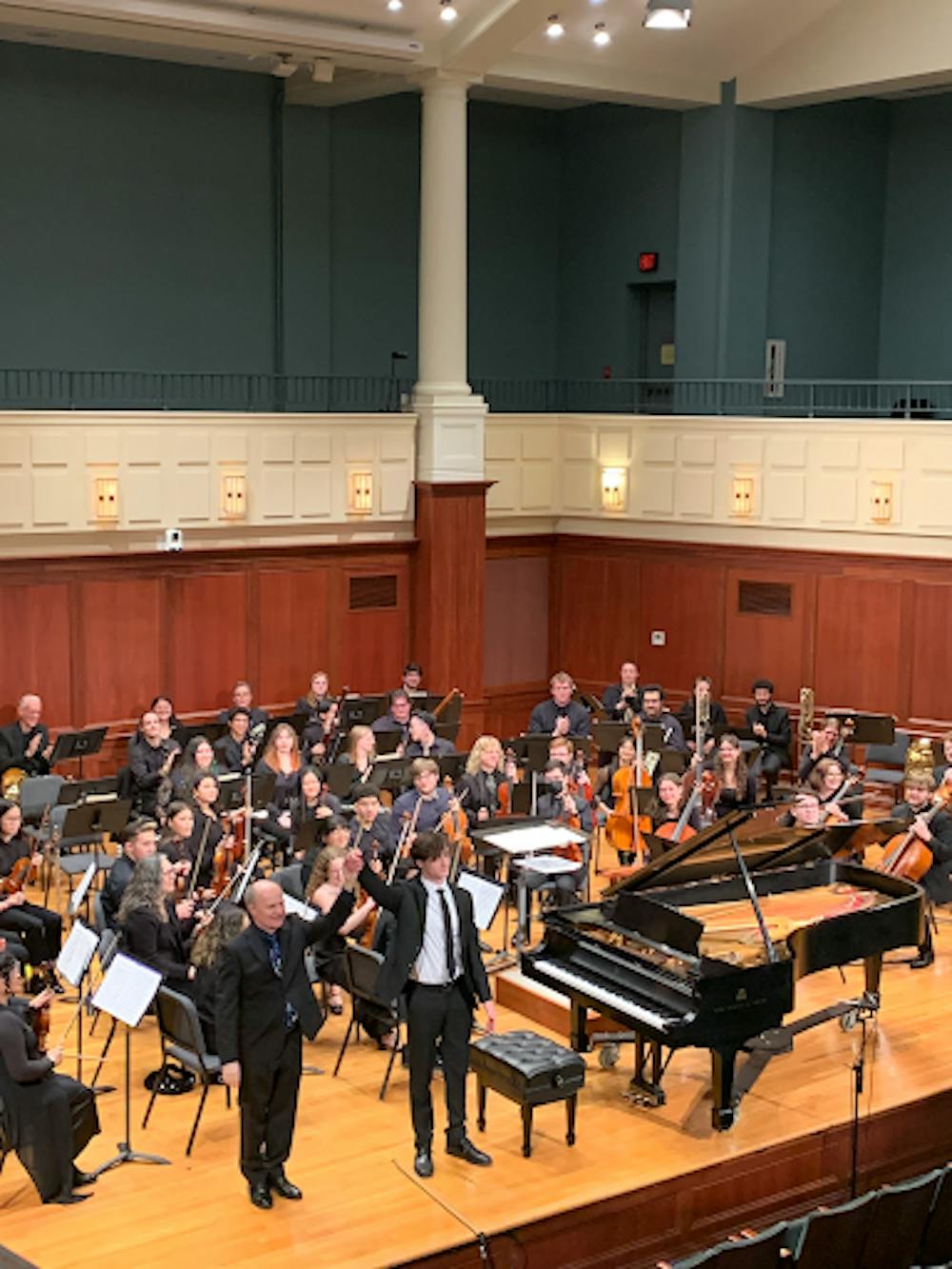
The Music Performance Certificate is a very recent development at the College, so much so that senior biology major Darren Leopold will be the first student to ever graduate with this Certificate this year.
“I really just love piano and classical music, and getting involved in the music program here was the best way for me to continue with it,” Leopold said. “Keeping up with piano on my own could have been nice to an extent, but to improve enough to play the pieces I want to play and do them well, lessons and regular performances were necessary.”
His lessons and hard work paid off, as he was one of the winners of this year’s concerto competition and recently performed a solo at the College’s Summer Night Orchestra concert.
Leopold found that the Certificate did not interfere with his biology studies, which is the fear many non-music majors have in continuing their musical interests into college.
“As a STEM major, the accessibility that was offered for non-majors to get into music was enticing as well,” Leopold said. “Some weeks I simply did not have any time to devote to piano, but we were able to be flexible with what was required of me when things got difficult. I also had the opportunity to perform at COSA every year in addition to the concerto competition, and considering I won't have many opportunities in my future to perform classical pieces, it made sense to take advantage of the program here.”
Many non-music majors who are interested in music turn to the College’s music minor program. However, the Music Performance Certificate program was established as a more accessible option for students who have less time than they can commit to the minor.
“Early on during my freshman to sophomore year, I talked to Dr. Kanamaru about possibly pursuing a music minor, but it was apparent that the extra courses required just would not fit in with my STEM schedule,” Leopold explained. “Dr. Kanamaru pushed for a while to get this certificate up and running, so that students like me who are heavily involved in music performance but don't have time for extra music classes can be recognized with a certificate.”
“The Music Studies Minor is a more comprehensive study through music academic courses and performances including various ensembles, without particular focus on solo performances,” Kanamaru said while explaining the differences between the music minor and the Certificate. “The core element of study in the Music Performance Certificate Program is solo performance through the private lessons and a capstone solo performance experience.”
These elements of the Music Performance Certificate make it a preferable option to many non-music majors.
“I didn't need to do much extra work to receive it, besides taking 1 credit of music theory, since I've had many semesters of lessons, several performances, and the concerto performance last week which counted as my senior capstone,” Leopold said. “For any students interested in obtaining the certificate, the requirements generally include a certain number of lesson credits, including 300-level lessons, participation in performances, and a senior capstone performance.”
Kanamaru recommends that students who are interested in receiving this Certificate should take the steps to apply for it as soon as possible.
“The Music Performance Certificate requires a total of three course units through the first level music theory course and the advanced level private lessons,” Kanamaru said. “Additionally, a summative performance experience is required. To be enrolled in the private lessons, one must pass a qualifying audition first. Students may start working towards the Music Performance Certificate as soon as they matriculate at TCNJ and are encouraged to start no later than the first semester of their second year, allowing ample time to complete the program.”
This new certificate is a sigh of relief for upcoming students who were dreading that heartbreaking choice of leaving behind a love of music to study other fields. Such ones can now come to the College and expect a fresh new program waiting to support them in their musical pursuits, no matter what else they may be interested in aside from music.
"We pride ourselves in making certain our Department of Music lessons, classes, ensembles, and programs are available to all students across campus, regardless of their majors,” Laprade said. “Music is such an essential part of each of our lives and we believe all students on campus should have access to the transformative power of music education.”
The certificate is also a great supplement to the non-music related fields that students are engaged in. Leopold discussed how the certificate has led to some real life benefits for his future career goals. He is set to pursue a PhD in cancer and cell biology at the University of Cincinnati and plans to continue pursuing music there as well.
“First of all, music performance is challenging, especially when trying to balance it with a biology degree. The amount of work I had to put in to prepare for performances, and managing my nerves at the performances themselves will definitely be valuable experience for dealing with the struggles of grad school,” Leopold said. “My piano experience also helped me directly when I was applying and interviewing for PhD positions earlier this year. During my interviews, some of the professors were interested in my music performance pursuits in college, and it gave us something in common to talk about, as well as something I could point to when talking about work ethic and well-roundedness.”
No matter what else a student may want to get involved in during college, the Music Performance Certificate is another example of how the College supports the arts and its students within those arts.
“Even before the Music Performance Certificate Program, my studio roster included many excellent non-music major pianists over the years,” Kanamaru said. “It is very exciting to see them develop eventually to become advocates for classical music and the performing arts in various ways, whether as active performers such as members of medical orchestras, leadership position holders such as performing arts organizations’ board members, avid audience members, or well-informed parents of future student musicians.”