By Isabella McHugh
Nation & World Editor
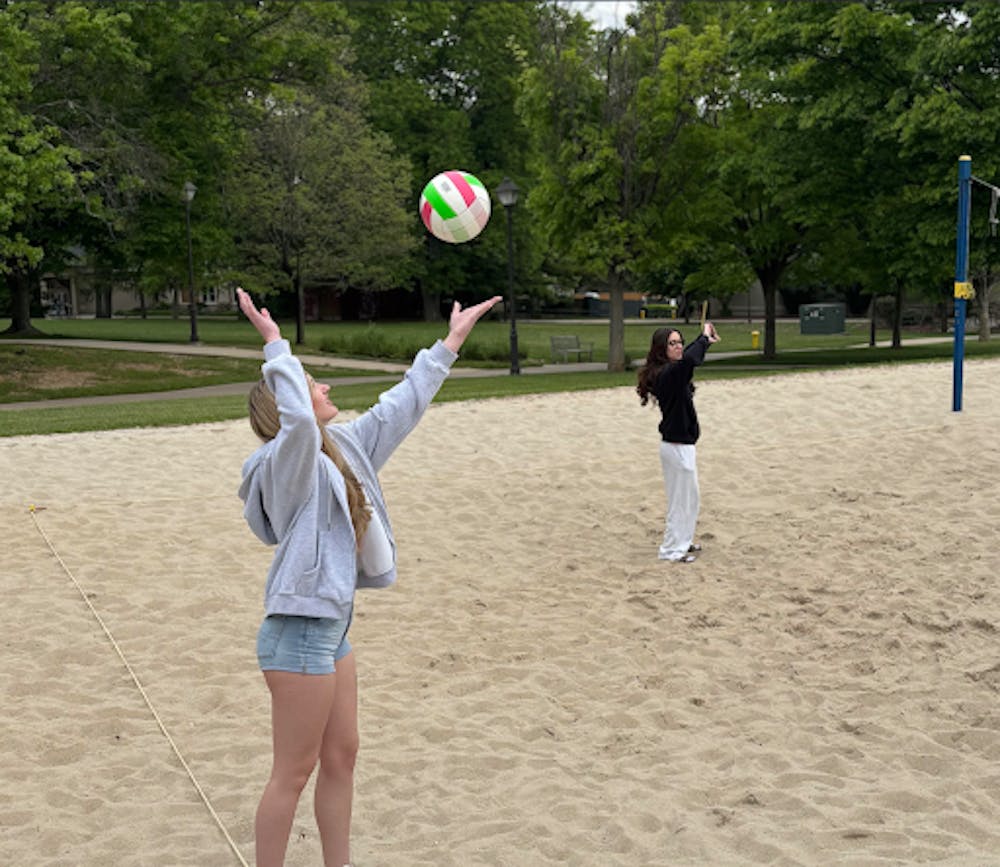
On warm weekend evenings, Kendra Baker, a freshman psychology major, plays volleyball with friends, chatting between points. Everyone smiles and cracks jokes while maintaining friendly competition, even though the game is purely recreational.
“I think playing with friends helps me to sort of de-stress, especially after a long day of either classes or homework,” Baker said.
Baker said schoolwork can feel “daunting” at times, and having a physical outlet helps her refocus when she returns to her assignments.
Baker’s experience reflects what students and a campus counseling expert describe as a broader campus trend of using recreational sports to de-stress and build social connections.
Dr. Beverly Mason, director of Counseling and Prevention Services, said experiences like Baker’s are common among students. She explained the mental health benefits of physical activity through a metaphor, describing exercise as depositing money into an emotional bank.
“Then when stress comes around, you have a reserve to draw from,” she said.
Mason said CAPS encourages students to take breaks when they feel overwhelmed with homework or other responsibilities rather than letting schoolwork consume their lives.
Stress levels on campus often rise during midterms, finals and April, Mason said. During those periods, maintaining healthy habits such as exercise, social interaction and scheduled breaks becomes especially important.
Many students say recreational sports provide both physical activity and opportunities to connect with others.
Hope Margarum ‘26, an international studies major, said recreational sports can support both social and emotional growth during college. She said these activities can be particularly valuable for freshmen adjusting to campus life.
To help new students connect, orientation leaders often organize activities that combine movement and social interaction.
During Welcome Week, orientation leaders plan activities that combine movement and social interaction, according to Margarum. She mentioned activities such as ultimate rock-paper-scissors and other icebreaker-style group games.
Margarum said these activities help students break out of their shells and interact with others in a low-pressure setting.
She added that recreational sports are highly social and can help students become more comfortable meeting new people.
She said students may say, “Oh my gosh, I don't know anyone, I don’t know what to do,” adding, “But I see people playing volleyball, so why don’t I get out of my head, get out of my comfort zone and just go and talk to people and hang out?”
For many students, these casual games become regular routines with friends.
Ashton Villaverde, a sophomore Nursing major, said he plays tennis with friends several times a week.
He said his nursing coursework is heavy, and stepping outside to play tennis offers a break from academics.
“I think it's kind of relieving in a way, because nursing is a lot,” Villaverde said. “I think tennis is a nice way to de-stress, especially if it's just for fun with my friends,” he added.
Villaverde said he played tennis throughout high school and wanted to continue at the College. Instead of joining a formal team, he found it easier and more enjoyable to meet friends for casual games.
Rather than playing full matches, Villaverde said he and his friends usually rally back and forth without strictly keeping score.
However, Villaverde said he adjusts his attention depending on how skilled his friends are.
Villaverde said that if his friends aren’t as experienced, he feels like he doesn’t “have to try as much,” but if they also played in high school, he focuses more.
Baker described a similar approach to volleyball. She said she never played competitively, and most of her friends approach the game casually.
“Sometimes we keep track of points, but a lot of the time we’re like giving redos and not playing seriously,” she said. “I think the important thing is that we’re being active and getting a chance to talk about what’s going on in our lives — just catching up,” she added.
While recreational sports can be enjoyable, Mason said some students hesitate to join games because they worry about their athletic ability.
Mason said students often refrain from playing recreational sports with others because they “fear being embarrassed.” She added, “The good thing is that most of the casual recreational activities around here don’t require athletic skill.”
Margarum said that mindset can sometimes prevent students from trying something new. She admitted she is not athletic but said, “it's about jumping into it, and just being like, ‘Oh, I suck too, but come on, let's play.”
Villaverde agreed that playing sports recreationally with friends is a great way to build social skills.
He said it takes a certain level of confidence to approach someone new and ask them to play. “If someone were too shy or, like, they didn't have many friends, they wouldn't do this kind of stuff where they would ask their friends, ‘Hey, do you want to play tennis?’””
For Baker, volleyball has become part of her routine with the friends she met during her first few weeks on campus.
Baker said she was nervous when she first came to the College, but was grateful to meet people on her floor who she’s become close with.
“I feel like us playing volleyball outside is just, like, one of our things,” she said, laughing. “I mean we do lots of different things together, but having something active is a different feeling, and really improves my mood after,” she added.
Mason said recreational sports can help students decompress from everyday pressures, though she emphasized that managing stress requires multiple strategies.
“When students are overwhelmed, we try to work with them and see how they're doing and organize their time,” she said, adding, “We always encourage students to reach out, get support, and avoid the pressure of never-ending productivity.”