By Sandra Abrantes
Multimedia Coordinator
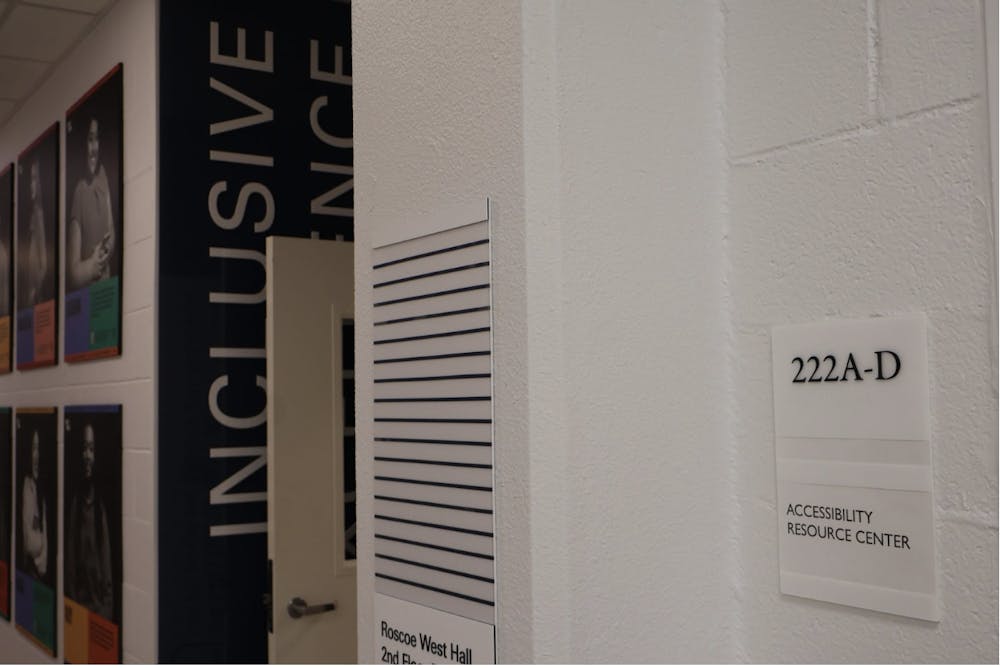
The Accessibility Resource Center at the College offers an opportunity for students with disabilities to receive accommodations in whatever regard they require. This is a necessary resource to have in order to maintain the College’s mission of Division of Excellence to persons with disabilities. ARC does not offer the opportunity and help that it has said to allow, but there is still room to improve and truly offer a fully inclusive and easier process for students struggling.
As an individual who has accommodations due to severe anxiety, I am very familiar with the process of asking for the help I need in regards to my disability. I have had accommodations since I was in eighth grade, and my circumstances have changed from then until now. But what has remained is the need for accommodations in order to perform my best academically.
In middle school, the accommodations process relied on a therapist or doctor note stating the need for such, and a meeting with the vice principal discussing the terms for extra help. What that meant for me was being removed from the classroom during any kind of test or quiz, and taking it in a separate room entirely to ease the overwhelming anxiety I felt during them. I was also allotted extra time to complete exams if the class period was not enough time.
In high school, this changed slightly, and I no longer had to discuss my accommodations with any of my teachers, because these details were included on the attendance roster. This greatly eased the anxiety I felt in asking each teacher for help and to respect my requests. It was understood that my accommodations would change by moving schools, and it came as no surprise that I was expected to take exams in the same room as other students and would have to communicate with each teacher when extra time was needed occasionally, but with this interaction being minimal, I found I was performing better academically for these four years.
Upon applying to college I was aware that the accommodations process would once again change, but I remained positive about ARC and moved forward with asking for help in leveling the academic playing field.
In the fall semester of my freshman year I first attempted to apply for accommodations. In order to apply for accommodations students must fill out an ARC Affiliation Form which provides information on who you are, the details of your disabilities, what accommodations you are requesting and the documentation proving you require them.
After this is completed, you will be made aware if you are approved for accommodations, and assigned an accessibility specialist with whom you must have a meeting with to set up your plan. In addition, you must then submit a semester request for your accommodation plan to be active, as well as set up meetings with each professor whose class you expect your plan to be active in. If you do not discuss this plan with your professor, then your request for accommodations will not be honored.
This process is slightly different depending on the student, since each individual’s accommodations vary, yet the process remains to be more difficult than necessary. In order to have academic accommodations at the college level absolutely requires more than it would at a high school or elementary level school.
Considering this fact, I believe that in my experience of receiving academic accommodations for as long as I have, there is a simpler way of achieving these accommodations that puts less stress on the applicant, as well as makes the process simpler and therefore more easily accessible to students.
This would include the ARC Affiliation Form that is already required, as it is important to ensure that only those who really need help are receiving it. Additionally, it would include the option to select an accessibility specialist based on when they are available.
One struggle I found was that it was hard to find a time when my specialist and my schedules overlapped. This fact made me lose confidence and induce more anxiety in reaching out to figure out when we could meet to discuss my plan.
Similarly, I feel most comfortable when I do not have to approach my professors about my accommodations, given that I struggle with anxiety. I believe this step is not necessary, as it simply adds an extra step that without it, would lessen worry surrounding asking for help, as well as encourage more people to apply.
This action could be taken by allowing students to choose whether they approach their professors or not. In this case, the consequence is that students will be able to communicate with their professors in a digital sense, whether that be email, or a virtual meeting to ease their anxiety.
Through these means of change, I believe more people interested in using ARC will be more inclined to do so. Before I received my accommodations, I felt overwhelmed by the process and intimidated by the anxiety it would cause me, which is why it took me an entire year to apply and go through with this process.
With the proper amount of communication and information on how to better improve these established processes, I believe that ARC can do more good for the College community.