By Lake DiStefano
Nation & World Editor
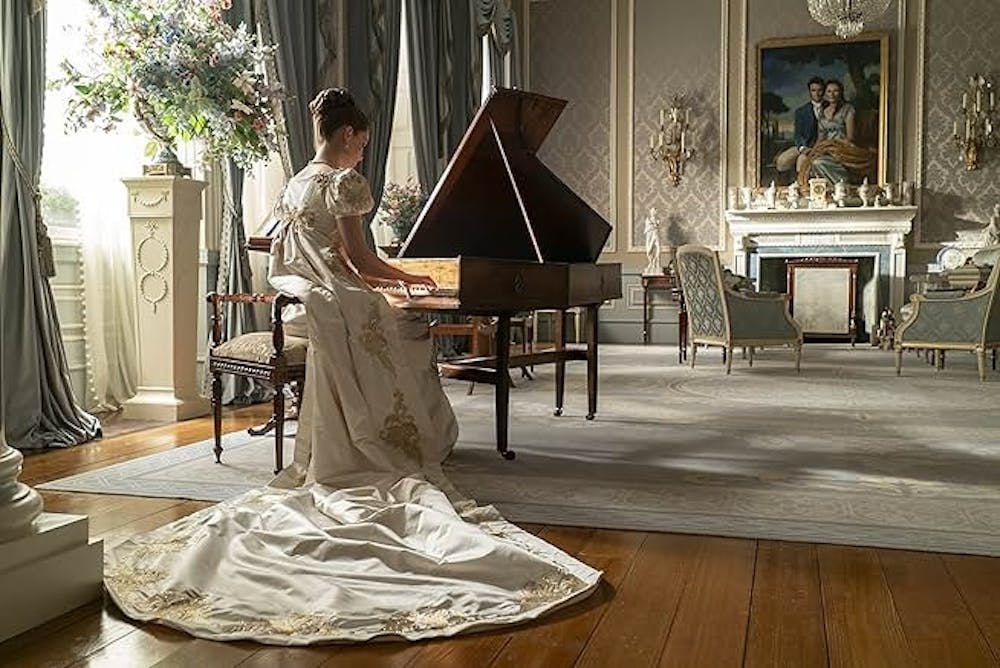
“Bridgerton” is one of our modern television juggernauts, with it being one of Netflix's few remaining crown-jewels in terms of traffic for the platform. The premise of the show is simple: a historical romance anthology, with each season focusing on a different couple, within a vaguely Regency-era London that is racially diverse.
Recently, Netflix announced that Season 5 will follow a lesbian couple, and the backlash towards this announcement can be summarized in one word: disproportionate.
The common sentiment in the comment sections of the various posts reporting this news, such as the announcement post of the season leads on the official “Bridgerton” Instagram account, is nothing short of vitriol.
Fans are, seemingly, against the idea of a lesbian-led season. Which begs the question: why?
“Bridgerton” is an adaptation of a series of novels, with each season being loosely inspired from a single book in the series. The show often straddles the line between being a faithful adaptation and making changes — taking the bare elements of the book it's trying to adapt, and filling in extra details to create a more complete season of television.
The most famous change from the books, which catapulted the show into mainstream attention during the show’s first season, is the love interests that each of the Bridgerton siblings end up with. In the books, the period-piece aspect of the story is taken a little more seriously, and thus the representation for different racial identities is not only lacking, but frankly, nonexistent.
The show has rectified this, creating a fictional version of Regency-era London in which racism is seemingly absent. This has allowed for the love interests in each season to be of varying different races and cultural backgrounds, and is widely regarded to be a change for the better, as it’s allowed for each season’s storyline to feel distinct via the cultural references they’re allowed to represent.
This is all to say that the show’s faithfulness to the books has only ever been a loose thing to begin with. Every season so far has changed not only the love interests in question, but has also done the extra work to rewrite the story around the couple, to better fit how the love interest’s new identity would realistically function.
I mention this for a very specific reason. You see, the backlash towards the choice for a lesbian-led season has spawned a few pieces of rhetoric to justify itself, with the main one being that it’s not faithful to the books.
Giving these fans the benefit of the doubt, and assuming their discontent isn’t solely rooted in homophobia, this sentiment is charged with two poles of pushback — the fact it’s a gender change from the book’s originally male love interest, and the belief that some of the book’s themes might not translate under this new queer context.
As an anthology, the show sets up the prominent couples often seasons before their focus season, and this case is no different. Francesa and Michaela, the two confirmed leads of Season 5, have been interacting in the show for two seasons now, with their love story having been set up sufficiently as a result.
From this sampling of their dynamic we, as the audience, can already glean some of the ways they’ve taken to adapting their book. While obviously certain changes have been made as a result of the queer element, it seems, so far at least, that this change was haphazard or self-congratulatory.
Beyond the fact that some of Francesa’s narrative themes from her book have been adapted earlier in the show, rather than during the love story itself, the show seems genuinely interested in telling a queer love story, in which the queer elements of that love aren’t glossed over.
This says, to me at least, that this rhetoric is hypocritical at best. Every single season so far has featured changes, both to the love interests’ identities and the storyline itself as a result, so I’m not sure why this change rings any more unnecessary than the others.
It certainly seems thought-through, with them having two whole seasons of set up by this point, during which they’ve managed to adapt all the other themes of the book which wouldn’t translate as easily within a queer love story.
So what is the real reason for so many finding this decision unsavory? Why are so many fans claiming they’re going to skip this season out of sheer frustration?
To better articulate my upcoming point, I’d like to draw a comparison to another queer show that was recently released, and the reception with which it received.
“Heated Rivalry” and “Bridgerton,” fundamentally, are the same show. They’re shows that, on a surface level, seem purely erotica — but actually have a deeply emotional core, which makes the spice a mere cherry on top. “Heated Rivalry,” like this upcoming season of “Bridgerton,” also centers a queer love story, with it instead focusing on two gay men.
So why is this upcoming lesbian season, which hasn’t even been released yet, mind you, receiving more backlash than “Heated Rivalry” did?
Given the fact that all the popular rhetoric proposed fails to hold up under even a light amount of scrutiny, I find that the backlash to this upcoming season speaks volumes towards a more quiet kind of homophobia, which can be argued to be worse than outright discrimination.
While there are exceptions, like all things, I would not face much contention were I to assert the fact that the primary fanbase for these shows, excluding queer fans, is straight women.
An article from Vulture, entitled “Girls Who Love Boys Who Love Boys” discusses this phenomenon, and proposes a few theories as to why straight women enjoy this specific kind of queer media, like “Heated Rivalry.”
I would like to propose a theory of my own. In 2018, NBC News reported “The most searched term on online pornography sites this year? "Lesbian," according to Pornhub and YouPorn, two of the most-visited porn sites in the world.”
Without stating the obvious, I feel this framework of understanding, regarding the type of queer representation that is accepted by the heterosexual majority, offers up an interesting insight into how these kinds of romance shows, in which sex scenes are present, are often received.
For as much as people stay for the love stories at the center of these shows, sex does, in fact, sell.
Queer people, it seems, are only ever tolerated when they can provide some sexual gratification. The success of shows like “Heated Rivalry” ring hollow, in this sense. It exposes how despite the love stories at the heart of these shows — the reason many claim to love the romance genre — we are still at a place where people assess the merit of queer art according to their own standards of what they deem appealing.
It makes an unfortunate amount of sense then, that a show like “Bridgerton,” with a majority straight-woman audience, would reject a love story between two women. Just as “Lesbian” is often the most searched category of porn, realistically by straight men, the disgusted reaction to a lesbian-led season of “Bridgerton” is the mere inverse of that.